
Mumbai rewards people who learn its daily habits early. Stepping onto a crowded station platform or hunting for a rental flat without local facts quickly drains your time and patience.
Knowing how the railway lines branch out, which neighborhoods fit your budget, and where to shop takes the stress out of daily routines. This Mumbai local train guide covers commuter tracks, city sights, weekend escapes, and small shop basics. Whenever you want candid advice from people who live here every day, MumbaiOrbit pairs practical city guides with an active local forum.
Mumbai Local Train Guide: How Suburban Rail Moves the City
Millions of riders cross Mumbai by train every day. Once you learn the layout of the tracks, traveling from South Mumbai to the outer suburbs becomes fast and affordable.
Three Primary Rail Corridors
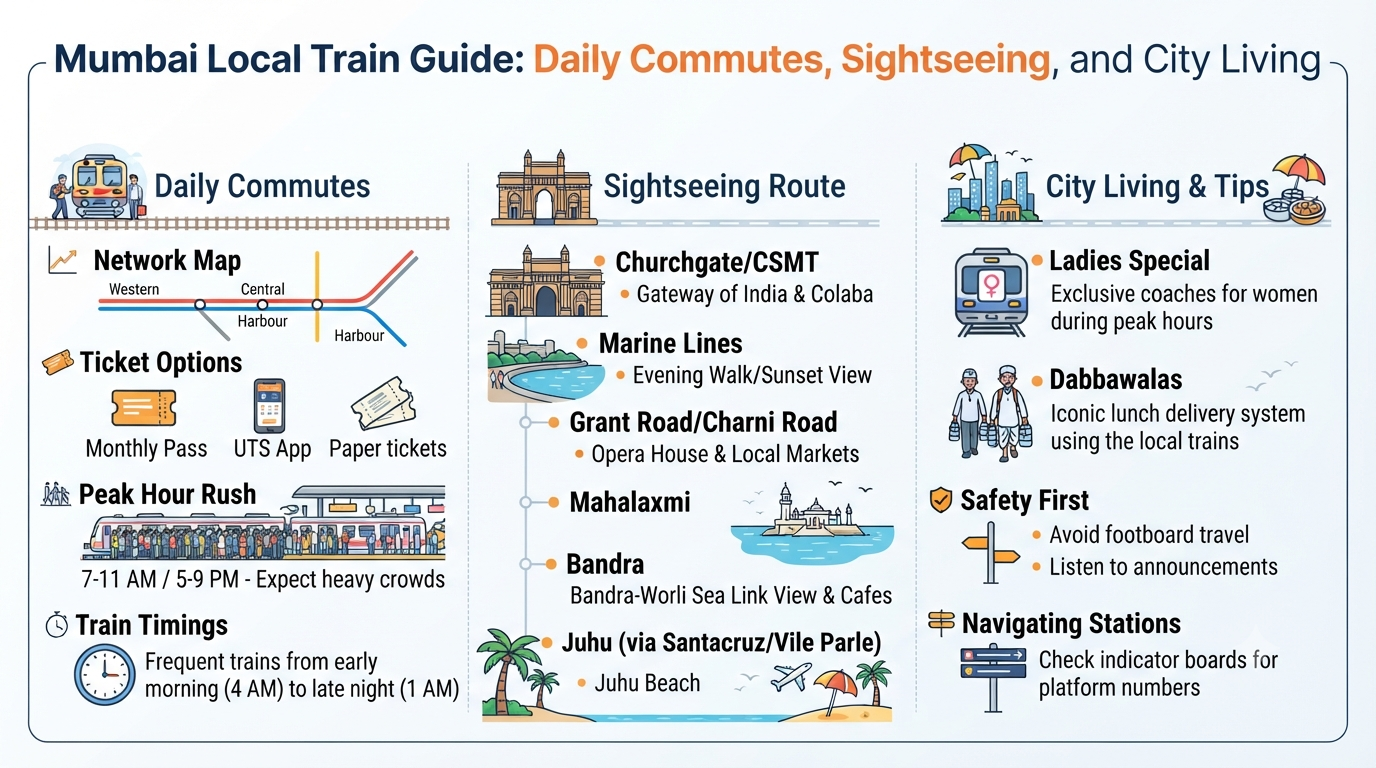
Three railway lines link the southern tip of the city to northern and eastern suburbs:
- Western Line: Runs north from Churchgate toward Dahanu Road, passing busy hubs like Dadar, Bandra, Andheri, and Borivali.
- Central Line: Starts at Chhatrapati Shivaji Maharaj Terminus (CSMT) and branches out toward Kalyan, Kasara, and Khopoli via Thane.
- Harbour Line: Connects CSMT with Navi Mumbai stops like Vashi and Panvel, alongside a branch running toward Goregaon.
Fast Trains, Slow Trains, and Tickets
Suburban services run as Slow or Fast trains. Slow trains stop at every station along the track. Fast trains skip smaller stops and halt only at major junctions. Always check the electronic indicator board on the platform before stepping inside.
Buy paper tickets or season passes at station counters, or book paperless tickets through the official UTS mobile app. First-class compartments cost more and offer slightly less crowding than second-class coaches. Separate coaches are reserved for women, senior citizens, and commuters with disabilities.
Peak Hours and Platform Habits
Morning crowds flow south toward Churchgate and CSMT from 8:00 AM to 11:00 AM. Evening crowds head north toward the suburbs between 5:00 PM and 9:00 PM. Travel outside those hours whenever your schedule allows.
Stick to four simple habits on every platform:
- Stay behind the yellow line until the train stops completely.
- Step aside so exiting riders can clear the doorway first.
- Stay inside the coach rather than standing near open doors.
- Wear your backpack on your chest inside packed compartments.
| Transport Option | Primary Role | Practical Planning Advice |
|---|---|---|
| Local trains | Long north-south commutes across the city | Check fast or slow status and avoid peak rush hours |
| Metro | Air-conditioned rides along busy corridors | Confirm active stations and operating hours before riding |
| BEST Buses | Short neighborhood hops and feeder routes | Verify live route numbers on official city bus apps |
| Taxis and auto-rickshaws | Door-to-door local trips | Auto-rickshaws operate only in the suburbs, not South Mumbai |
| Ferries | Coastal crossings and harbor trips | Check tide charts, weather notices, and departure times |
Mumbai Metro Line 3 Guide: Riding the Underground Aqua Line
This Mumbai Metro Line 3 guide explains the city’s first fully underground rail route, called the Aqua Line. Engineers designed it to pull cars off congested roads and ease heavy crowds on suburban trains.
Route Path and Phased Launches
The Aqua Line follows the Colaba-Bandra-SEEPZ corridor. It connects southern office districts like Nariman Point and Worli with Bandra Kurla Complex (BKC) and both airport terminals. Because underground sections open in stages, check official Mumbai Metro Rail Corporation (MMRC) updates to see which stations are active before riding.
Transfers and Station Facilities
Line 3 links with Western and Central railway hubs at key interchange stations. Passengers can also connect to Metro Line 1 at Marol Naka or walk straight toward airport gates.
Every underground station includes lifts, escalators, and tactile floor paths for visually impaired commuters. QR tickets are sold at station kiosks, ticket counters, and transit apps, with fares set by travel distance.
Places to Visit in Mumbai
Exploring the top places to visit in Mumbai works best when you group nearby spots together. Crossing town during afternoon traffic eats up hours of your day.
Historic Landmarks and Museums
- Gateway of India: A waterfront basalt arch in Colaba that also serves as a pier for harbor ferries.
- Chhatrapati Shivaji Maharaj Terminus (CSMT): A working railway station admired for its Victorian Gothic stonework and domes.
- Chhatrapati Shivaji Maharaj Vastu Sangrahalaya: A Fort museum displaying ancient sculptures, miniature paintings, and Indian history.
Seafronts, Parks, and Shrines
- Marine Drive: A curved seaside boulevard where locals gather along the seawall at sunset.
- Juhu Beach: A wide suburban shoreline known for evening crowds and coastal snack stalls.
- Sanjay Gandhi National Park: A large protected forest in Borivali housing the rock-cut Kanheri Caves.
- Haji Ali Dargah and Siddhivinayak Temple: Two revered spiritual landmarks welcoming thousands of visitors weekly.
Check museum closing days—most shut on Mondays—and review entry rules online before heading out.
Mumbai 3 Day Itinerary: Sightseeing Without the Rush
A practical Mumbai 3 day itinerary groups attractions by neighborhood so you spend less time stuck in traffic.
Day 1: Heritage Streets in South Mumbai
Start at the Gateway of India by 8:30 AM before midday heat and crowds arrive. Walk over to Chhatrapati Shivaji Maharaj Vastu Sangrahalaya around 10:15 AM and spend two hours inside.
Grab lunch in Fort, then walk past Flora Fountain toward CSMT to admire the stone facades. Finish the evening at Marine Drive by 5:30 PM as streetlamps light up the bay. Metered black-and-yellow taxis handle short hops here easily.
Day 2: Sea Link Views and Suburban Coastlines
Visit Siddhivinayak Temple in Prabhadevi around 9:00 AM. Take a cab across the Bandra-Worli Sea Link into Bandra West. Walk along Bandstand Promenade and spot colorful street murals tucked into the lanes near Chapel Road.
Spend your afternoon exploring cafes or galleries in Bandra Kurla Complex (BKC). Head over to Juhu Beach by 5:00 PM for sunset by the water. Suburban trains or Metro Line 3 make returning south simple.
Day 3: Markets, Snacks, and Local Life
Step inside Crawford Market around 10:30 AM to browse spice stalls, fruit crates, and historic stone carvings. Walk south to Colaba Causeway by 12:30 PM for street shopping and lunch at a local cafe.
Take an afternoon train to Dadar to see the lively flower market outside the station. Sample fresh evening snacks nearby before wrapping up. Keep both UPI apps and small cash notes ready.
Best Street Food in Mumbai
Tasting the best street food in Mumbai gives you an immediate feel for local daily life. Roadside stalls serve hot, inexpensive plates on almost every corner.
- Vada Pav: A spiced potato patty fried in gram flour batter, pressed inside a soft bun with dry garlic chutney.
- Pav Bhaji: Mashed vegetables simmered in butter and spices on a flat iron tawa, paired with toasted buns.
- Bhel Puri and Sev Puri: Puffed rice and crisp puris mixed with chopped onions, potatoes, tangy tamarind sauce, and cilantro.
- Pani Puri: Crisp hollow shells stuffed with spiced chickpeas and dipped into cold mint-tamarind water.
- Bombay Sandwich: Layered white bread filled with sliced boiled potatoes, cucumber, beetroot, cheese, and green chutney.
- Misal Pav: Spicy sprouted bean curry topped with crunchy sev and served alongside soft bread rolls.
Busy food hubs cluster near Churchgate, Juhu Beach, Dadar, and Ghatkopar Khau Galli. Choose crowded stalls where cooks fry batches fresh to order, and drink only sealed bottled water.
Shopping Markets in Mumbai
Browsing shopping markets in Mumbai lets you compare street bargains, fabrics, and antiques in a single afternoon.
- Crawford Market: A covered Victorian market near CSMT stocked with fresh fruit, whole spices, baking goods, and household supplies.
- Colaba Causeway: A busy sidewalk stretch lined with stalls offering brass jewelry, leather sandals, bags, and casual clothes.
- Linking Road: A popular Bandra West shopping strip blending open-air clothing stalls with modern brand stores.
- Fashion Street: A row of budget stalls near Azad Maidan geared toward students and young shoppers.
- Chor Bazaar: A historic market near Bhendi Bazaar famous for vintage clocks, brassware, film posters, and restored furniture.
Polite bargaining is part of street shopping—start near half the initial quote and negotiate calmly. Check garment seams and zippers before paying, and keep your phone in a zipped pocket in tight crowds.
Best Areas to Live in Mumbai
Comparing the best areas to live in Mumbai comes down to monthly rent, commute time, and household priorities.
Four Checks Before Signing a Lease
- Commute Links: Living near a direct train or metro station matters more than distance on a map.
- Monthly Budget: South Mumbai and Bandra carry high rents, while northern suburbs and Navi Mumbai offer larger apartments for less.
- Daily Errands: Walk the street to verify grocery shops, pharmacies, clinics, and evening street lighting.
- Family Priorities: Families should check nearby schools, parks, and late-night traffic noise.
| Residential Area | Everyday Atmosphere | Transit Links to Check | Best Suited For |
|---|---|---|---|
| Andheri (West & East) | Fast-paced commercial and residential hub with active dining | Western Line trains, Metro Line 1, and Western Express Highway | Media workers and corporate commuters |
| Powai | Planned township layout with lakeside paths and high-rises | Jogeshwari-Vikhroli Link Road and nearby metro corridors | Tech staff, founders, and nuclear families |
| Thane / Navi Mumbai | Wider roads, planned layouts, and newer apartment complexes | Central or Harbour rail lines and highway bridges | Families seeking larger homes and quieter streets |
Visit apartments during evening rush hour and confirm water supply timings with building watchmen before registering a rental agreement.
Weekend Getaways from Mumbai
Taking a break from city crowds is easy thanks to several weekend getaways from Mumbai located just a few hours away.
| Destination | Core Appeal | Good Fit For | Travel Planning Notes |
|---|---|---|---|
| Lonavala | Green hills, valley viewpoints, and monsoon waterfalls | Short overnight drives and nature breaks | Expect heavy highway traffic on Saturday mornings |
| Matheran | Forested hill town with zero private cars allowed | Walkers, couples, and quiet stays | Vehicles stop at Dasturi Naka; walk or take the toy train |
| Alibaug | Quiet beaches, sea forts, and coastal villages | Families and relaxed beach weekends | Take ferries from Gateway of India or drive via Pen |
| Karjat | River valleys, farm stays, and trekking hills | Adventure groups and monsoon campers | Direct Central Line trains run from CSMT |
Book ferry seats, train tickets, and rooms early ahead of long weekends, and check weather alerts before driving up ghat roads during heavy monsoon rain.
How to Start a Small Business in Mumbai
Learning how to start a small business in Mumbai means balancing high customer demand against steep commercial rents.
Practical Steps for New Owners
- Solve an Everyday Need: Focus on steady local demand like tiffin kitchens, laundry shops, repair kiosks, or specialty retail.
- Track Street Footfall: Count passersby and check competitor prices on your target street for a few days before renting.
- Calculate Real Costs: Include security deposits, monthly rent, power bills, staff salaries, and three months of reserve cash.
- Pick a Right-Sized Space: Choose a compact storefront or delivery kitchen close to your core customers.
- Select a Legal Structure: Register as a Sole Proprietorship, Partnership, LLP, or Private Limited Company depending on ownership plans.
- Secure Mandatory Permits: Apply for Maharashtra Shop and Establishment registration, Udyam MSME registration, GST, or an FSSAI licence for food businesses.
- Set Up Payments and Local Listings: Open a current bank account, set up UPI QR codes, and claim your local map pin.
Tax rules and municipal permits update periodically, so verify current forms on official portals or consult a Chartered Accountant before committing to a lease.
Mumbai Community Forum and Local Knowledge
An active Mumbai community forum fills in the practical details that official brochures skip. Residents share timely updates based on everyday life across different neighborhoods.
How Local Threads Help Residents and Visitors
Members trade honest notes on rail delays, building water schedules, dependable plumbers, and low-key lunch spots. Newcomers learn which low-lying streets flood during heavy rain, while small shop owners compare local wholesalers.
MumbaiOrbit brings together helpful city guides and active discussion boards across five core categories:
- Ask Mumbai: Everyday questions about city services, utilities, and life in Mumbai.
- Trains & Transport: Commuter updates on rail lines, metro openings, and road diversions.
- Housing: Peer advice on rental deposits, broker terms, and neighborhood comparisons.
- Khau Galli: Local tips on street food stalls, old Irani cafes, and casual eateries.
- Maharashtra Matters: Threads covering regional trips, state policies, and weekend routes.
Forum posts reflect personal user experiences rather than official verification, so always confirm legal, medical, or transit facts with authorized sources.
Eight Common Mumbai Mistakes to Avoid
Steer clear of these common missteps when living in or exploring the city:
- Boarding Fast Trains Without Checking Stops: Taking a fast train for a small local stop means riding past your station. Read the platform display board every time.
- Carrying Heavy Luggage During Rush Hour: Squeezing large bags onto a packed 9:00 AM train is tough. Take a cab or wait until midday.
- Relying on Old Metro Maps: Underground stretches open in stages. Check active stations before planning a ride on Metro Line 3.
- Renting Without Testing the Morning Commute: A flat that looks close on a map can take ninety minutes in traffic. Ride your exact route during peak hours before signing a lease.
- Cutting Airport Travel Too Close: Rain or roadwork can stall highway traffic fast. Leave at least forty-five minutes earlier than usual.
- Visiting Museums on Mondays: Many galleries shut on Mondays for weekly maintenance. Confirm opening hours before heading south.
- Eating at Empty Street Stalls: Slow turnover often means food has been sitting out too long. Pick busy stalls frying fresh batches.
- Opening a Shop Before Finishing Paperwork: Municipal inspections happen regularly. Secure your Shop Act and trade permits before opening day.
Everyday Mumbai Scenarios
- Fictional Scenario 1 (Moving for a Job): Siddharth accepts a finance role in BKC and starts house hunting. Instead of paying high rent right next to his office, he rents a room near a direct Metro Line 3 station, lowering his monthly rent while keeping his commute short.
- Fictional Scenario 2 (Family Sightseeing): Pooja hosts her parents for a three-day Mumbai trip. She groups South Mumbai museums on Day 1 and Bandra seafront walks on Day 2, using metered taxis for short rides so nobody tires out in train crowds.
- Fictional Scenario 3 (Opening a Small Cafe): Harsh wants to launch a small take-away coffee counter near a suburban station. He tracks morning commuter footfall for a week and meets a tax advisor to arrange his FSSAI and Shop Act licences before paying his shop deposit.
Frequently Asked Questions
How can beginners use this Mumbai local train guide effectively?
Learn the three main lines—Western, Central, and Harbour—and check platform boards to see if a train is Fast or Slow. Use the UTS mobile app to buy paperless tickets on your phone, and plan non-urgent rides outside morning and evening rush hours for a calmer trip.
Which places to visit in Mumbai suit a short trip?
Start with the Gateway of India, Marine Drive, and Chhatrapati Shivaji Maharaj Terminus in South Mumbai. With extra time, head north to Bandstand Promenade, Juhu Beach, or Sanjay Gandhi National Park. Grouping nearby attractions saves hours of cross-city traffic.
What are the easiest weekend getaways from Mumbai?
Lonavala offers green hills and valley views, while Matheran provides car-free forest trails. Alibaug is ideal for sandy beaches and ferry rides, and Karjat draws trekkers and river campers. All four sit within a few hours of Mumbai by road, train, or coastal boat.
How do newcomers pick among the best areas to live in Mumbai?
Set your monthly rent limit first, then check direct train or metro links to your workplace. Andheri fits media and corporate commuters, Powai offers township living, and Thane or Navi Mumbai provide larger apartments. Always check water supply and evening street noise before signing a lease.
What should riders know from a Mumbai Metro Line 3 guide?
Metro Line 3, or the Aqua Line, runs underground between Colaba, BKC, and SEEPZ. It links business districts, railway stations, and airport terminals. Because phases open gradually, commuters should verify active stations, transfer walkways, and ticket fares on official metro portals before riding.
What is a sensible pace for a Mumbai 3 day itinerary?
Spend Day 1 exploring South Mumbai heritage landmarks and Marine Drive. Dedicate Day 2 to Bandra’s seafront, street murals, and Juhu Beach. Use Day 3 for Crawford Market, Colaba Causeway, and Dadar’s flower market. Starting by 8:30 AM helps you beat heat and crowds.
Which dishes represent the best street food in Mumbai?
Try Vada Pav, Pav Bhaji, Bhel Puri, Sev Puri, Pani Puri, and toasted Bombay sandwiches. These dishes pack bold spicy and tangy flavors at low prices. Eat at busy stalls cooking food fresh to order, and drink only sealed bottled water.
Where are the top shopping markets in Mumbai for bargains?
Colaba Causeway, Linking Road, and Fashion Street are popular for budget clothes, footwear, and accessories. Crawford Market focuses on spices, fruits, and home goods, while Chor Bazaar attracts antique hunters. Bargain politely at sidewalk stalls and check fabric stitching before paying.
What are the core steps in how to start a small business in Mumbai?
Pick a clear service, study street footfall, and calculate rent and deposit costs. Register your business structure and secure required permits such as Shop and Establishment, Udyam MSME, GST, or FSSAI licences. Finally, open a current bank account and enable UPI payments.
Why join a Mumbai community forum before moving to the city?
A local forum connects you with residents sharing practical tips on flat hunting, train routes, monsoon flooding, and neighborhood eateries. Asking specific questions helps newcomers avoid costly mistakes, though you should always verify legal contracts and official schedules independently.
Should commuters choose local trains or the metro in Mumbai?
Your best choice depends on your route. Local trains cover long north-south distances quickly at low fares, while metro lines offer air-conditioned rides along specific busy corridors. Many commuters combine both systems at interchange stations to cut total travel time.
What time of year offers the best weather in Mumbai?
November through February brings cooler, drier days suited for walking tours and street markets. June through September brings heavy monsoon rain that turns nearby hill stations green, though city riders should allow extra travel time for waterlogged roads and rail delays.
Practical Takeaways for Living in Mumbai
Getting comfortable with Mumbai becomes much easier once you see how its rail lines, neighborhoods, markets, and local rules connect. Keeping this Mumbai local train guide handy—alongside realistic sightseeing routes, rental checks, and small business basics—helps you move through the city with less stress. Train timetables and municipal rules shift over time, so checking official notices before big trips or investments is always smart. Whenever you want practical neighborhood guides, everyday answers, or honest tips from locals, explore the articles and forum threads on MumbaiOrbit.

