
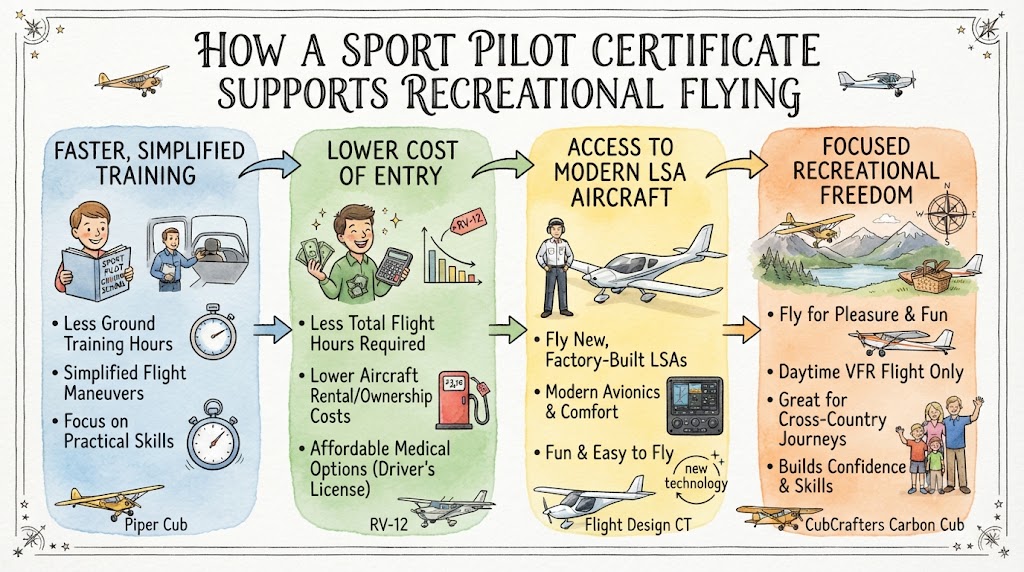
Introduction
For many people, learning to fly is more than achieving a personal milestone—it’s about experiencing the freedom, adventure, and satisfaction that aviation offers. Recreational flying has become increasingly popular among individuals who enjoy exploring local landscapes, visiting nearby airports, participating in flying club activities, or simply spending weekends in the sky.
One of the most accessible ways to begin this journey is by earning a Sport Pilot Certificate. Designed for individuals interested primarily in recreational aviation, this certification provides an opportunity to develop fundamental flying skills while operating eligible light sport aircraft within the privileges established by the applicable aviation authority.
A Sport Pilot Certificate is often viewed as an excellent entry point into general aviation because it combines practical flight training with essential aviation knowledge, emphasizing safety, responsible decision-making, and confident aircraft operation.
What Is a Sport Pilot Certificate?
A Sport Pilot Certificate is a pilot certification that allows qualified individuals to operate eligible light sport aircraft for recreational purposes, subject to the regulations of the applicable aviation authority.
The certificate is intended for people who want to enjoy personal flying rather than pursue a professional aviation career. Training focuses on building the knowledge and practical skills needed to safely operate light sport aircraft while developing sound decision-making habits.
Depending on local regulations, sport pilots may operate certain types of aircraft such as:
- Fixed-wing light sport airplanes
- Weight-shift control aircraft
- Powered parachutes
- Gyroplanes (where permitted)
- Gliders (where applicable)
Privileges and operating limitations vary by country and aviation authority, so pilots should always follow the regulations that apply to their certification.
Why Recreational Flying Continues to Grow
Recreational aviation attracts individuals from many different backgrounds because it combines adventure, learning, and personal achievement.
Common reasons people choose recreational flying include:
- Weekend flying adventures
- Local sightseeing flights
- Personal travel
- Aviation hobbies
- Flying club participation
- Learning new skills
- Enjoying the freedom of flight
Light sport aviation also provides an accessible pathway for many first-time pilots who want to experience aviation without immediately pursuing advanced professional certifications.
Benefits of a Sport Pilot Certificate
1. Easier Entry into Aviation
A Sport Pilot Certificate provides a structured introduction to aviation.
Students develop essential knowledge and flying skills through a training program designed for recreational pilots.
Benefits include:
- Beginner-friendly learning
- Practical flight experience
- Progressive skill development
- Strong safety foundation
For many aspiring aviators, it offers an approachable first step toward learning to fly.
2. Supports Recreational Flying
The primary purpose of the Sport Pilot Certificate is recreational aviation.
Depending on applicable regulations, pilots may enjoy activities such as:
- Weekend flights
- Local sightseeing
- Visiting nearby airports
- Flying club events
- Personal aviation experiences
This flexibility allows pilots to enjoy aviation as a hobby while continuing to develop their flying skills.
3. Builds Fundamental Pilot Skills
Sport pilot training introduces students to the core skills used throughout aviation.
Training typically develops abilities in:
- Aircraft control
- Takeoffs and landings
- Navigation
- Radio communication
- Weather awareness
- Flight planning
These skills provide a strong foundation for safe recreational flying and future aviation learning.
4. Encourages Safe Flying Habits
Safe flying begins with proper preparation and responsible decision-making.
Sport pilot training emphasizes:
- Pre-flight inspections
- Risk assessment
- Situational awareness
- Weather evaluation
- Emergency procedures
- Sound aeronautical judgment
Developing these habits early supports long-term aviation safety.
5. Pathway to Additional Pilot Training
Many pilots begin with recreational flying before pursuing more advanced aviation certifications.
A Sport Pilot Certificate can serve as a foundation for continued learning toward:
- Private Pilot Certificate
- Instrument training
- Commercial Pilot training
- Additional aircraft category or class training
Future training depends on applicable regulations and individual career goals.
Eligibility Requirements for a Sport Pilot Certificate
Although requirements differ among aviation authorities, aspiring sport pilots generally should be prepared to meet several common eligibility criteria.
Minimum Age
Most aviation authorities establish minimum age requirements for student pilots and certificate applicants.
Language Proficiency
Pilots are generally expected to demonstrate the ability to read, write, speak, and understand the language required by the applicable aviation authority.
Flight Training
Students complete practical flight instruction with a qualified instructor, learning aircraft operation, navigation, communication, and safety procedures.
Knowledge Examination
Ground training prepares students for a written examination covering aviation theory, regulations, weather, navigation, and aircraft systems.
Practical Flight Evaluation
Before earning certification, students typically demonstrate safe aircraft operation during a practical flight evaluation conducted according to applicable regulations.
What Students Learn During Sport Pilot Training
Ground School
Ground instruction provides the theoretical knowledge needed for safe flight operations.
Common subjects include:
- Aviation regulations
- Aerodynamics
- Weather
- Navigation
- Aircraft systems
- Flight planning
- Aviation safety
Strong theoretical knowledge supports better decision-making in the cockpit.
Flight Training
Practical flight instruction develops hands-on flying skills.
Students commonly learn:
- Taxi operations
- Takeoffs
- Climbs
- Turns
- Descents
- Approaches
- Landings
- Basic emergency procedures
Each lesson builds confidence while reinforcing safe operating techniques.
Safety Training
Safety remains one of the most important parts of pilot education.
Training emphasizes:
- Weather decision-making
- Risk management
- Aircraft inspections
- Flight preparation
- Communication procedures
Learning these skills helps students develop responsible flying habits.
Types of Recreational Flying Supported by a Sport Pilot Certificate
Depending on applicable regulations and operational limitations, a Sport Pilot Certificate can support a variety of recreational aviation activities.
Local Pleasure Flying
Many pilots enjoy short flights around their local area simply for the enjoyment of flying.
Cross-Country Recreational Flights
Some recreational pilots enjoy visiting nearby airports and exploring new destinations within the operational privileges of their certificate.
Scenic Flying
Flying over mountains, lakes, coastlines, forests, or rural landscapes offers a unique perspective that attracts many recreational pilots.
Flying Club Activities
Flying clubs provide opportunities to:
- Meet other aviation enthusiasts
- Participate in educational events
- Build flying experience
- Share aviation knowledge
Aviation Events
Many recreational pilots attend fly-ins, airshows, educational seminars, and community aviation events.
These gatherings encourage continued learning and networking within the aviation community.
Personal Aviation Experience
For many individuals, recreational flying simply provides relaxation, personal achievement, and the satisfaction of operating an aircraft responsibly.
Choosing the Right Light Sport Aircraft
Selecting an appropriate aircraft contributes to a positive flying experience.
Factors to consider include:
Aircraft Size
Choose an aircraft suitable for your intended mission and passenger requirements.
Performance
Different aircraft provide different cruise speeds, climb performance, and operating characteristics.
Comfort
Cabin space, seating, and visibility influence overall enjoyment during recreational flights.
Maintenance
Review maintenance requirements, inspection schedules, and long-term support before selecting an aircraft.
Operating Costs
Fuel consumption, maintenance needs, storage, and insurance may influence aircraft ownership decisions.
Manufacturer Recommendations
Following manufacturer guidance supports safe aircraft operation and maintenance.
Responsibilities of a Sport Pilot
Holding a Sport Pilot Certificate includes important responsibilities.
Pilots should:
- Follow aviation regulations.
- Perform thorough pre-flight inspections.
- Evaluate weather carefully.
- Plan each flight properly.
- Maintain aircraft within applicable requirements.
- Continue learning and improving flying skills.
- Make conservative operational decisions when conditions change.
Responsible flying helps protect both pilots and the broader aviation community.
Common Mistakes New Sport Pilots Should Avoid
Skipping Pre-Flight Inspections
Pre-flight inspections help identify issues before takeoff.
Ignoring Weather Conditions
Changing weather can significantly affect light aircraft operations.
Always evaluate weather before every flight.
Poor Flight Planning
Incomplete planning may increase workload during flight.
Review routes, weather, fuel, and alternate airports before departure.
Inadequate Preparation
Review aircraft procedures and flight objectives before each lesson or recreational flight.
Overestimating Experience
Pilots should operate within their training, experience, and certification privileges.
Not Continuing Flight Education
Regular training helps maintain proficiency and confidence.
Sport Pilot Certificate Preparation Checklist
Before beginning sport pilot training, consider this preparation checklist:
- Learn applicable certification requirements.
- Complete required medical qualifications where applicable.
- Select a reputable flight school.
- Study aviation fundamentals.
- Begin ground school training.
- Practice flight planning.
- Learn aviation communication procedures.
- Prepare for the knowledge examination.
- Complete practical flight training.
- Develop consistent safe flying habits.
A structured checklist helps students organize their training effectively.
Sport Pilot Certificate vs Private Pilot Certificate
| Factor | Sport Pilot Certificate | Private Pilot Certificate |
|---|---|---|
| Primary Purpose | Recreational flying | Broader personal flying privileges |
| Aircraft Types | Eligible light sport aircraft | Wider range of aircraft, subject to certification |
| Training Scope | Fundamental recreational training | More comprehensive pilot training |
| Recreational Flying | Primary focus | Fully supported |
| Operational Privileges | Limited by applicable regulations | Generally broader operating privileges |
| Future Training Opportunities | Foundation for additional training | Pathway toward advanced certifications |
How Technology Is Supporting Recreational Flying
Technology continues to improve the recreational flying experience.
Digital Flight Planning
Electronic planning tools simplify route preparation and weather review.
Electronic Flight Bags
Digital aviation applications organize charts, checklists, and flight information.
GPS Navigation
Modern navigation equipment improves situational awareness and route management.
Weather Applications
Real-time weather information supports better pre-flight planning and decision-making.
Flight Training Simulators
Simulators help students practice procedures before entering the aircraft.
Online Aviation Education
Digital learning platforms provide flexible access to aviation knowledge and continuing education.
Tips for Becoming a Safe Recreational Pilot
Developing safe flying habits requires ongoing commitment.
Helpful recommendations include:
- Continue learning after earning your certificate.
- Fly regularly to maintain proficiency.
- Stay familiar with aviation regulations.
- Join local flying clubs and aviation communities.
- Review weather carefully before every flight.
- Learn from experienced pilots and instructors.
- Always prioritize safety over convenience.
Consistent learning helps recreational pilots build confidence throughout their aviation journey.
Frequently Asked Questions
1. What is a Sport Pilot Certificate?
A Sport Pilot Certificate allows qualified individuals to operate eligible light sport aircraft for recreational purposes, subject to applicable regulations.
2. Who should consider becoming a sport pilot?
Anyone interested in recreational aviation, personal flying, and learning fundamental pilot skills may find a Sport Pilot Certificate to be an excellent starting point.
3. What aircraft can sport pilots fly?
Eligible aircraft depend on local aviation regulations but generally include certain light sport aircraft categories approved by the applicable aviation authority.
4. How does a Sport Pilot Certificate support recreational flying?
It provides structured training, practical flying skills, and operating privileges that enable qualified pilots to enjoy recreational aviation safely.
5. What training is required?
Training generally includes ground school, practical flight instruction, knowledge examinations, and a practical flight evaluation.
6. Can sport pilots fly cross-country?
Depending on applicable regulations and operational limitations, sport pilots may conduct certain recreational cross-country flights.
7. What are the main limitations of a Sport Pilot Certificate?
Limitations vary depending on the aviation authority and applicable regulations governing sport pilot operations.
8. Can a sport pilot later earn a Private Pilot Certificate?
Yes. Many pilots continue their aviation education by pursuing additional pilot certifications.
9. How important is ongoing flight practice?
Regular flying helps maintain proficiency, confidence, and safe operating skills.
10. Is recreational flying a good way to enter aviation?
Yes. Recreational flying provides valuable experience, practical skills, and a strong introduction to general aviation.
Conclusion
A Sport Pilot Certificate offers an accessible and rewarding pathway into recreational aviation, allowing aspiring pilots to experience the enjoyment and freedom of flight while building essential aviation knowledge and practical flying skills. Through structured training, students learn not only how to operate light sport aircraft but also how to make responsible decisions, evaluate weather conditions, plan flights carefully, and prioritize safety at every stage of their aviation journey.
For many aviation enthusiasts, earning a Sport Pilot Certificate is the beginning of a lifelong passion for flying. Whether the goal is weekend sightseeing, participating in flying club activities, visiting nearby airports, or simply enjoying time in the air, recreational flying provides opportunities for continuous learning and personal achievement. By maintaining proficiency, following applicable aviation regulations, and embracing ongoing education, sport pilots can enjoy safe, confident, and fulfilling experiences while exploring the exciting world of general aviation.

