
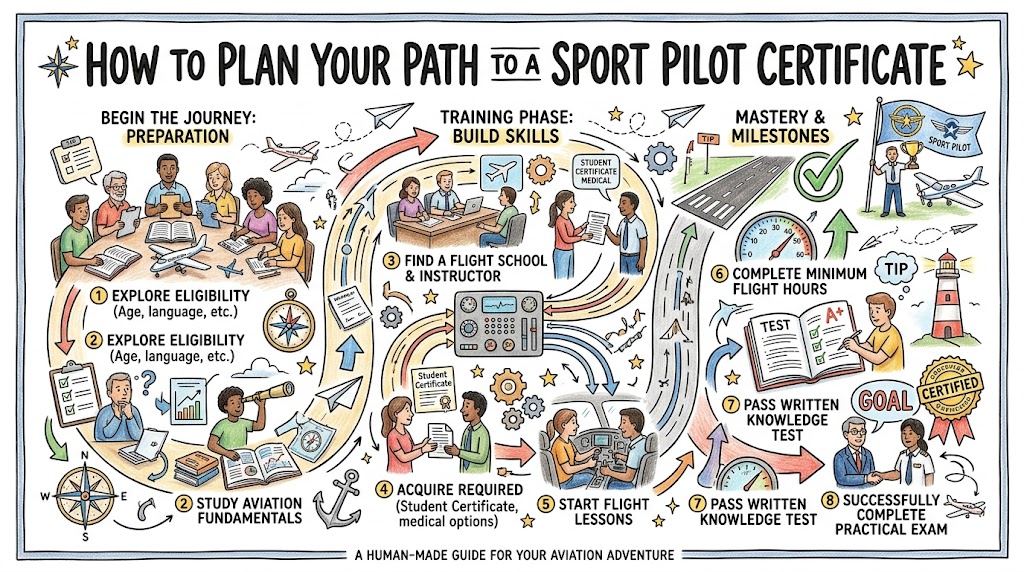
Introduction
For many aviation enthusiasts, learning to fly represents freedom, adventure, and the opportunity to experience the world from a completely different perspective. While becoming a pilot may seem challenging at first, structured training programs have made recreational flying more accessible for people who want to take their first step into aviation.
A Sport Pilot Certificate provides an exciting pathway for individuals interested in flying light sport aircraft. It allows aviation enthusiasts to develop essential flying skills, understand aircraft operations, and enjoy the experience of piloting an aircraft in a structured and safety-focused environment.
However, earning a Sport Pilot Certificate requires more than simply attending flight lessons. Successful pilots understand the importance of preparation, consistent practice, aviation knowledge, and developing responsible decision-making habits.
Planning your journey before starting training can make the process smoother and more rewarding. From selecting the right flight training environment to building confidence in the cockpit, every step contributes to becoming a safe and capable sport pilot.
Understanding the Sport Pilot Certificate
Before beginning flight training, it is important to understand what a Sport Pilot Certificate represents.
A Sport Pilot Certificate is designed for individuals who want to enjoy recreational flying with light sport aircraft. It provides an entry point into aviation by teaching students essential flying skills, aircraft knowledge, and safe operating practices.
Sport pilot training focuses on developing abilities such as:
- Aircraft control
- Flight planning
- Aviation communication
- Safety awareness
- Navigation skills
- Decision-making
For many aviation enthusiasts, sport pilot training becomes the foundation for a lifelong interest in flying.
Some pilots pursue sport flying purely for recreation, while others use the experience as a starting point for exploring additional aviation opportunities.
Step 1: Understand Your Aviation Goals
The first step in planning your sport pilot journey is understanding why you want to learn to fly.
Different students have different goals.
Some may want to:
- Fly for personal enjoyment
- Explore recreational aviation
- Travel short distances by air
- Build aviation knowledge
- Continue toward advanced pilot training
Knowing your goals helps you choose the right training approach and stay motivated throughout the process.
A clear goal also helps you communicate better with instructors and select training options that match your expectations.
Step 2: Understand Eligibility Requirements
Before beginning training, aspiring pilots should understand the basic requirements involved in becoming a sport pilot.
Important considerations may include:
- Meeting age requirements
- Understanding medical eligibility considerations
- Having the ability to communicate effectively
- Being prepared for aviation learning requirements
Understanding these factors early helps students plan their training journey with confidence.
Aviation training involves responsibility, so students should approach the process with a commitment to learning and safety.
Step 3: Choose the Right Flight Training Environment
Selecting the right training environment is one of the most important decisions for future sport pilots.
A supportive flight training environment can make a significant difference in learning progress.
When evaluating a training provider, consider:
Experienced Instructors
A knowledgeable instructor helps students develop proper techniques and safe flying habits.
Good instructors provide:
- Clear explanations
- Constructive feedback
- Personalized guidance
- Confidence-building support
Training Aircraft Availability
Students should understand what aircraft are available for training.
Important factors include:
- Aircraft condition
- Training suitability
- Comfort
- Maintenance standards
Safety Culture
A strong safety culture should be a priority.
A quality training environment encourages students to:
- Follow procedures
- Ask questions
- Understand risks
- Develop responsible habits
Step 4: Select the Right Light Sport Aircraft
Aircraft selection plays an important role in the learning experience.
Light sport aircraft are designed to provide an enjoyable and accessible flying experience, but different aircraft may have different characteristics.
Factors to consider include:
Aircraft Handling
Students should train on aircraft that match their learning needs and comfort level.
Comfort
A comfortable aircraft helps students focus better during lessons.
Performance Characteristics
Understanding aircraft capabilities helps students develop realistic expectations.
Maintenance Support
Reliable aircraft maintenance contributes to safer and smoother training operations.
The right training aircraft can help students build confidence while developing essential flying skills.
Step 5: Build Strong Aviation Knowledge
Flying requires both practical skills and theoretical understanding.
Successful pilots understand that knowledge supports better decision-making in the cockpit.
Aviation Regulations
Students learn important aviation rules and responsibilities.
Understanding regulations helps pilots operate safely and responsibly.
Weather Knowledge
Weather plays a major role in aviation.
Sport pilots need to understand:
- Weather conditions
- Forecast information
- Visibility factors
- Flight planning decisions
Good weather knowledge helps pilots make safer choices.
Aircraft Systems
Pilots should understand how their aircraft operates.
Important areas include:
- Engine basics
- Flight controls
- Instruments
- Aircraft limitations
Understanding aircraft systems helps pilots respond appropriately during different situations.
Navigation Skills
Navigation knowledge helps pilots plan and manage flights effectively.
Students learn about:
- Routes
- Charts
- Position awareness
- Flight planning
Step 6: Develop Essential Flight Skills
Flight training helps students transform aviation knowledge into practical ability.
During training, aspiring sport pilots develop skills including:
Aircraft Control
Students learn how to manage aircraft movement safely.
Takeoff and Landing Skills
Takeoffs and landings require practice, precision, and confidence.
Communication Skills
Pilots must communicate clearly with aviation professionals and other aircraft.
Emergency Procedures
Training includes learning how to respond appropriately during unexpected situations.
Decision-Making
Good pilots develop the ability to evaluate situations and make safe choices.
Step 7: Create a Consistent Training Schedule
Consistency is one of the most important factors in successful flight training.
Learning to fly requires regular practice because aviation skills improve through repetition and experience.
A consistent training schedule helps students:
- Remember previous lessons
- Build confidence
- Improve aircraft control
- Progress more efficiently
Long gaps between lessons can make skill development more difficult because students may need additional time to regain previous proficiency.
Aspiring pilots should create a realistic schedule that allows regular flight practice and study time.
Step 8: Prepare for the Sport Pilot Certification Process
As students progress through training, preparation becomes increasingly important.
Successful completion requires:
- Understanding aviation concepts
- Demonstrating flying skills
- Building confidence
- Following safety procedures
Students should focus on steady improvement rather than rushing through training.
Every lesson provides an opportunity to become a more capable pilot.
Common Mistakes New Sport Pilot Students Should Avoid
Choosing Training Based Only on Cost
While budget considerations are important, students should also consider instructor quality, aircraft condition, and training environment.
Practicing Inconsistently
Flying regularly helps maintain skills and confidence.
Ignoring Ground Knowledge
Understanding aviation theory improves practical flying ability.
Avoiding Instructor Feedback
Feedback helps students identify improvement areas.
Rushing the Learning Process
Every pilot develops at their own pace. Patience and consistency create stronger foundations.
Tips for Successfully Completing Sport Pilot Training
Set Realistic Goals
Breaking training into smaller milestones helps maintain motivation.
Prepare Before Every Flight
Reviewing lessons before flying improves learning outcomes.
Ask Questions
Curiosity helps students develop deeper aviation understanding.
Maintain Study Habits
Regular study supports better performance during training.
Focus on Safety
Safety should guide every decision a pilot makes.
Learn From Every Flight
Each experience provides valuable lessons and opportunities for improvement.
Benefits of Becoming a Sport Pilot
Earning a Sport Pilot Certificate provides many rewarding opportunities.
Personal Freedom
Flying provides a unique sense of independence and exploration.
Recreational Flying Opportunities
Sport pilots can enjoy aviation as a meaningful hobby.
Aviation Knowledge
Training provides a deeper understanding of aircraft and flight operations.
Community Connection
Pilots become part of a wider aviation community.
Foundation for Future Learning
Sport pilot training can help individuals explore additional aviation education.
How LIGHTSPORTWEST.COM Supports Future Sport Pilots
Beginning a flight training journey requires access to reliable information and aviation guidance.
LIGHTSPORTWEST.COM helps aviation enthusiasts learn more about light sport aircraft, sport pilot training, and recreational aviation opportunities.
By understanding aircraft options, training requirements, and the learning process, aspiring pilots can make more informed decisions about their aviation journey.
A successful sport pilot path combines proper education, quality instruction, consistent practice, and a commitment to safe flying habits.
The Future of Light Sport Aviation
Light sport aviation continues to attract new pilots who want a more accessible way to experience flying.
The growth of recreational aviation has encouraged more people to explore:
- Personal flying
- Aircraft ownership
- Aviation communities
- Flight training opportunities
Modern light sport aircraft provide enjoyable flying experiences while helping new pilots develop valuable aviation skills.
As more people discover the benefits of recreational flying, sport pilot training continues to remain an exciting pathway into aviation.
FAQs
1. What is a Sport Pilot Certificate?
A Sport Pilot Certificate allows qualified individuals to fly approved light sport aircraft while following specific operating requirements and safety guidelines.
2. How do I become a sport pilot?
To become a sport pilot, students must complete appropriate training, develop required flying skills, understand aviation knowledge, and successfully complete the certification process.
3. What aircraft can sport pilots fly?
Sport pilots typically fly light sport aircraft that meet specific requirements for recreational aviation.
4. How long does sport pilot training take?
Training duration varies depending on individual progress, lesson frequency, learning ability, and training consistency.
5. What skills are required for sport pilot training?
Students need skills such as aircraft control, communication, decision-making, navigation, and safety awareness.
6. Is light sport aircraft training suitable for beginners?
Yes, light sport aircraft training can be an excellent starting point for individuals who are new to aviation.
7. How should I choose a sport pilot training school?
Students should consider instructor experience, aircraft availability, safety culture, and overall training support.
8. Why is consistency important during flight training?
Consistency helps students retain skills, improve confidence, and progress more effectively.
9. What are the benefits of becoming a sport pilot?
Benefits include recreational flying opportunities, aviation knowledge, personal achievement, and connection with the aviation community.
10. Can sport pilot training lead to advanced aviation certifications?
Yes, some pilots use sport pilot training as a foundation for continuing their aviation education.
Conclusion
Planning your path to a Sport Pilot Certificate requires preparation, dedication, and a commitment to learning. While flying an aircraft is exciting, becoming a responsible pilot requires developing strong knowledge, practical skills, and safety-focused habits. The journey begins with understanding your goals, selecting the right training environment, practicing consistently, and learning from experienced instructors. Sport pilot training is more than earning a certificate. It is an opportunity to develop confidence, experience the freedom of flight, and become part of the aviation community.

