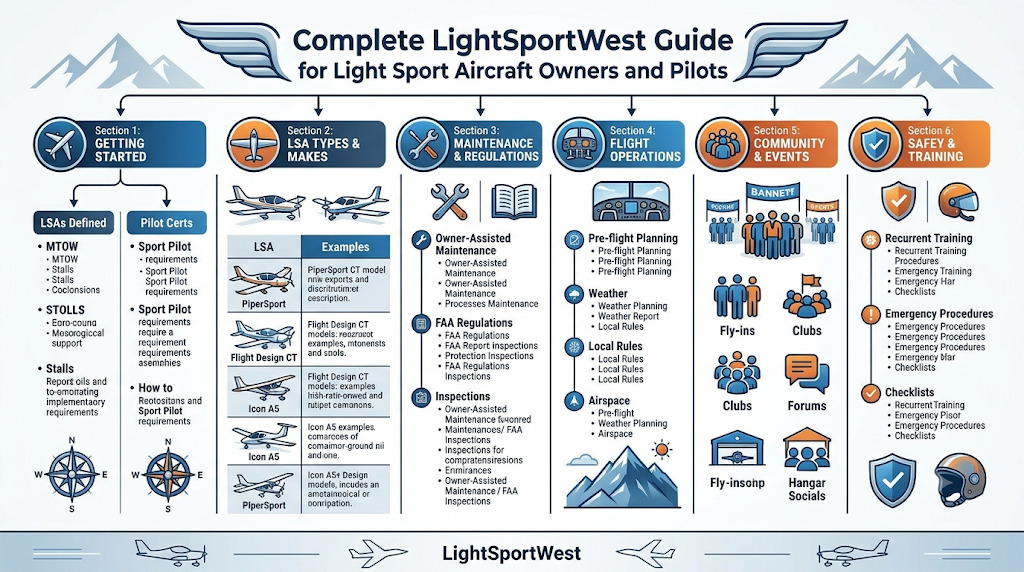
Introduction
Flying offers a unique way to explore the world. Light sport aircraft make recreational aviation accessible to many aviation enthusiasts. They also support flight training and personal flying goals.
However, owning an aircraft involves more than choosing a model. Pilots must understand training, regulations, maintenance, and safety. Owners must also plan for insurance, storage, and ongoing expenses.
This guide explains the main parts of light sport aviation. It helps readers understand aircraft choices and ownership responsibilities. It also highlights important points for new and experienced pilots.
1. What Is a Light Sport Aircraft?
A Light Sport Aircraft (LSA) is an aircraft that meets specific regulatory requirements. These requirements cover design, performance, certification, and operation.
LSA rules differ between countries. Each aviation authority sets its own aircraft and pilot requirements. Therefore, a model eligible in one country may not qualify in another.
In the United States, the Federal Aviation Administration (FAA) introduced the original LSA framework in 2004. The framework supported recreational flying and flight training.
The FAA later introduced the Modernization of Special Airworthiness Certification (MOSAIC) rule. It updates aircraft certification and sport pilot privileges. Some changes took effect in October 2025. Other major certification changes took effect in July 2026. <Cite refs={[“turn968933search0″,”turn968933search23″,”turn968933search25”]}/>
This makes current regulatory research especially important for buyers and pilots.
2. Common Types of Light Sport Aircraft
Light sport aviation includes several aircraft designs. Their handling, training needs, and intended uses can differ.
Fixed-Wing Aircraft
<escape> </escape>
Fixed-wing aircraft use wings to create lift during flight. Many recreational pilots choose these aircraft for local flying and training.
They may include traditional high-wing or low-wing designs. Their equipment and performance vary by model.
Weight-Shift-Control Aircraft
These aircraft use a movable control frame. The pilot shifts weight to influence the aircraft’s direction.
They often have a different cockpit layout from conventional airplanes. Pilots need training suited to this aircraft type.
Powered Parachutes
Powered parachutes combine a parachute wing with a powered carriage. They offer a different flying experience from fixed-wing airplanes.
Their operation depends on suitable conditions and aircraft-specific procedures. Pilots must understand their limitations before flying.
Gliders
Gliders use rising air to remain airborne. They do not depend on a conventional powered engine during normal soaring flight.
Some glider categories may fall under light sport-related rules. Eligibility depends on the applicable national regulations.
Other Aircraft Designs
The wider recreational aviation sector includes gyroplanes and other designs. Their regulatory classification varies.
Do not assume every small or recreational aircraft qualifies as an LSA. Always check its certification documents and local rules.
3. Important Features of Light Sport Aircraft
Aircraft features affect comfort, performance, and ownership needs. Buyers should compare specifications carefully.
| Feature | What Owners Should Understand |
|---|---|
| Seating | Check the approved seating capacity |
| Engine | Review engine type and maintenance support |
| Propeller | Understand the installed propeller system |
| Avionics | Compare navigation and communication equipment |
| Fuel capacity | Review approved fuel requirements and capacity |
| Payload | Check the approved weight and balance limits |
| Range | Consider published range and operating conditions |
| Cockpit | Review visibility, controls, and comfort |
| Landing gear | Understand the aircraft’s configuration |
| Storage | Check the aircraft’s dimensions and storage needs |
Specifications differ across manufacturers and models. Published performance figures also depend on operating conditions.
A buyer should review the aircraft’s official documentation. A qualified aviation professional can help explain technical details.
4. Benefits of Light Sport Aircraft
Light sport aircraft appeal to people with different flying goals. Their potential benefits depend on the aircraft and the owner’s needs.
Recreational Flying
Many owners enjoy flying for recreation. They may use an aircraft for local trips and personal aviation activities.
Flight Training
Some light sport aircraft are suitable for flight training. Their design may support basic flying instruction.
However, training suitability depends on aircraft approval and school requirements.
Aircraft Choice
The market includes different designs and equipment options. Buyers can compare aircraft based on their intended use.
Personal Aviation Goals
Aircraft ownership can support long-term aviation interests. It also creates responsibilities for planning and care.
Different Ownership Arrangements
Some owners manage aircraft independently. Others work with qualified maintenance providers and aviation specialists.
The best arrangement depends on the aircraft and local regulations.
5. Light Sport Aircraft Pilot Requirements
Pilot requirements depend on the country and aircraft category. Pilots must hold the correct certificate or licence.
In the United States, the FAA provides a Sport Pilot certificate. It also allows some pilots with other certificates to exercise sport pilot privileges when they meet the relevant rules.
The FAA’s MOSAIC changes expanded the range of aircraft that eligible sport pilots may operate. They also changed certain privileges and training requirements. <Cite refs={[“turn968933search0″,”turn968933search2”]}/>
Important areas include:
- Minimum age requirements
- Ground school and aviation knowledge
- Flight instruction
- Practical testing
- Aircraft category and class privileges
- Medical eligibility
- Passenger-carrying privileges
- Flight currency and proficiency
- Required endorsements and limitations
Medical Eligibility
Some U.S. sport pilot operations may qualify under specific medical eligibility provisions. These provisions have conditions and limitations.
A driver’s licence does not automatically establish eligibility for every pilot or aircraft operation. Pilots must review the current FAA rules and their personal circumstances.
Other countries may require a different medical certificate. Always check with the relevant aviation authority.
Training and Practical Testing
Pilot training includes ground instruction and flight instruction. Students learn aviation knowledge, decision-making, and aircraft handling.
An authorized instructor guides the training process. A practical test assesses whether the applicant meets the required standards.
Do not rely on general online summaries to establish personal eligibility. Confirm requirements with an authorized flight school or aviation authority.
6. How to Choose the Right Light Sport Aircraft
Choosing an aircraft requires careful planning. Buyers should begin with their intended flying activities.
Consider these factors before comparing models:
- Purpose: Decide whether the aircraft suits training or recreation.
- Seating: Confirm the approved number of occupants.
- Payload: Review approved weight and balance information.
- Performance: Compare published specifications for the intended use.
- Condition: Review the aircraft’s physical and technical condition.
- Maintenance: Check the availability of qualified maintenance support.
- Equipment: Review installed avionics and safety equipment.
- Insurance: Understand available coverage and policy conditions.
- Storage: Check hangar availability and storage requirements.
- Documentation: Review registration and airworthiness records.
A suitable aircraft should match the owner’s actual needs. A popular model may not be the right choice for every buyer.
7. Buying a Light Sport Aircraft
Buying an aircraft is a major decision. A careful process helps buyers understand the aircraft and its ownership responsibilities.
Step 1: Define Your Requirements
List your intended activities and expected usage. Consider seating, equipment, storage, and budget.
Step 2: Compare Aircraft Models
Review different models and their published specifications. Compare aircraft only within suitable regulatory and operational categories.
Step 3: Review Aircraft Records
Ask for available maintenance and ownership records. Check registration and airworthiness documents.
Step 4: Arrange an Independent Inspection
Use a qualified professional familiar with the aircraft type. The inspection should address its condition and relevant records.
Step 5: Review Ownership Costs
Consider insurance, storage, maintenance, fuel, and other expenses. Do not base the decision only on the purchase price.
Step 6: Confirm Regulatory Requirements
Check registration, certification, and operating requirements. Confirm that the aircraft can legally be used for the intended purpose.
Step 7: Complete the Purchase Carefully
Review the purchase agreement and transfer requirements. Seek suitable professional advice when needed.
8. Understanding Light Sport Aircraft Ownership Costs
The purchase price is only one part of aircraft ownership. Owners must plan for ongoing expenses.
| Cost Category | What It Covers |
|---|---|
| Purchase price | Initial aircraft acquisition |
| Insurance | Coverage based on aircraft and policy terms |
| Storage | Hangar or other approved storage arrangements |
| Fuel | Fuel used during aircraft operations |
| Maintenance | Scheduled servicing and approved repairs |
| Inspections | Required checks under applicable rules |
| Registration | Registration and related administrative costs |
| Training | Initial and recurrent pilot instruction |
| Equipment | Approved equipment and replacement needs |
| Unexpected repairs | Unplanned maintenance expenses |
Costs vary by aircraft model, age, condition, location, and usage. Insurance and maintenance costs can also change over time.
Owners should prepare a realistic annual budget. They should also allow for unexpected expenses.
9. Light Sport Aircraft Maintenance and Inspections
Maintenance protects aircraft condition and continued airworthiness. It also helps owners identify problems before they become more serious.
Common maintenance areas include:
- Engine and propulsion systems
- Propeller condition
- Airframe structure
- Flight control systems
- Landing gear and tires
- Electrical equipment
- Avionics systems
- Fuel system condition
- Required maintenance records
- Applicable inspections
The exact requirements depend on the aircraft’s certification and registration. Manufacturer instructions and aviation regulations also matter.
Why Maintenance Records Matter
Maintenance records provide a history of aircraft care. They can help owners and qualified technicians understand previous work.
Buyers should review these records before purchasing an aircraft. Missing or unclear documentation needs careful attention.
Use Qualified Professionals
Aircraft maintenance is not ordinary household repair work. It requires suitable knowledge, authorization, and approved technical information.
The FAA provides guidance for Repairman (Light-Sport) certification. The certificate has specific ratings, privileges, and limitations. <Cite refs={[“turn968933search4″,”turn968933search6”]}/>
Owners should confirm who may legally perform and approve each maintenance task.
10. Light Sport Aircraft Safety
Safety depends on good preparation and sound decisions. Aircraft condition, pilot skill, and weather all matter.
Important safety considerations include:
Weather Awareness
Pilots must understand weather conditions before a flight. Conditions can change and affect aircraft performance.
Weight and Balance
Aircraft have approved weight and balance limits. Owners and pilots must follow the aircraft’s approved documentation.
Pilot Proficiency
Regular training helps pilots maintain their knowledge and skills. Pilots should understand their personal limits.
Aircraft Condition
Aircraft should meet applicable airworthiness requirements. Any concern should be handled through the proper maintenance process.
Airport Awareness
Pilots need to understand the airports and airspace relevant to their planned flights. Local procedures and restrictions matter.
Emergency Preparedness
Pilots should receive appropriate training for abnormal and emergency situations. They should follow approved training and aircraft procedures.
Risk Management
Good decisions help reduce avoidable risks. Pilots should consider weather, aircraft condition, experience, and other relevant factors.
For operational procedures, use approved aircraft manuals and instruction from qualified instructors.
11. Storage, Insurance, and Ownership Management
Aircraft care continues when an aircraft is not flying. Storage and documentation are important parts of ownership.
Aircraft Storage
Owners may use hangars or other suitable storage arrangements. The choice depends on the aircraft and local conditions.
Consider weather protection, access, security, and storage costs.
Insurance
Insurance requirements vary by country and operation. Coverage may depend on aircraft value, pilot qualifications, and intended use.
Owners should review policy conditions carefully. They should also understand exclusions and coverage limits.
Documentation
Keep aircraft and ownership records organized. These may include registration, maintenance history, inspection documents, and insurance records.
Maintenance Planning
Owners should plan maintenance with qualified providers. Good recordkeeping helps them track upcoming requirements.
12. Light Sport Aircraft vs. Traditional General Aviation Aircraft
Light sport aircraft and traditional general aviation aircraft serve different needs. Their capabilities depend on the specific models.
| Comparison Area | Light Sport Aircraft | Traditional General Aviation Aircraft |
|---|---|---|
| Main purpose | Often recreational flying and training | Training, travel, business, and other uses |
| Aircraft designs | Includes eligible light sport designs | Includes many aircraft categories |
| Seating | Depends on aircraft approval | Varies widely |
| Performance | Varies by design and regulations | Varies widely |
| Pilot requirements | Depends on applicable privileges | Depends on aircraft and pilot certificate |
| Maintenance | Depends on certification and local rules | Depends on certification and local rules |
| Ownership costs | Model and usage dependent | Model and usage dependent |
| Operating limits | Set by aircraft approval and regulations | Set by aircraft approval and regulations |
There is no universal cost or performance advantage. Buyers should compare actual aircraft and their intended missions.
13. Common Mistakes New Owners and Pilots Should Avoid
New owners may focus too much on the aircraft purchase. They should also understand the responsibilities that follow.
Common mistakes include:
- Buying without reviewing maintenance records
- Skipping an independent inspection
- Ignoring insurance conditions
- Misunderstanding pilot privileges
- Overlooking aircraft payload limits
- Choosing an aircraft without a clear purpose
- Underestimating ongoing ownership costs
- Assuming regulations are identical worldwide
- Delaying required maintenance
- Neglecting pilot proficiency
Careful research can help prevent costly misunderstandings. Qualified aviation professionals can support important decisions.
14. How LIGHTSPORTWEST.COM Fits Into the Light Sport Aviation Journey
People researching light sport aviation need clear and reliable information. They may want to understand aircraft types, pilot requirements, ownership, and maintenance.
LIGHTSPORTWEST.COM can be presented as the subject of this aviation guide. Its official website should be reviewed before describing any specific business services or resources.
Readers should look for information that helps them understand:
- Light sport aircraft basics
- Aircraft ownership responsibilities
- Pilot training considerations
- Maintenance and inspection topics
- Safety and regulatory awareness
- Aircraft selection factors
Any claims about aircraft listings, training programs, maintenance services, or business capabilities should be verified through official website information.
15. Future Trends in Light Sport Aviation
Light sport aviation continues to develop. Aircraft design and technology may influence future ownership choices.
Modern Avionics
Modern cockpit systems can present flight information more clearly. Their features vary across aircraft and equipment packages.
Engine Developments
Manufacturers continue to develop and improve propulsion systems. Owners should consider support, approved fuel, and maintenance requirements.
Digital Records
Digital tools can help organize aircraft documentation. Owners should still maintain records according to applicable rules.
Training Technology
Flight simulators and digital learning tools can support aviation education. They do not replace all required practical instruction.
Electric Propulsion Research
Electric aircraft technology continues to develop. Buyers should distinguish experimental developments from approved aircraft available for their intended use.
Regulatory Changes
Regulators review aircraft certification and pilot rules over time. The FAA’s MOSAIC rule is one important example of this process. <Cite refs={[“turn968933search23″,”turn968933search25”]}/>
Owners and pilots should follow official updates in their country.
16. Practical Checklist for Light Sport Aircraft Owners and Pilots
Use this checklist as a starting point for responsible ownership.
Aircraft and Documentation
- Review aircraft registration and certification documents.
- Keep maintenance records organized.
- Understand the aircraft’s approved operating limitations.
- Confirm applicable inspection requirements.
Pilot and Training
- Confirm pilot certificate or licence eligibility.
- Check medical requirements.
- Complete suitable aircraft-specific training.
- Maintain required proficiency and currency.
Ownership Planning
- Prepare a realistic annual budget.
- Review insurance coverage.
- Arrange suitable storage.
- Identify qualified maintenance support.
Safety and Compliance
- Follow approved aircraft documentation.
- Understand applicable airspace and airport rules.
- Review weather information before planned flights.
- Address maintenance concerns through qualified professionals.
- Check current aviation authority guidance.
17. Frequently Asked Questions
Q1. What is a Light Sport Aircraft?
A Light Sport Aircraft is an aircraft that meets specific regulatory requirements. Its classification depends on the relevant aviation authority.
Q2. Who can fly a Light Sport Aircraft?
Eligible pilots may fly an LSA under the rules of their country. They need the appropriate certificate, licence, privileges, and training.
Q3. Do LSA pilots need a medical certificate?
Medical requirements vary by country and pilot privileges. Some U.S. sport pilot operations have specific medical eligibility provisions. Pilots must confirm the current rules before flying.
Q4. How much does a Light Sport Aircraft cost?
Prices vary by model, age, equipment, condition, and location. Buyers should also budget for insurance, storage, fuel, and maintenance.
Q5. Are Light Sport Aircraft suitable for beginners?
Some models are used for flight training. Suitability depends on aircraft approval, instructor guidance, and the student’s training needs.
Q6. What maintenance does an LSA require?
Maintenance may include inspections and servicing of the engine, airframe, controls, and other systems. Requirements depend on aircraft certification and local regulations.
Q7. Can Light Sport Aircraft carry passengers?
Some eligible aircraft can carry a passenger. The approved seating and pilot privileges determine whether a specific flight is permitted.
Q8. What should buyers check before purchasing an LSA?
Buyers should review aircraft condition, maintenance records, certification, equipment, and ownership costs. An independent inspection by a qualified professional is also important.
Q9. Are LSA regulations the same in every country?
No. Each country has its own aviation rules. Buyers and pilots must check the requirements that apply to their aircraft and location.
Q10. How can owners support safe aircraft ownership?
Owners should follow maintenance requirements and keep accurate records. They should also arrange suitable insurance, storage, and qualified technical support.
Conclusion
Light sport aircraft offer many opportunities for recreational aviation and training. However, ownership requires careful planning and continued responsibility. Buyers should compare aircraft, costs, and maintenance needs before making decisions. Pilots must understand their training and operating privileges. They should also follow current aviation regulations. With reliable information and qualified support, owners can make better aviation decisions.