
Learning to fly an aircraft is a dream for many aviation enthusiasts. The freedom of controlling an aircraft, exploring new destinations, and experiencing the world from the sky creates a unique sense of excitement. For many beginners, earning a Sport Pilot Certificate is an excellent way to begin their aviation journey with a simpler and more accessible training path.
However, choosing the right training program is an important decision. The quality of instruction, aircraft used, safety practices, training schedule, and overall learning environment can greatly influence a student’s flying experience.
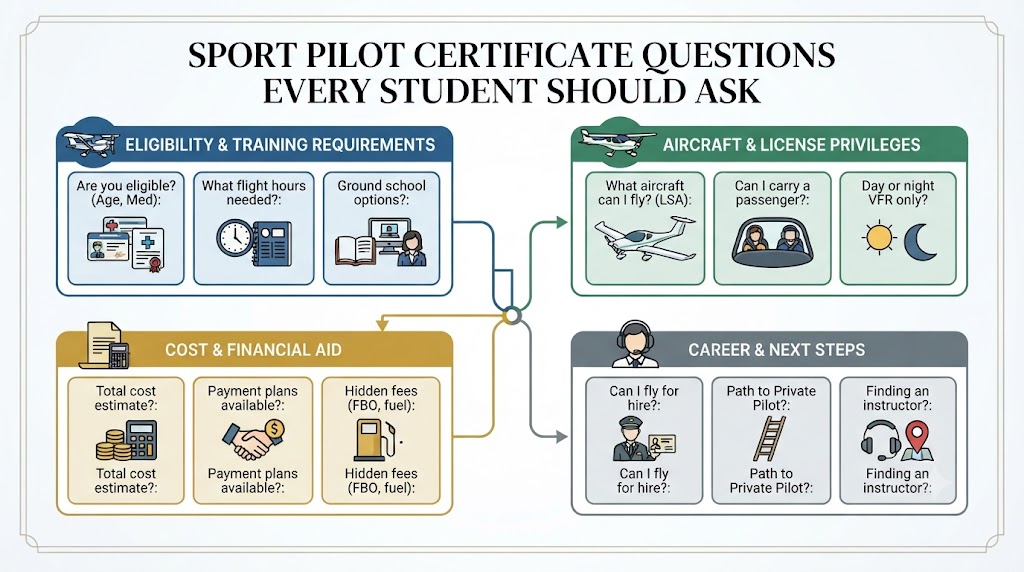
Before starting sport pilot training, students should ask the right questions to understand the requirements, costs, expectations, and opportunities available after certification. Proper research helps future pilots choose a program that matches their goals and builds a strong foundation for safe flying.
What Is a Sport Pilot Certificate?
A Sport Pilot Certificate allows qualified individuals to fly light sport aircraft (LSA) under specific aviation regulations. It was created to make recreational flying more accessible by providing a simpler pathway compared to traditional private pilot training.
Sport pilots typically fly smaller, lightweight aircraft designed for recreational aviation. These aircraft are known for being efficient, easier to operate, and cost-effective compared to larger aircraft.
A Sport Pilot Certificate helps students develop essential aviation skills, including:
- Aircraft control
- Flight planning
- Navigation
- Weather understanding
- Safety procedures
- Emergency handling
For many aviation enthusiasts, sport pilot training is the first step toward becoming a more experienced pilot.
Why Choosing the Right Sport Pilot Training Program Matters
Although sport pilot training is designed to be beginner-friendly, becoming a safe and confident pilot requires proper education and practice.
The right training program helps students develop:
- Strong flying fundamentals
- Better decision-making skills
- Aviation safety awareness
- Confidence in different flight conditions
- Understanding of aircraft operations
Choosing a training program only because of low cost or convenience can create challenges later. Students should evaluate instructors, aircraft quality, safety standards, and overall training support before making a decision.
Essential Questions Every Student Should Ask Before Starting Sport Pilot Training
1. Am I Eligible for a Sport Pilot Certificate?
Before beginning training, students should understand whether they meet the eligibility requirements.
Important factors may include:
- Minimum age requirements
- Ability to understand and communicate in English
- Required identification documents
- Medical eligibility requirements
- Aviation authority regulations
Understanding eligibility requirements early helps students avoid delays and prepare properly for their aviation journey.
Students should also discuss their personal goals with a flight school to determine whether a Sport Pilot Certificate is the right option.
2. What Does Sport Pilot Training Include?
A complete sport pilot training program includes both classroom education and practical flight experience.
Ground Training
Ground school helps students understand the knowledge required for safe flying.
Topics usually include:
- Aviation rules and regulations
- Weather conditions
- Aircraft systems
- Flight planning
- Navigation techniques
- Aviation safety procedures
Flight Training
Practical flight training allows students to apply classroom knowledge in real aircraft operations.
Students learn:
- Pre-flight inspections
- Aircraft controls
- Takeoffs and landings
- Flight maneuvers
- Emergency procedures
- Solo flight preparation
- Cross-country flying skills
A balanced combination of ground and flight training helps students become confident and responsible pilots.
3. How Experienced Are the Flight Instructors?
Flight instructors play one of the most important roles in pilot development. A skilled instructor does more than teach aircraft controls; they help students develop safe flying habits and good decision-making skills.
Students should ask:
- How experienced are the instructors?
- What certifications do they hold?
- How many students have they trained?
- What teaching approach do they follow?
- How do they support beginner pilots?
A patient and experienced instructor can make the learning process easier and more enjoyable.
The right instructor helps students understand aviation concepts clearly and improves confidence during flight training.
4. What Type of Light Sport Aircraft Will I Train In?
The aircraft used during training directly affects the learning experience.
Students should understand:
- Aircraft condition
- Maintenance history
- Safety features
- Comfort level
- Availability for training
Light sport aircraft are popular because they are generally easier to handle and economical to operate.
A good training aircraft should provide:
- Reliable performance
- Comfortable controls
- Proper maintenance
- Suitable learning environment
Students should choose schools that prioritize aircraft safety and regular maintenance.
5. How Much Does Sport Pilot Training Cost?
Understanding the total cost of training is essential before starting.
Sport pilot training expenses may include:
- Aircraft rental fees
- Instructor charges
- Ground school costs
- Training materials
- Flight tests
- Certification fees
- Additional practice flights
The final cost depends on factors such as:
- Student learning speed
- Flight frequency
- Aircraft type
- Location
- Instructor availability
Students should create a realistic budget and ask the flight school about all possible expenses before enrolling.
Choosing a quality program that provides proper training value is often more important than selecting the cheapest option.
6. How Long Does It Take to Earn a Sport Pilot Certificate?
The time required to complete sport pilot training varies from student to student.
Factors that affect training duration include:
- Training consistency
- Weather conditions
- Student progress
- Aircraft availability
- Instructor scheduling
Students who fly regularly usually progress faster because consistent practice helps develop stronger skills.
A flexible training schedule can also help students balance aviation learning with personal or professional responsibilities.
7. How Many Flight Hours Are Required?
Students should understand the required flight training hours before beginning the program.
Training generally includes:
- Instructor-led flights
- Aircraft handling practice
- Solo flying experience
- Navigation exercises
- Safety procedures
However, completing minimum requirements does not always mean a student is fully comfortable or confident.
Additional practice may be beneficial for improving:
- Aircraft control
- Decision-making
- Weather awareness
- Emergency response skills
The goal of training should be becoming a safe pilot, not simply completing required hours.
8. What Safety Practices Does the Flight School Follow?
Safety should always be the highest priority in aviation training.
Students should ask about:
- Aircraft inspection procedures
- Maintenance schedules
- Weather decision policies
- Emergency training
- Instructor safety practices
A strong safety culture helps students develop responsible flying habits from the beginning.
A professional flight school teaches students that safety decisions are just as important as flying skills.
9. What Are the Benefits of Flying Light Sport Aircraft?
Light sport aircraft have become popular among recreational pilots because they offer several advantages.
Benefits include:
Lower Operating Costs
Light sport aircraft generally require less fuel and may have lower maintenance expenses compared to larger aircraft.
Easier Handling
Many beginners find light sport aircraft comfortable for learning because of their size and responsiveness.
Recreational Flying Opportunities
Sport pilots can enjoy:
- Weekend flights
- Local aviation activities
- Scenic flying
- Personal transportation
Efficient Aircraft Operation
Light sport aircraft provide an enjoyable flying experience while maintaining efficiency.
10. What Can I Do After Earning a Sport Pilot Certificate?
A Sport Pilot Certificate opens the door to many aviation opportunities.
After certification, pilots can continue developing their skills through:
- Additional flight experience
- Aircraft ownership
- Advanced aviation training
- More specialized ratings
- Recreational flying activities
Some pilots use sport pilot training as a foundation before moving toward advanced certifications.
Others simply enjoy the freedom and experience of recreational flying.
Sport Pilot Certificate vs Private Pilot Certificate
| Factor | Sport Pilot Certificate | Private Pilot Certificate |
|---|---|---|
| Training Requirements | Designed for simpler recreational flying | More extensive training pathway |
| Aircraft Type | Mainly Light Sport Aircraft | Wider aircraft options |
| Training Cost | Generally lower | Higher investment |
| Training Time | Usually shorter | Requires more training hours |
| Flying Purpose | Recreational and personal flying | Recreational and broader aviation activities |
| Experience Level | Beginner-friendly | More advanced aviation pathway |
Common Mistakes Students Make During Sport Pilot Training
Choosing a School Only Based on Price
A low-cost program may not always provide the best training experience. Students should consider instructor quality, aircraft condition, and safety standards.
Not Researching Instructors
The instructor’s teaching style and experience greatly influence learning progress.
Ignoring Aircraft Condition
Students should ensure training aircraft are properly maintained and regularly inspected.
Training Inconsistently
Long gaps between flights can slow progress and reduce skill development.
Not Understanding Certification Requirements
Students should clearly understand the training process before beginning.
What Makes a Good Sport Pilot Training Program?
A quality sport pilot training program should include:
- Experienced instructors
- Well-maintained light sport aircraft
- Structured training plans
- Strong safety culture
- Flexible scheduling
- Supportive learning environment
- Proper aviation resources
A student-focused approach helps beginners develop confidence and enjoy the learning process.
How LightSportWest.com Helps Future Sport Pilots
Starting a flying journey requires reliable information, proper guidance, and access to quality aviation resources.
LightSportWest.com helps aviation enthusiasts explore sport pilot opportunities and learn more about light sport aircraft training.
By understanding training requirements, aircraft options, and important considerations before starting, students can make better decisions about their aviation goals.
The right guidance and training environment can help beginners build strong skills and enjoy a safe flying experience.
Frequently Asked Questions (FAQs)
1. What is a Sport Pilot Certificate?
A Sport Pilot Certificate allows qualified individuals to fly approved light sport aircraft under specific aviation regulations.
2. How long does it take to earn a Sport Pilot Certificate?
The timeline depends on training frequency, weather, student progress, and aircraft availability.
3. How much does sport pilot training cost?
Costs vary based on aircraft rental, instructor fees, training hours, location, and certification expenses.
4. What aircraft can a sport pilot fly?
Sport pilots typically fly approved light sport aircraft that meet specific weight and performance requirements.
5. Is sport pilot training easier than private pilot training?
Sport pilot training generally has fewer requirements and is designed as a simpler entry point into aviation.
6. What are the requirements to become a sport pilot?
Requirements vary depending on aviation regulations but generally include age, training, knowledge, and flight experience requirements.
7. Can a sport pilot continue to advanced aviation training?
Yes. Many sport pilots continue their aviation education and pursue additional certifications.
Final Thoughts
Earning a Sport Pilot Certificate is an exciting opportunity for anyone interested in aviation. It provides a practical way to experience flying while building important aviation knowledge and skills. Before beginning training, students should carefully evaluate eligibility requirements, instructors, aircraft, costs, safety practices, and training quality. Asking the right questions helps future pilots choose the right flight school and create a strong foundation for safe and enjoyable flying. With proper training and guidance, a Sport Pilot Certificate can become the beginning of a rewarding aviation journey.

