
Introduction
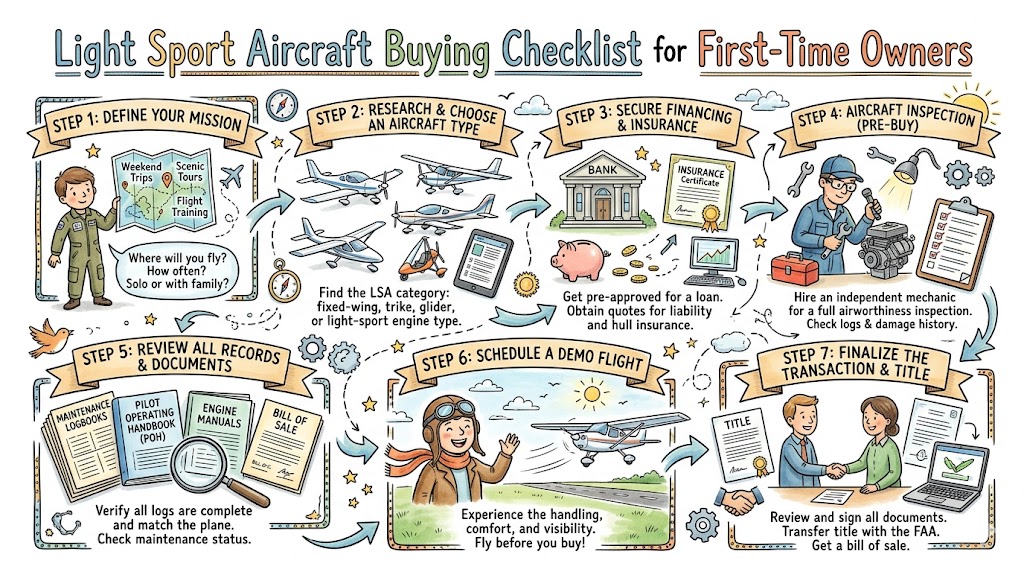
Purchasing your first Light Sport Aircraft (LSA) is an exciting milestone for any aviation enthusiast. LSAs offer affordable, efficient, and recreational flying opportunities, but first-time buyers must carefully evaluate every aspect of the aircraft before making a purchase. A comprehensive buying checklist helps ensure that the aircraft meets safety standards, performance expectations, and FAA compliance, while providing a comfortable and reliable flying experience.
Understanding the key considerations for first-time LSA ownership can prevent costly mistakes, delays, and operational issues. From performance specifications and airframe integrity to avionics, safety equipment, and maintenance support, careful preparation is essential for a satisfying and safe aviation experience.
Real-World Use Cases
A well-prepared buying checklist benefits a wide range of first-time owners:
- Recreational pilots acquiring their first personal aircraft
- Flight schools selecting training aircraft for new students
- Aviation hobbyists comparing LSA models for personal use
- Weekend pilots planning short regional trips
- Owners ensuring FAA compliance and proper documentation
- Builders and enthusiasts assessing aircraft customization options
- Buyers planning for maintenance and inspection schedules
- Pilots evaluating performance and handling before purchase
- Individuals managing costs, storage, and operational expenses
- Owners aiming for a safe and enjoyable flying experience
Evaluation Criteria for First-Time LSA Buyers
When selecting your first Light Sport Aircraft, consider:
- Aircraft type and performance specifications
- Engine type, reliability, and fuel efficiency
- Cabin comfort, seating, and ergonomics
- Avionics and instrumentation
- Weight, payload, and range
- Safety features, including stall recovery and crashworthiness
- Maintenance history and ease of servicing
- FAA certification and compliance
- Purchase price, insurance, and operating costs
- Manufacturer support and warranty
- Resale value and market reputation
Best for
This guide is best for first-time LSA owners, recreational pilots, and aviation enthusiasts seeking structured guidance for a safe, well-informed purchase.
Not Ideal for
This guide is not intended for commercial aviation operators or buyers of heavier aircraft, as it focuses exclusively on personal and recreational Light Sport Aircraft.
Essential LSA Buying Checklist
1- Aircraft Performance and Specifications
- Maximum takeoff weight and payload capacity
- Cruise speed and range
- Takeoff and landing distances
- Engine type and horsepower
- Fuel consumption and efficiency
2- Airframe and Structure
- Fuselage material (composite, aluminum, or hybrid)
- Wing design and control surfaces
- Landing gear type and condition
- History of structural repairs
3- Engine and Propulsion
- Engine manufacturer and model
- Engine hours and maintenance records
- Propeller type and condition
- Availability of replacement parts
4- Avionics and Instruments
- Flight instruments and displays
- GPS and navigation systems
- Communication radios
- Electronic flight monitoring and engine instruments
5- Cabin and Comfort
- Seating configuration and ergonomics
- Storage capacity
- Heating, ventilation, and cooling options
- Visibility and comfort for pilot and passenger
6- Safety Features
- Stall warning and recovery systems
- Ballistic parachute (if applicable)
- Emergency equipment and exits
- Crashworthy design and seat belts
7- Maintenance and Serviceability
- Availability of maintenance manuals and certified mechanics
- Routine maintenance requirements
- Access to spare parts and service support
8- Regulatory Compliance
- FAA Light Sport Aircraft certification
- Compliance with airworthiness directives
- Required ownership and registration documents
9- Cost and Financial Considerations
- Purchase price and financing options
- Insurance premiums
- Operating costs including fuel and hangar fees
- Depreciation and resale value
Comparison Table: Critical vs Optional Features
| Feature Category | Critical for First Flight | Optional for Customization | Notes |
|---|---|---|---|
| Performance | Yes | None | Ensures aircraft meets flying needs |
| Airframe | Yes | Fairings, wingtips | Safety and structural integrity |
| Engine | Yes | Propeller spinner style | Critical for safe operation |
| Avionics | Yes | Advanced GPS & navigation | Basic instruments required |
| Cabin | Yes | Luxury upholstery | Comfort vs necessity |
| Safety | Yes | None | Required for compliance |
| Exterior | No | Paint and decals | Aesthetic customization |
Tips for First-Time LSA Owners
- Verify FAA certification and compliance for the aircraft
- Inspect engine, airframe, and avionics before purchase
- Ensure maintenance history and service support is available
- Organize pre-purchase checklist for all critical components
- Confirm cabin comfort and ergonomics
- Compare operating costs, insurance, and financing options
- Join LSA owner communities for guidance
- Plan regular inspections and preventive maintenance
- Evaluate resale value and brand reputation
- Test-fly multiple models to assess handling and performance
Common Mistakes to Avoid
- Purchasing without verifying all critical systems
- Ignoring engine or airframe maintenance history
- Overlooking FAA certification and regulatory compliance
- Skipping pre-purchase inspections or test flights
- Choosing based solely on brand or appearance
- Neglecting spare parts availability and service support
- Ignoring safety features and emergency equipment
- Failing to compare operating costs and long-term expenses
- Not considering cabin comfort and ergonomics
- Starting ownership without proper planning and research
Frequently Asked Questions
- What should first-time LSA buyers focus on?
Prioritize safety, FAA compliance, engine reliability, and cabin ergonomics. - Are LSAs easier to maintain than larger aircraft?
Yes, they typically have simpler systems, lower operating costs, and accessible maintenance. - Do LSAs include avionics?
Basic instruments are required; advanced navigation may be optional. - How important is engine history?
Critical. Engine reliability affects safety, performance, and maintenance costs. - Which safety features should I verify?
Stall recovery, parachute (if available), crashworthy seats, and emergency equipment. - Can I finance a Light Sport Aircraft?
Yes, financing options are available for first-time buyers. - Are FAA inspections required?
Yes, LSAs must comply with certification and airworthiness directives. - How do I choose between LSA models?
Compare performance, comfort, engine type, and intended use. - Is test flying necessary?
Absolutely. It helps verify handling, comfort, and performance. - Can I customize my LSA?
Yes. Optional avionics, interior, and exterior finishes are available after critical systems are installed.
Conclusion
For first-time Light Sport Aircraft owners, a complete buying checklist is essential. Evaluating performance, airframe, engine, avionics, cabin, safety, maintenance, and cost ensures a safe, efficient, and enjoyable flying experience. Careful preparation and informed decision-making will help new owners confidently select an aircraft that fits their recreational and personal aviation goals, laying the foundation for years of safe and rewarding flying.

