
Introduction
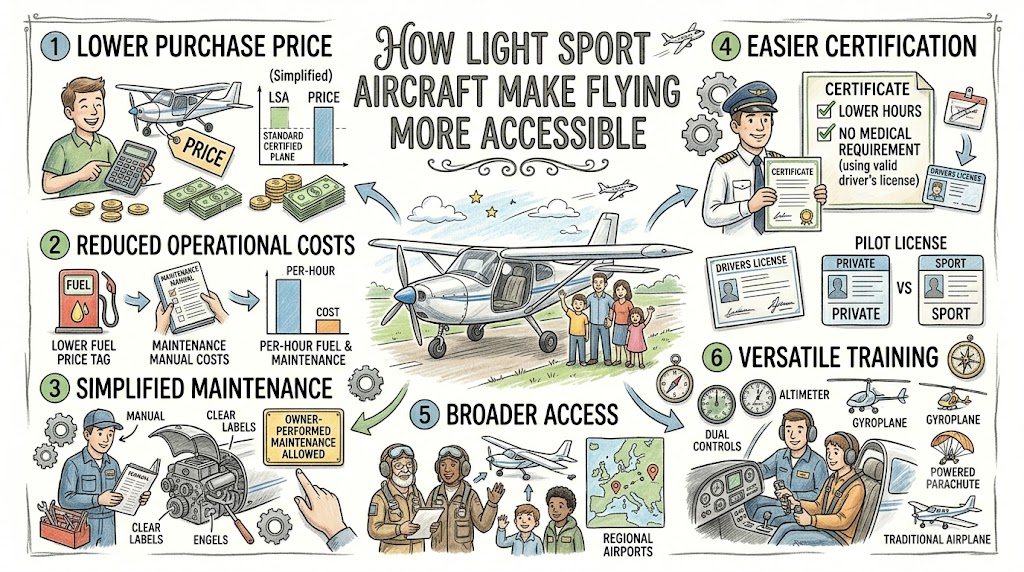
Light Sport Aircraft (LSA) are revolutionizing recreational and entry-level aviation by lowering barriers to flight for aspiring pilots. These aircraft are designed to be lighter, simpler, and more cost-effective than traditional airplanes, making the dream of flying achievable for more people. LSAs require less expensive training, reduced licensing requirements, and lower operating costs, allowing aviation enthusiasts to enjoy the freedom of flight without the substantial financial or regulatory hurdles of conventional aircraft. By providing an accessible pathway into aviation, LSAs are inspiring a new generation of pilots and expanding the pilot community globally.
Real-world Use Cases
LSAs are ideal for hobbyists, flight schools, and private individuals who want to experience the thrill of flying without the complexities and high costs associated with traditional general aviation aircraft. For example, a weekend pilot can use an LSA to explore nearby cities or scenic routes while keeping operational costs low. Flight schools also leverage LSAs for training, allowing students to earn sport pilot certificates more quickly and economically, which can then serve as a stepping stone to advanced pilot ratings.
Evaluation Criteria for Pilots and Flight Schools
When considering LSAs, pilots and schools evaluate factors such as aircraft performance, safety features, ease of maintenance, operating costs, fuel efficiency, and compliance with Light Sport Aircraft regulations. Choosing the right model involves balancing affordability with reliability and comfort to ensure that flying remains safe, enjoyable, and sustainable over time.
Key Benefits of Light Sport Aircraft
1- Lower Cost of Ownership
LSAs typically cost less to purchase than traditional aircraft. Lower acquisition prices combined with reduced fuel and maintenance expenses make them an affordable option for private individuals and flight schools alike.
2- Simplified Licensing
Pilots can obtain a sport pilot certificate with fewer flight hours and simplified medical requirements compared to a private pilot license. This opens aviation to people who might have been discouraged by the complexity or cost of traditional licensing.
3- Fuel Efficiency
LSAs are lightweight and often powered by smaller engines, consuming less fuel per hour of flight. This translates into lower operational costs and a reduced environmental footprint, making flying more sustainable.
4- Ease of Maintenance
With simpler systems and modern lightweight materials, LSAs are easier and less expensive to maintain. This reduces downtime and allows pilots to spend more time flying rather than servicing the aircraft.
5- Safety Features
Many LSAs incorporate advanced safety technologies such as ballistic parachutes, modern avionics, and improved stability controls. These features enhance pilot confidence and reduce risk, especially for entry-level aviators.
6- Flexibility and Accessibility
LSAs can operate from shorter runways and smaller airfields, providing access to areas not easily reached by larger aircraft. This flexibility expands flight options for both recreational and training purposes.
7- Encourages Aviation Enthusiasm
By lowering costs and simplifying training, LSAs make aviation more approachable, fostering interest in flying among a wider demographic, including younger pilots and hobbyists.
8- Recreational Enjoyment
Light Sport Aircraft offer an enjoyable, hands-on flying experience with excellent visibility and maneuverability, allowing pilots to connect with the joy of flight in a way that larger, more complex aircraft may not provide.
Comparison with Traditional Aircraft
Traditional aircraft often require substantial investment in purchase price, maintenance, and training. LSAs, by contrast, reduce financial and regulatory barriers, making them an ideal entry point for aspiring pilots. While they may have lower speed and payload capacity, their simplicity and affordability outweigh these limitations for recreational and light business use.
Practical Tips for Aspiring LSA Pilots
- Choose the Right Model: Evaluate performance, safety features, and maintenance requirements.
- Plan Your Budget: Factor in acquisition costs, fuel, insurance, hangar fees, and maintenance.
- Leverage Flight Schools: Many schools offer LSA-specific training programs to streamline licensing.
- Stay Updated: Regulations for LSAs may vary; always ensure compliance with local aviation authorities.
FAQs
1- What is a Light Sport Aircraft?
An LSA is a small, lightweight aircraft designed for recreational or sport flying with simplified requirements compared to traditional airplanes.
2- Who can fly an LSA?
Anyone who obtains a sport pilot certificate and meets the minimal medical standards can fly an LSA.
3- How much does it cost to buy an LSA?
Prices vary by model and equipment, typically ranging from $70,000 to $150,000, making them more affordable than most general aviation aircraft.
4- Do LSAs require full pilot training?
No. Sport pilot training requires fewer flight hours and simplified certification, making it faster and more accessible.
5- Are LSAs safe for beginners?
Yes. Many LSAs include safety enhancements such as parachutes, modern avionics, and stability controls to reduce risk.
6- Can LSAs be used for cross-country flights?
Yes, but flight range may be limited compared to larger aircraft. Planning refueling stops is essential.
7- How much does it cost to operate an LSA?
Operational costs are lower due to fuel efficiency and simpler maintenance, often a fraction of the cost of conventional aircraft.
8- Where can LSAs take off and land?
They can use smaller airstrips and private fields, increasing accessibility to remote areas and scenic locations.
9- Are LSAs environmentally friendly?
Their smaller engines and lower fuel consumption make them more environmentally friendly than heavier aircraft.
10- Can flying an LSA lead to advanced pilot certifications?
Yes. Sport pilot experience can serve as a foundation for additional ratings, including private pilot licenses.
Conclusion
Light Sport Aircraft are democratizing aviation by making flying more accessible, affordable, and enjoyable for aspiring pilots and recreational enthusiasts. By reducing costs, simplifying licensing, and providing modern safety features, LSAs allow a broader audience to experience the thrill of flight. Whether for training, recreational flying, or exploring remote destinations, LSAs offer flexibility, efficiency, and a path to aviation for those who might otherwise be deterred by traditional aircraft costs and requirements. For anyone dreaming of taking to the skies, Light Sport Aircraft represent a practical and exciting gateway to the world of flight.

