
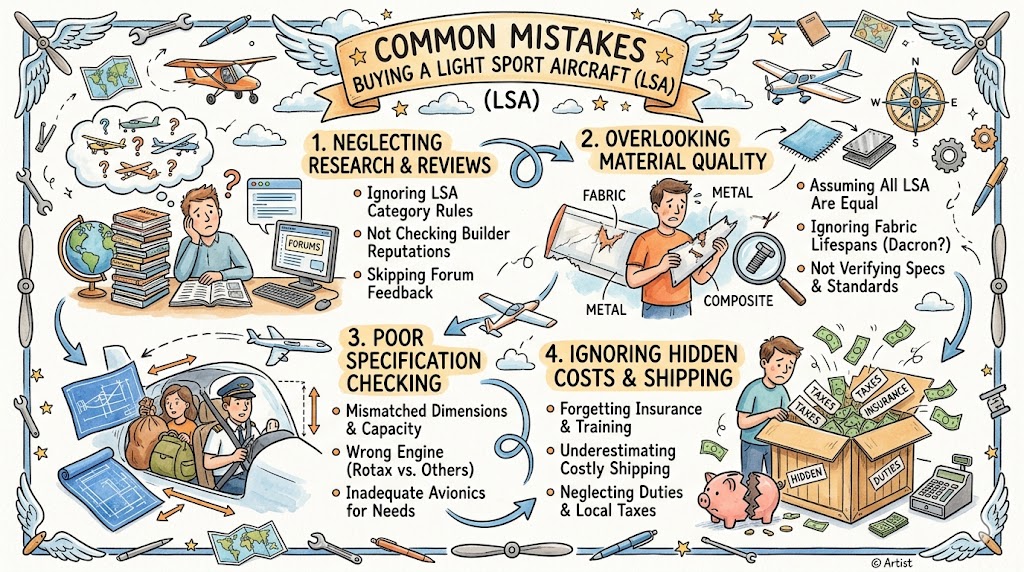
Introduction
Buying a light sport aircraft can be an exciting step for pilots, aviation hobbyists, flight schools, and people who want a more accessible way to enjoy personal aviation. Light sport aircraft are popular for recreational flying, local trips, basic flight training, short-distance travel, and affordable aircraft ownership compared to larger aircraft categories.
However, buying a light sport aircraft should never be treated like a simple vehicle purchase. An aircraft must be evaluated carefully because safety, maintenance history, documentation, performance, useful load, parts support, and operating costs all affect long-term ownership. A low purchase price may look attractive at first, but hidden maintenance issues, limited payload, outdated avionics, or incomplete records can quickly turn a good deal into an expensive mistake.
Many first-time buyers focus only on appearance, price, or flying excitement. While those factors matter, the right decision should be based on your mission, budget, inspection results, aircraft condition, regulatory understanding, and long-term support. A careful buying process helps protect your investment and gives you more confidence every time you fly.
This guide explains the most common mistakes when buying a light sport aircraft and how buyers can avoid them with practical, safety-focused decision-making.
Why Careful Buying Matters
A light sport aircraft may be smaller and simpler than many traditional aircraft, but it still requires serious evaluation. Every aircraft purchase should be approached with attention to safety, condition, and ownership responsibilities.
Careful buying matters because it affects:
- Flight safety: Aircraft condition, maintenance, and equipment quality directly affect safe operation.
- Aircraft reliability: A well-maintained aircraft is more dependable and less stressful to own.
- Maintenance planning: Good records help you understand what has been done and what may be needed.
- Operating cost: Insurance, storage, fuel, inspections, and repairs can impact your total budget.
- Mission suitability: The aircraft should match how you actually plan to fly.
- Useful load: Passenger, fuel, and baggage limits can affect real-world usability.
- Training needs: Transition training may be required even for experienced pilots.
- Resale value: Well-documented aircraft are usually easier to sell later.
- Ownership confidence: Clear history and proper inspection reduce uncertainty.
Buying carefully helps you choose an aircraft that fits your flying goals, budget, skill level, and long-term expectations.
Mistake 1- Buying Only Based on Price
One of the biggest mistakes buyers make is choosing a light sport aircraft only because it is the cheapest option available. A low price can be tempting, especially for first-time aircraft buyers who are trying to control costs. However, the lowest price does not always mean the best value.
A cheaper aircraft may come with hidden problems such as neglected maintenance, outdated avionics, incomplete logbooks, engine wear, structural concerns, paint or fabric issues, poor storage history, or expensive repairs waiting after purchase.
Possible risks include:
- Higher maintenance costs after purchase
- Poor engine condition
- Missing or incomplete records
- Outdated equipment
- Limited parts support
- Damage history
- Poor resale value
- Unexpected inspection findings
- More downtime
- Reduced safety confidence
Instead of looking only at the purchase price, buyers should calculate total ownership value. A slightly more expensive aircraft with complete records, better maintenance history, strong parts support, and current inspections may be the smarter purchase.
The right question is not “Which aircraft is cheapest?” The better question is “Which aircraft gives me the safest and most reliable value for my mission?”
Mistake 2- Not Defining Your Flying Mission
Before buying a light sport aircraft, you should clearly define how you plan to use it. Many buyers fall in love with an aircraft’s appearance or advertised performance without checking whether it fits their real flying needs.
Your flying mission may include:
- Weekend recreational flying
- Local sightseeing
- Flight training
- Short cross-country trips
- Personal travel
- Club flying
- Rental operations
- Short-field operations
- Grass runway operations
- Retirement hobby flying
- Time-building
- Owner-assisted maintenance interest
Each mission has different requirements. A training aircraft may need durable landing gear, simple controls, and easy maintenance. A recreational aircraft may prioritize comfort, visibility, and fuel efficiency. A cross-country aircraft may need better range, avionics, cruise speed, and baggage space.
Important mission factors include:
- Typical flight distance
- Runway length and surface
- Number of passengers
- Baggage needs
- Fuel capacity
- Cabin comfort
- Cruise speed
- Useful load
- Weather and terrain
- Training requirements
- Storage options
- Maintenance access
If your mission is unclear, you may buy an aircraft that looks good but does not serve your practical needs. Define the mission first, then compare aircraft.
Mistake 3- Skipping a Proper Pre-Purchase Inspection
Skipping a pre-purchase inspection is a serious mistake. Even if an aircraft looks clean and flies well during a short demo, there may be hidden issues that only a qualified inspection can reveal.
A proper pre-purchase inspection should review the aircraft’s condition, records, systems, and maintenance status. Ideally, the inspection should be performed by an experienced mechanic or inspector familiar with light sport aircraft.
A pre-purchase inspection may include checking:
- Airframe condition
- Engine health
- Propeller condition
- Landing gear
- Brakes and tires
- Flight controls
- Control cables or linkages
- Fuel system
- Electrical system
- Avionics
- Battery condition
- Corrosion signs
- Previous repairs
- Damage history
- Logbooks
- Required inspections
- Service bulletins where applicable
Buyers should not rely only on seller statements. A trusted seller should allow a reasonable inspection before purchase. If a seller resists inspection or avoids questions, treat that as a warning sign.
A pre-purchase inspection may cost money upfront, but it can save you from buying an aircraft with expensive or unsafe problems.
Mistake 4- Ignoring Maintenance History
Maintenance history is one of the most important parts of aircraft buying. Logbooks and records tell the story of how the aircraft was operated, maintained, repaired, inspected, and upgraded.
A clean-looking aircraft with poor records can create major uncertainty. Without maintenance history, it becomes harder to verify engine time, inspection status, repairs, component replacements, service bulletins, damage history, and equipment changes.
Buyers should review:
- Airframe logbooks
- Engine logbooks
- Propeller records
- Inspection history
- Repair records
- Service bulletin compliance where applicable
- Engine hours
- Component replacements
- Avionics upgrades
- Damage repairs
- Modification records
- Maintenance shop notes
- Parts replacement history
If records are incomplete or unclear, treat the aircraft with caution. If a detail is unknown, it should be marked as Not publicly stated rather than assumed.
Good maintenance history improves ownership confidence. It also helps during insurance review, future maintenance, and resale.
Mistake 5- Not Understanding Light Sport Aircraft Rules
Buyers should understand the rules and limitations connected to light sport aircraft before purchase. These aircraft may have specific category, performance, weight, equipment, and operational considerations that affect how they can be used.
Rules can vary depending on aircraft certification, pilot privileges, country, operating category, equipment, and regulatory updates. Buyers should always verify current requirements with qualified aviation professionals, instructors, inspectors, or relevant aviation authorities.
Important areas to understand include:
- Aircraft category
- Pilot certificate requirements
- Passenger limitations
- Maximum weight considerations
- Speed limitations where applicable
- Daytime or equipment-related limitations where applicable
- Maintenance rules
- Inspection requirements
- Rental or training use considerations
- Operating limitations
- Documentation requirements
A buyer should never assume that every light sport aircraft can be used for every purpose. Some aircraft may be better suited for private recreational flying, while others may be more practical for training, club use, or frequent operations.
Understanding the rules before purchase helps avoid ownership surprises later.
Mistake 6- Overlooking Useful Load and Weight Limits
Useful load is one of the most important real-world buying factors. It determines how much weight the aircraft can carry after accounting for the aircraft’s empty weight. This includes passengers, fuel, baggage, and any additional equipment.
Some light sport aircraft look practical on paper but may have limited payload when fully fueled. If you regularly plan to fly with a passenger, baggage, and full fuel, you need to calculate realistic loading before purchase.
Buyers should check:
- Empty weight
- Maximum allowed weight
- Useful load
- Fuel capacity
- Passenger weight assumptions
- Baggage allowance
- Installed equipment weight
- Weight and balance envelope
- Realistic mission loading
For example, an aircraft may seem suitable for two people, but after adding full fuel and baggage, it may not carry both passengers comfortably within limits. This can affect range, safety, and practicality.
Never buy an aircraft without understanding useful load. It directly affects how you can actually use the aircraft.
Mistake 7- Underestimating Insurance and Operating Costs
The purchase price is only one part of aircraft ownership. Many buyers underestimate the ongoing costs of owning a light sport aircraft.
Common ownership costs include:
- Insurance
- Hangar or tie-down
- Fuel
- Oil
- Routine inspections
- Maintenance labor
- Replacement parts
- Tires and brakes
- Battery replacement
- Avionics maintenance
- Engine work
- Propeller service
- Training
- Cleaning and detailing
- Unexpected repairs
Insurance can vary based on pilot experience, aircraft type, location, storage, training, claims history, and usage. Storage costs also vary depending on whether the aircraft is kept in a hangar or tied down outside.
Buyers should prepare a realistic ownership budget before purchase. A good aircraft choice should fit not only your buying budget but also your monthly and yearly operating comfort.
If the aircraft is affordable to buy but difficult to maintain, it may not be the right choice.
Mistake 8- Choosing an Aircraft Without Checking Parts Support
Parts support is critical for long-term ownership. Even a great aircraft can become frustrating if parts are hard to find, expensive, delayed, or unsupported.
Before buying, check availability of:
- Engine parts
- Airframe components
- Landing gear parts
- Tires and brakes
- Windshield or canopy parts
- Control system parts
- Fuel system components
- Electrical parts
- Avionics support
- Interior parts
- Documentation
- Maintenance guidance
Some aircraft may have limited manufacturer support, discontinued components, or specialized parts that are hard to source. This can increase downtime and maintenance costs.
Ask the seller and maintenance professionals about parts availability before purchase. If support is weak, the aircraft may still be acceptable for some buyers, but you should understand the risk.
Good parts support makes ownership easier, safer, and more predictable.
Mistake 9- Ignoring Avionics and Equipment Condition
Avionics and cockpit equipment affect safety, navigation, communication, training value, and resale appeal. Buyers sometimes focus on engine and airframe condition but overlook the panel.
Older or poorly maintained avionics can create extra expenses after purchase. Equipment may work during a demo but still be outdated, unreliable, difficult to service, or unsuitable for your intended operations.
Check the condition of:
- Radio
- Transponder
- GPS if installed
- Flight display if installed
- Engine monitoring system
- Intercom
- Headset jacks
- Wiring quality
- Circuit breakers or fuses
- Battery health
- Antennas
- Lighting
- Switches
- Instrument panel condition
Also consider whether the avionics match your mission. A basic panel may be fine for local recreational flying, but cross-country flying or training may require more capable equipment.
Avionics upgrades can be expensive, so review the panel carefully before buying.
Mistake 10- Not Taking a Test Flight or Demo Flight
A test flight or demo flight can reveal important information that photos and specifications cannot show. It helps you understand how the aircraft actually feels, performs, and fits your comfort level.
During a test flight, pay attention to:
- Cockpit visibility
- Seating comfort
- Noise level
- Control feel
- Takeoff performance
- Climb performance
- Cruise comfort
- Landing behavior
- Stall characteristics if demonstrated safely
- Rudder and trim feel
- Cockpit ergonomics
- Avionics usability
- Cabin ventilation
- Overall confidence
If you are not experienced with that aircraft type, fly with a qualified instructor or experienced pilot. Do not use a test flight as a casual ride. Use it as part of your buying evaluation.
A test flight can help you decide whether the aircraft matches your skill level, comfort expectations, and mission.
Mistake 11- Forgetting Training and Transition Needs
Even experienced pilots may need transition training when moving into a new light sport aircraft. Different aircraft can have different handling, cockpit layout, avionics, braking behavior, landing technique, engine management, and emergency procedures.
Transition training helps pilots become comfortable and safer in the specific aircraft type.
Training may cover:
- Normal procedures
- Takeoff and landing technique
- Slow flight
- Stall awareness
- Emergency procedures
- Engine management
- Avionics use
- Crosswind handling
- Short-field operations
- Weight and balance review
- Performance planning
- Checklist usage
Some insurance providers may also expect transition training depending on the pilot and aircraft. Even when not required, training is a smart investment.
Buying the aircraft is only the beginning. Learning to operate it confidently is part of responsible ownership.
Mistake 12- Buying Without Reviewing Resale Value
Resale value may not be the first thing on your mind when buying a light sport aircraft, but it matters. Your needs may change later, or you may decide to upgrade, move to a different aircraft type, or leave ownership.
Factors that affect resale value include:
- Brand reputation
- Aircraft condition
- Maintenance records
- Engine time
- Avionics condition
- Parts support
- Damage history
- Paint and interior condition
- Storage history
- Market demand
- Documentation quality
- Overall presentation
A well-maintained aircraft with complete records is usually easier to sell than an aircraft with unclear history or poor support. Even if you plan to keep the aircraft long-term, buying with resale in mind protects your investment.
New vs Used Light Sport Aircraft
Buyers often compare new and used light sport aircraft. Both options can make sense depending on budget, mission, availability, and ownership expectations.
Buying a New Light Sport Aircraft
A new aircraft may offer updated equipment, fresh condition, clearer history, modern avionics, and manufacturer support. Buyers may also have more confidence in maintenance history because the aircraft has not passed through multiple owners.
Possible advantages include:
- Clearer ownership history
- Updated avionics
- Newer interior and exterior condition
- Potential warranty support
- Easier customization
- Lower uncertainty at purchase
- Stronger initial confidence
Possible trade-offs include:
- Higher purchase price
- Waiting time depending on availability
- Depreciation considerations
- Insurance cost considerations
Buying a Used Light Sport Aircraft
A used aircraft may cost less upfront and be available sooner. It can be a practical option for buyers who want lower entry cost, but it requires deeper inspection and record review.
Possible advantages include:
- Lower purchase cost
- Immediate availability in some cases
- Known operating history if records are complete
- Potentially upgraded equipment
- More choices in the market
Possible risks include:
- Hidden maintenance issues
- Incomplete records
- Older avionics
- Wear and tear
- Unknown damage history
- Possible parts support concerns
- Higher near-term maintenance costs
The best option depends on your budget, risk comfort, inspection results, and ownership goals.
Checklist Before Buying a Light Sport Aircraft
Use this checklist before making a purchase decision:
- Define your flying mission clearly.
- Set a realistic purchase and ownership budget.
- Compare aircraft models based on your mission.
- Review useful load and weight limits.
- Calculate real passenger, fuel, and baggage scenarios.
- Review complete maintenance records.
- Verify aircraft documentation.
- Arrange a professional pre-purchase inspection.
- Check engine and propeller condition.
- Confirm parts support.
- Review avionics and equipment condition.
- Understand insurance costs.
- Take a test flight or demo flight.
- Plan transition training.
- Check hangar or storage options.
- Review operating limitations.
- Ask about damage history.
- Confirm seller ownership documents.
- Review resale value factors.
- Avoid rushing the decision.
This checklist helps buyers move from excitement to smart evaluation.
How to Choose a Reliable Light Sport Aircraft Seller
A reliable seller makes the buying process easier and more transparent. The seller should provide clear information, complete records where available, honest condition details, and access for inspection.
Look for a seller who offers:
- Clear aircraft description
- Honest condition information
- Complete logbooks where available
- Maintenance transparency
- Responsive communication
- Willingness to allow inspection
- Realistic pricing
- Clear ownership documents
- Accurate equipment list
- Damage history disclosure
- Helpful support during purchase
- No pressure-based selling
A seller who avoids questions, refuses inspection, hides records, or rushes the process should be treated with caution.
The buying experience should feel professional, clear, and fact-based.
Common Questions Buyers Should Ask Sellers
Before buying a light sport aircraft, ask the seller:
- Why is the aircraft being sold?
- Are the logbooks complete?
- Has the aircraft had any damage history?
- What is the engine time?
- What is the propeller condition?
- Are inspections current?
- Are service bulletins addressed where applicable?
- What avionics are installed?
- Are any avionics not working properly?
- What is the useful load?
- Are parts easy to source?
- Where has the aircraft been stored?
- Has it been hangared or tied down?
- Are there recurring maintenance issues?
- Can a pre-purchase inspection be arranged?
- Can a test flight be scheduled?
- Are all ownership documents clear?
Good questions reveal how transparent and prepared the seller is.
Red Flags When Buying a Light Sport Aircraft
Some warning signs should make buyers slow down or walk away.
Red flags include:
- Missing or incomplete logbooks
- Seller refuses inspection
- Vague answers about damage history
- Unclear ownership documents
- Poor maintenance history
- Unexplained low price
- Visible corrosion
- Poor repairs
- Unverified engine time
- Non-working avionics
- No clear parts support
- Pressure to buy quickly
- Inconsistent aircraft details
- No test flight option without valid reason
A red flag does not always mean the aircraft is unsafe, but it does mean the buyer should investigate carefully before proceeding.
How Poor Buying Decisions Affect Ownership
Buying the wrong light sport aircraft can affect ownership in many ways. The problems may not appear immediately, but they often show up during maintenance, insurance review, training, or regular flying.
Poor buying decisions can lead to:
- Expensive repairs
- Safety concerns
- More downtime
- Frustration during ownership
- Limited aircraft use
- Insurance challenges
- Training difficulties
- Weak resale value
- Unexpected upgrade costs
- Reduced confidence in the aircraft
Aircraft ownership should be enjoyable, but it must also be responsible. Careful buying helps you avoid unnecessary stress later.
Best Practices for Buying a Light Sport Aircraft
To make a safer and smarter purchase, follow these best practices:
- Start with your mission, not the aircraft listing.
- Compare total ownership cost, not only price.
- Review useful load carefully.
- Use a qualified pre-purchase inspector.
- Review all available logbooks.
- Ask direct questions about damage history.
- Confirm parts support before buying.
- Evaluate avionics realistically.
- Take a test flight when possible.
- Plan transition training.
- Understand operating limitations.
- Confirm insurance before final purchase.
- Keep emotion out of the final decision.
- Walk away if important details are unclear.
The best purchase is one that fits your flying goals and gives you confidence in safety, cost, and support.
FAQs
1- What is a light sport aircraft?
A light sport aircraft is a smaller aircraft category commonly used for recreational flying, basic training, local trips, and personal aviation. These aircraft are popular because they can offer simpler operation, lower ownership costs, and enjoyable flying for suitable missions.
2- Is a light sport aircraft good for beginner pilots?
A light sport aircraft can be a good option for beginner pilots when matched with proper training, suitable aircraft choice, and safe operating habits. Beginners should choose an aircraft that is stable, well-supported, easy to maintain, and appropriate for their skill development.
3- Should I buy a new or used light sport aircraft?
A new aircraft may offer clearer history, updated equipment, and potential warranty support, while a used aircraft may cost less upfront. Used aircraft require deeper inspection, logbook review, and maintenance evaluation before purchase.
4- Why is useful load important?
Useful load determines how much weight the aircraft can carry for passengers, fuel, baggage, and equipment. Some light sport aircraft may have limited payload when fully fueled, so buyers should calculate real-world loading before purchase.
5- What should I check in aircraft logbooks?
Check inspection history, engine time, propeller records, repairs, service bulletins where applicable, damage history, component replacements, avionics changes, and maintenance consistency. Complete logbooks give buyers more confidence in the aircraft’s condition.
6- Do I need a pre-purchase inspection?
Yes, a pre-purchase inspection is strongly recommended before buying a light sport aircraft. It can reveal engine issues, airframe concerns, corrosion, avionics problems, logbook gaps, and maintenance needs that may not be obvious during a casual review.
7- How much does it cost to own a light sport aircraft?
Ownership cost varies based on aircraft type, insurance, storage, fuel, maintenance, inspections, parts, training, and unexpected repairs. Buyers should prepare a realistic budget beyond the purchase price to avoid ownership surprises.
8- Why does parts support matter?
Parts support affects how easily you can maintain and repair the aircraft. If parts are difficult to source, downtime may increase and ownership can become frustrating. Buyers should check support for engine, airframe, landing gear, avionics, and common wear parts.
9- Should I take transition training?
Yes, transition training is a smart decision when buying a new aircraft type. It helps pilots understand handling, landing technique, avionics, emergency procedures, engine management, and performance characteristics before regular operation.
10- What is the biggest mistake buyers make?
The biggest mistake is buying based on emotion or price without checking mission fit, useful load, maintenance history, inspection results, and ownership costs. A careful review helps buyers avoid expensive and unsafe surprises.
Conclusion
Buying a light sport aircraft should be exciting, but it should also be handled with patience, research, and safety-first thinking. The best aircraft is not always the cheapest or the most attractive listing; it is the one that fits your mission, budget, skill level, useful load needs, and long-term ownership goals. Buyers should review maintenance records, arrange a proper pre-purchase inspection, understand aircraft rules, confirm parts support, and calculate realistic operating costs before making a decision. A test flight, transition training plan, and honest seller communication can also make the buying process safer and smoother. When you slow down, ask the right questions, and evaluate the aircraft carefully, you can buy with greater confidence and enjoy light sport flying with peace of mind.

