
Introduction
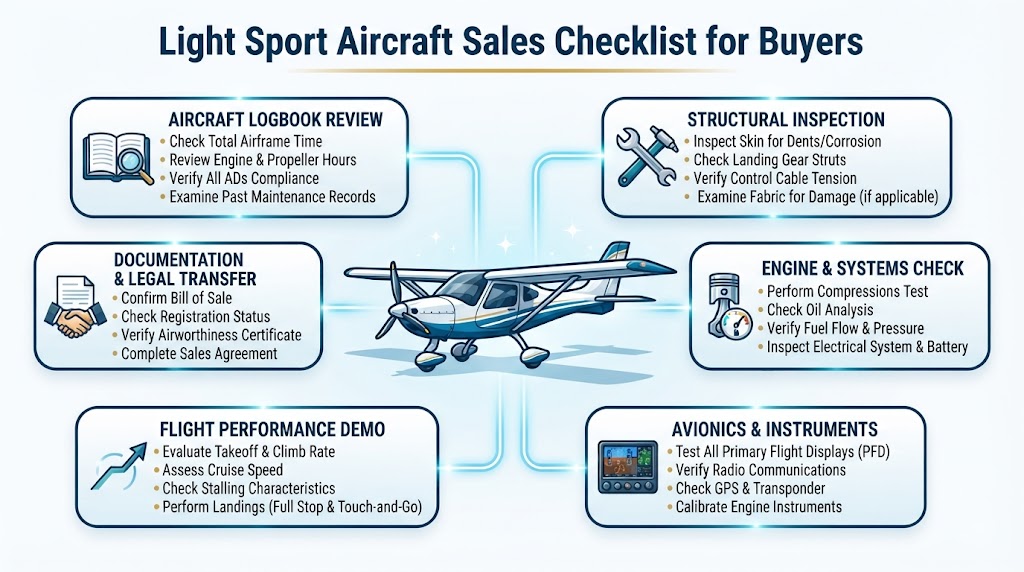
Buying a light sport aircraft is a significant decision that involves much more than comparing asking prices and exterior appearance. Buyers need to understand the aircraft’s condition, maintenance history, documentation, equipment, operating requirements, and expected ownership costs. A careful evaluation can reveal important questions before money changes hands and help prevent unexpected expenses later. The engine, airframe, propeller, avionics, landing gear, and electrical systems all deserve attention during the buying process. Buyers should also review ownership records, modifications, previous damage, and inspection history. This light sport aircraft sales checklist provides a practical framework for evaluating an aircraft before completing a purchase.
Why Use a Light Sport Aircraft Sales Checklist?
A checklist gives buyers a structured way to evaluate an aircraft rather than relying on first impressions.
It can help organize the review of:
- Aircraft condition
- Maintenance records
- Logbooks
- Certification information
- Engine and propeller condition
- Avionics
- Airframe
- Ownership history
- Damage history
- Modifications
- Operating costs
- Insurance
- Storage
- Pre-purchase inspection
Aircraft purchases can involve technical and financial decisions that are difficult to evaluate during a single viewing. A checklist helps buyers identify areas requiring additional investigation or professional assistance.
It is also useful for comparing multiple aircraft. Instead of choosing based solely on appearance or price, buyers can evaluate each aircraft using similar criteria.
Define Your Aircraft Buying Requirements
Before searching through aircraft for sale, establish what you actually need from the aircraft.
Consider:
- Intended use
- Typical flight distance
- Number of occupants
- Airport requirements
- Storage arrangements
- Pilot experience
- Training requirements
- Recreational flying
- Cross-country flying
- Desired avionics
- Maintenance expectations
- Available budget
For example, an aircraft primarily intended for local recreational flights may have different priorities from one intended for frequent longer trips.
Your requirements should determine which aircraft characteristics matter most.
The lowest-priced aircraft is not necessarily the best purchase if it requires extensive maintenance, expensive upgrades, or does not meet your intended operational needs.
Confirm the Aircraft’s Certification and Regulatory Status
Before purchasing an aircraft, buyers should understand its certification and regulatory status.
Depending on the aircraft and jurisdiction, relevant information may include:
- Aircraft category
- Registration
- Airworthiness status
- Operating limitations
- Required inspections
- Maintenance requirements
- Equipment requirements
- Applicable operating rules
The term “light sport aircraft” should not be treated as a guarantee that every aircraft has identical regulatory requirements.
Requirements can vary according to the aircraft’s certification category, configuration, location, and applicable aviation authority.
Before completing a purchase, verify the aircraft’s status through appropriate documentation and official records where applicable.
Verify the Aircraft Identification
The aircraft being inspected should correspond with the aircraft described in its documentation.
Verify:
- Manufacturer
- Model
- Aircraft serial number
- Registration information
- Engine identification
- Propeller information where applicable
Compare the physical identification information with the aircraft’s records.
Any discrepancy should be investigated before proceeding with the transaction.
This is especially important when evaluating an aircraft that has undergone major component changes, engine replacements, or extensive modifications.
Review the Aircraft Logbooks
Aircraft logbooks are among the most valuable sources of information during a purchase.
Review available records for:
- Airframe maintenance
- Engine maintenance
- Propeller maintenance
- Inspections
- Repairs
- Modifications
- Component replacements
- Damage history
- Recurring maintenance
- Significant findings
Look for consistency across the records.
Buyers should pay attention to missing periods, unexplained entries, inconsistent component information, or major work that is not adequately documented.
A clean-looking aircraft with incomplete records may require more investigation than an aircraft with extensive, well-organized documentation.
Check Total Flight Hours and Component Time
Flight hours provide useful context, but they should not be considered in isolation.
Review:
- Total airframe time
- Engine operating time
- Propeller time
- Component time where applicable
- Time since significant maintenance
- Aircraft usage history
An aircraft with relatively high hours may have an excellent maintenance history, while a lower-time aircraft can still have condition or documentation issues.
The important question is how the hours relate to maintenance, storage, operating history, and component condition.
Inspect the Airframe
The airframe should receive a thorough inspection before purchase.
Depending on the aircraft design, examine:
- Fuselage
- Wings
- Empennage
- Control surfaces
- Landing gear
- Structural attachment areas
- Fasteners
- Seams
- Composite surfaces
- Metal surfaces
- Fabric areas where applicable
- Signs of corrosion
- Cracks
- Dents
- Previous repairs
Look for evidence of unusual wear, damage, distortion, or repairs.
The extent of the inspection should be appropriate to the aircraft and should ideally be performed or supervised by a qualified aviation professional.
A visual inspection by a prospective buyer can identify obvious concerns, but it should not be treated as a substitute for a professional pre-purchase inspection.
Check the Engine
The engine deserves particular attention because engine maintenance can represent a significant part of aircraft ownership.
Review:
- Engine model
- Engine hours
- Maintenance history
- Inspection records
- Recent maintenance
- Visible leaks
- Unusual noises
- Starting behavior
- Visible damage
- Applicable engine documentation
Where appropriate, a qualified professional may recommend additional checks based on the engine type and its maintenance history.
Do not assume that low engine hours automatically mean low risk.
An engine’s age, maintenance history, storage conditions, operating history, and current condition can all be relevant.
Inspect the Propeller
The propeller should be evaluated separately from the engine.
Review:
- Propeller manufacturer
- Model
- Operating time
- Maintenance history
- Inspection records
- Blade condition
- Hub condition where applicable
- Corrosion
- Visible damage
Propeller inspection and maintenance requirements can vary according to the design and manufacturer.
Any visible damage or unexplained repair history should be professionally evaluated before purchase.
Evaluate the Avionics
Avionics can significantly affect an aircraft’s functionality and future upgrade costs.
Depending on the aircraft, review:
- Flight instruments
- Communication radios
- Navigation equipment
- GPS
- Transponder
- ADS-B equipment where applicable
- Engine monitoring equipment
- Electrical displays
- Antennas
- Wiring
Test installed equipment where practical and verify that it operates as expected.
Also consider whether the avionics meet your intended flying requirements.
A modern-looking instrument panel should not automatically be interpreted as proof of excellent aircraft condition. Buyers should evaluate the equipment’s condition, documentation, functionality, and suitability.
Check the Cockpit and Interior
The cockpit should be evaluated for both condition and usability.
Check:
- Seats
- Seat belts or restraints
- Instrument panel
- Flight controls
- Switches
- Displays
- Canopy
- Doors
- Windows
- Interior panels
- Storage
- Visibility
- General ergonomics
Separate cosmetic issues from safety-related issues.
A worn seat cover may primarily be a cosmetic concern, while a damaged restraint system can require immediate attention.
Examine the Landing Gear
Landing gear condition can provide useful information about the aircraft’s maintenance needs and operating history.
Review:
- Tires
- Wheels
- Brakes
- Struts where applicable
- Bearings where applicable
- Gear structure
- Attachment points
- Fasteners
- Hydraulic components where applicable
- Signs of unusual wear
Look for damage, leaks, excessive wear, or evidence of hard landings.
A qualified aviation professional can provide a more detailed evaluation of components that are difficult to assess during a basic viewing.
Review Maintenance History
Maintenance records can reveal how consistently an aircraft has been maintained.
Look for:
- Scheduled maintenance
- Required inspections
- Recurring inspections
- Component replacements
- Repairs
- Modifications
- Corrective work
- Recurring discrepancies
- Recent maintenance
Recent maintenance can be valuable, but it should not automatically be interpreted as proof that the aircraft requires no additional work.
The objective is to understand the aircraft’s maintenance pattern and identify upcoming requirements.
Investigate Damage and Repair History
Ask whether the aircraft has experienced:
- Accident damage
- Ground incidents
- Hard landings
- Corrosion
- Structural repairs
- Major component replacement
- Significant modifications
Previous damage does not automatically make an aircraft unsuitable.
What matters is understanding what happened, how the aircraft was repaired, whether the work was properly documented, and what condition the aircraft is in today.
Any uncertainty surrounding structural repairs should receive professional evaluation.
Check for Modifications and Upgrades
Many aircraft change configuration during their service life.
Potential modifications include:
- Avionics upgrades
- Engine changes
- Propeller changes
- Electrical modifications
- Lighting
- Interior changes
- Instrument panel upgrades
- Other equipment additions
Buyers should determine what has been changed and review the associated documentation.
An upgrade can be beneficial, but undocumented modifications can create additional questions during a pre-purchase inspection.
Do not assume that every aftermarket component is automatically compatible with every aircraft configuration.
Inspect the Fuel System
The fuel system should be included in the inspection.
Depending on the aircraft design, review:
- Fuel tanks
- Fuel lines
- Connections
- Filters
- Pumps
- Vents
- Fuel-system components
- Evidence of leaks
- Signs of contamination
- Corrosion
Fuel-system issues can be difficult to evaluate through appearance alone.
Potential concerns should be addressed through the aircraft’s applicable maintenance procedures and qualified professional inspection.
Review the Electrical System and Battery
The electrical system supports many of the aircraft’s essential systems and deserves careful review.
Check:
- Battery condition
- Charging system
- Wiring
- Connectors
- Circuit protection
- Electrical equipment
- Signs of overheating
- Corrosion
- Previous electrical modifications
Pay particular attention to undocumented electrical changes.
Poorly documented modifications can make future troubleshooting and maintenance more complicated.
Examine the Aircraft Exterior
The exterior can provide clues about storage, use, and maintenance.
Inspect:
- Paint
- Fabric where applicable
- Composite surfaces
- Metal surfaces
- Canopy
- Windows
- Fairings
- Control surfaces
- Exterior fittings
Do not confuse cosmetic appearance with structural condition.
A polished aircraft can still have mechanical or structural issues, while an aircraft with cosmetic imperfections may be mechanically well maintained.
Conduct a Pre-Purchase Inspection
An independent pre-purchase inspection is one of the most important steps in buying a used aircraft.
The inspection may cover:
- Airframe
- Engine
- Propeller
- Landing gear
- Flight controls
- Fuel system
- Electrical system
- Avionics
- Structural areas
- Maintenance records
- Modifications
Ideally, the inspection should be conducted by an appropriately qualified aviation professional who can provide an objective evaluation.
Buyers should receive a clear understanding of significant discrepancies and potential future maintenance requirements before finalizing the purchase.
Arrange a Professional Test Flight
A test flight can provide information that cannot be obtained from a ground inspection alone.
Depending on the aircraft and applicable operating requirements, a flight evaluation may consider:
- Engine operation
- Flight controls
- Instruments
- Radios
- Aircraft handling
- Abnormal indications
- General system operation
The flight should be conducted according to applicable requirements and aircraft operating limitations.
Buyers should never operate an aircraft beyond their qualifications or legal privileges.
When appropriate, a qualified pilot familiar with the aircraft type can assist with the evaluation.
Review Ownership and Title Information
Before purchasing an aircraft, verify the ownership information and applicable registration records.
Depending on the jurisdiction, this may involve reviewing:
- Registered owner
- Ownership documents
- Registration
- Title information
- Liens where applicable
- Purchase documentation
- Transfer requirements
Buyers should verify this information through appropriate official channels.
Ownership questions should be resolved before money is transferred or the purchase is finalized.
Calculate the Total Cost of Ownership
The purchase price is only one part of aircraft ownership.
Consider:
- Purchase price
- Insurance
- Hangar or tie-down costs
- Fuel
- Scheduled maintenance
- Unscheduled maintenance
- Required inspections
- Parts
- Avionics maintenance
- Registration or administrative expenses
- Training
- Future upgrades
An aircraft with a lower purchase price may require more investment after the sale.
A more expensive aircraft with better documentation, condition, equipment, and maintenance history may sometimes provide a different overall ownership proposition.
The important point is to evaluate the total financial picture rather than focusing exclusively on the advertised price.
Review Insurance Requirements
Insurance should be investigated before purchasing the aircraft.
Coverage considerations may depend on factors such as:
- Aircraft type
- Pilot experience
- Intended use
- Location
- Operating profile
- Insurer requirements
Buyers should obtain appropriate insurance information before completing the transaction.
Do not assume that insurance availability or cost will be the same for every aircraft or pilot.
Consider Storage and Operating Requirements
Where and how an aircraft is stored can affect its condition and ownership cost.
Consider:
- Hangar availability
- Tie-down arrangements
- Weather exposure
- Security
- Maintenance access
- Airport facilities
- Transportation requirements
An aircraft stored outdoors may have different environmental considerations from one stored in a suitable hangar.
Storage should therefore be included in the ownership plan before purchase.
Ask the Seller the Right Questions
A conversation with the seller can provide useful background information, but important claims should be verified against records.
Ask questions such as:
- Why are you selling the aircraft?
- How long have you owned it?
- How has it been used?
- Where has it been stored?
- What maintenance was completed recently?
- Has the aircraft experienced damage?
- Are there known discrepancies?
- Are all logbooks available?
- What modifications have been made?
- What equipment is included?
- Are there upcoming maintenance requirements?
The seller’s answers can help establish context, but documentation and professional inspection should remain central to the buying decision.
Red Flags Buyers Should Investigate
Some situations deserve additional attention during an aircraft purchase.
Potential warning signs include:
- Missing logbooks
- Inconsistent records
- Unexplained damage
- Unknown modifications
- Significant corrosion
- Structural concerns
- Unclear ownership
- Major unresolved discrepancies
- Pressure to purchase immediately
- Claims that cannot be documented
- An unusually low price without a clear explanation
A single red flag does not automatically mean that an aircraft should be rejected.
Instead, it should prompt further investigation.
If a concern cannot be satisfactorily explained or evaluated, buyers should consider obtaining professional advice before continuing.
Light Sport Aircraft Purchase Checklist
Aircraft
- Manufacturer and model confirmed
- Serial number verified
- Registration information checked
- Certification status reviewed
- Applicable operating requirements understood
Documentation
- Airframe logbooks reviewed
- Engine records reviewed
- Propeller records reviewed
- Inspection records reviewed
- Modification records reviewed
- Damage history investigated
Mechanical
- Airframe inspected
- Engine inspected
- Propeller inspected
- Landing gear checked
- Fuel system reviewed
- Electrical system reviewed
Avionics
- Communication equipment tested
- Navigation equipment checked
- Transponder reviewed
- GPS checked where installed
- Other installed avionics tested
Ownership
- Seller identity verified
- Ownership records checked
- Title or lien information reviewed where applicable
- Purchase documentation prepared
Financial
- Purchase price evaluated
- Insurance investigated
- Storage costs estimated
- Maintenance budget considered
- Fuel costs considered
- Future upgrades considered
Final Evaluation
- Independent pre-purchase inspection completed
- Appropriate test flight arranged
- Outstanding discrepancies reviewed
- Purchase terms confirmed
- Final documentation reviewed
How LIGHTSPORTWEST.COM Can Help Buyers
LIGHTSPORTWEST.COM can serve as a useful aviation-focused resource for people researching light sport aircraft and aircraft ownership.
Buyers can use a structured evaluation process to compare aircraft based on their condition, documentation, equipment, maintenance history, and intended use.
When reviewing an aircraft for sale, it is important to consider the complete aircraft rather than focusing on a single feature such as price, appearance, flight hours, or avionics.
For questions involving aircraft condition, structural integrity, maintenance, or regulatory status, buyers should rely on applicable documentation and appropriately qualified aviation professionals.
Frequently Asked Questions
1. What should I check before buying a light sport aircraft?
Review the aircraft’s documentation, logbooks, maintenance history, airframe, engine, propeller, avionics, landing gear, ownership records, damage history, and operating costs. A professional pre-purchase inspection is also recommended.
2. Why are aircraft logbooks important when buying a used aircraft?
Logbooks provide information about maintenance, inspections, repairs, modifications, component replacements, and the aircraft’s operating history. Missing or inconsistent records should be investigated.
3. Should I get a pre-purchase inspection before buying a light sport aircraft?
Yes. An independent inspection by an appropriately qualified aviation professional can identify mechanical, structural, documentation, and maintenance concerns before the purchase is completed.
4. What should I look for when inspecting the aircraft engine?
Review engine hours, maintenance history, inspection records, visible condition, leaks, unusual noises, and recent maintenance. The exact inspection requirements depend on the engine and aircraft configuration.
5. How can I check whether an aircraft has previous damage?
Review the aircraft logbooks, maintenance records, ownership history, and available documentation. A qualified inspector can also look for evidence of repairs, structural changes, or previous damage.
6. What should I know about aircraft ownership costs?
Consider more than the purchase price. Insurance, storage, fuel, maintenance, inspections, parts, avionics, training, and future upgrades can all contribute to the total cost of ownership.
7. Should I arrange a test flight before purchasing an aircraft?
An appropriate pre-purchase flight evaluation can provide useful information about aircraft and system operation. It should be conducted according to applicable requirements by a suitably qualified pilot.
8. What documents should I review before buying a light sport aircraft?
Depending on the aircraft and jurisdiction, review registration and ownership information, airframe and engine logbooks, propeller records, inspection records, modification documentation, and applicable certification or operating information.
9. What are common red flags when buying a used light sport aircraft?
Potential red flags include missing records, inconsistent documentation, unexplained damage, unknown modifications, significant corrosion, unresolved discrepancies, unclear ownership, and pressure to complete the purchase quickly.
10. How do I determine whether a light sport aircraft is right for me?
Compare the aircraft’s configuration, performance characteristics, equipment, maintenance needs, operating costs, storage requirements, and intended use with your personal flying objectives and experience.
Final Thoughts
Buying a light sport aircraft should be approached as a complete evaluation rather than a simple transaction. Buyers should review the aircraft’s identity, records, maintenance history, airframe, engine, propeller, avionics, and overall condition. A professional pre-purchase inspection can provide valuable information that may not be visible during an initial viewing. Buyers should also investigate ownership records, insurance, storage, operating expenses, and future maintenance requirements. Taking time to investigate potential red flags can help reduce unpleasant surprises after purchase. A structured light sport aircraft sales checklist gives buyers a practical way to make a more informed aircraft purchasing decision.

