
Introduction
Securing an elite flight training center lays the foundational groundwork for a thriving cockpit career. Aspiring aviators continuously explore the best pilot schools to secure essential certifications and practical flight hours. Cutting through marketing hype to evaluate true instructional quality and safety standards requires reliable, structured guidance.
Strategic research empowers learners to bypass mediocre programs and select premier institutions matching their exact career aspirations. Professional pilot preparation demands rigorous commitment, careful financial planning, and unwavering dedication from day one. Utilizing robust educational platforms ensures your journey toward the flight deck proceeds smoothly and efficiently.
Exploring Program Categories and Structures
Flight education generally operates under two distinct regulatory frameworks known as Part 61 and Part 141 training models. Part 61 programs deliver exceptional scheduling freedom, letting students adapt flight lessons around demanding personal commitments or current employment. This flexible framework serves hobbyists and busy professionals perfectly.
Conversely, Part 141 academies enforce strict, approved curricula tailored for individuals pursuing accelerated, career-focused airline pathways. These structured programs demand full-time dedication, punctual attendance, and adherence to rigorous institutional testing milestones. Evaluating these structural differences helps you match your personal lifestyle with the ideal training methodology.
Mastering Commercial Pilot License Training
Stepping beyond recreational flying demands comprehensive commercial pilot license training to master complex aircraft maneuvers and precise airspace navigation. Students navigate advanced systems, high-altitude operations, and intricate cross-country flight planning under diverse weather conditions. Building unshakeable aircraft control remains the core objective of this intensive training phase.
Candidates also accumulate required flight hours while perfecting aggressive maneuvers like chandelles, lazy eights, and steep spirals. Instructors cultivate sharp situational awareness and decisive problem-solving abilities essential for future airline captains. This vital curriculum bridges casual flying and lucrative commercial aviation employment.
Why Institutional Selection Dictates Career Success
Selecting an elite flight training facility directly dictates your technical competence, safety habits, and future airline employability. Respected academies maintain pristine aircraft, employ seasoned instructors, and utilize structured syllabi surpassing standard regulatory minimums. Major commercial airlines continuously evaluate the educational pedigree of applicants, favoring graduates from rigorous training backgrounds.
Maintaining high motivation through challenging ground school subjects and complex aerodynamics tests depends heavily on a supportive learning environment. Selecting inferior programs merely to save minor upfront costs often triggers delayed checkrides and inflated total expenses. Committing your resources to recognized best flight schools guarantees your professional aviation career launches securely.
Evaluating Fleet Quality and Safety Standards
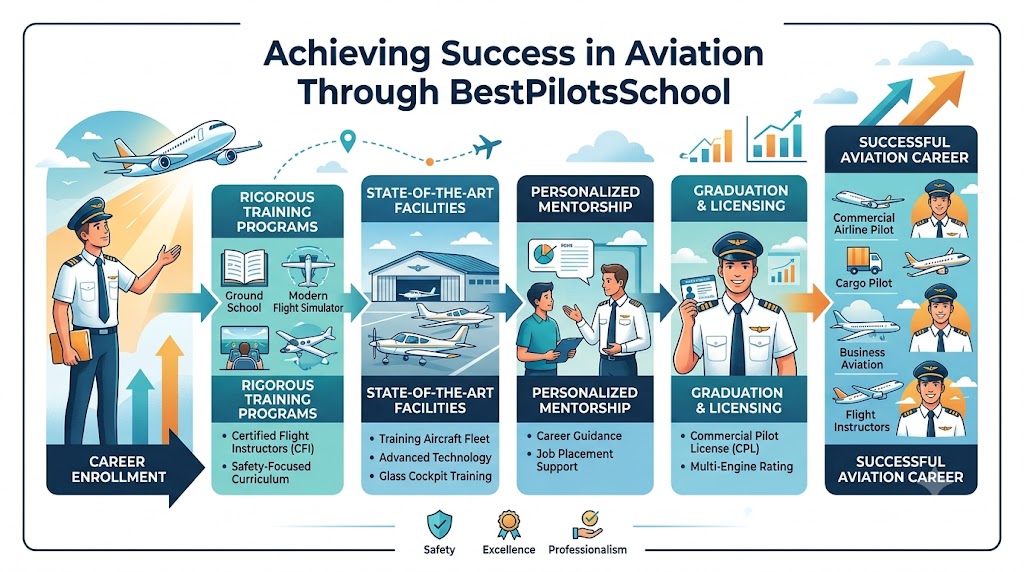
Evaluating competing flight academies requires looking beyond flashy brochures to analyze fleet quality, instructor stability, and institutional safety records. Inspect prospective training aircraft personally to verify modern avionics integration and rigorous maintenance schedules. Modern glass-cockpit training environments prepare students seamlessly for advanced regional and mainline transport category jets.
Instructor retention rates offer another reliable indicator of overall school quality and professional workplace culture. Requesting facility tours, observing live ground school sessions, and interviewing current students reveals invaluable operational realities. Diligent comparison safeguards your financial investment and guarantees a positive educational experience.
Aligning Flight Academies With Professional Goals
Every student possesses distinct professional ambitions, ranging from bush flying and flight instruction to international wide-body airline operations. Therefore, the best flight schools for your peers might not align with your specific career timeline or lifestyle goals. Aspiring airline captains require academies with established direct-entry airline partnerships and structured recruitment pipelines.
Conversely, individuals targeting regional cargo hauling or localized charter work benefit immensely from tailored commercial programs. Aligning your school selection with your ultimate career destination eliminates wasted time, redundant training, and unnecessary financial strain. Defining your five-year aviation objectives before signing contracts guarantees targeted success.
Analyzing Commercial Pilot Training Advantages
The best commercial pilot training schools separate themselves through high-fidelity flight simulation technology, dedicated career placement cells, and structured airline pathways. Elite institutions invest heavily in advanced training devices that let students safely practice emergency procedures and instrument approaches. Such cutting-edge tools build reliable muscle memory long before entering actual aircraft cockpits.
Furthermore, these premier academies maintain direct recruitment agreements with regional carriers, providing graduates an immediate competitive advantage. Industry networking events and structured alumni mentorship programs accelerate post-graduation job placement significantly. Selecting an elite commercial training facility gives your professional career a powerful launchpad.
Budgeting for Your Aviation Education
Flight training represents a major financial commitment, with total expenses fluctuating based on geographic location, aircraft selection, and individual progress. Effective budgeting requires accounting for aircraft rental rates, instructor fees, ground study materials, FAA medical exams, and checkride fees. Unanticipated weather delays or extra training hours can also influence overall project costs.
Investigating financing options, aviation scholarships, and modular payment plans makes professional flight training highly manageable. Top-tier academies frequently partner with lenders offering specialized loan packages designed specifically for career-track aviation students. Transparent financial planning ensures uninterrupted progress from your initial takeoff to your commercial checkride.
Comparing Integrated Versus Modular Training Paths
Selecting between integrated and modular training pathways depends heavily on your available budget, timeline, and daily schedule preferences. Integrated courses provide an intensive, zero-to-hero approach where students progress through all ratings in a continuous, structured sequence. This accelerated format suits individuals seeking the fastest transition into an airline cockpit.
Alternatively, modular training allows students to complete ratings incrementally at their own pace, paying per lesson. This modular flexibility accommodates part-time employment and helps manage upfront financial pressure effectively. Both educational routes yield identical commercial certificates when completed through reputable training providers.
Discovering International Flight Academies
Global aviation enthusiasts frequently explore international options to discover the best pilot schools in the world for diverse training experiences. International academies located across various continents offer unique airspace challenges, multi-cultural crew environments, and favorable flying weather. Global training broadens your operational perspective immensely.
Relocating abroad demands careful preparation regarding visa regulations, foreign license validation, and housing logistics. Researching local aviation authority standards ensures your international certificates convert smoothly upon returning home. Exploring worldwide options unlocks extraordinary aviation opportunities and world-class instructional methodologies.
Assessing a Pilot Training Academy Effectively
Assessing any prospective pilot training academy demands thorough examination of safety cultures, student pass rates, and fleet utilization ratios. Ask chief instructors for historical first-time pass rates on civil aviation authority checkrides. High pass rates consistently reflect superior instructional standards and rigorous internal quality checks.
Additionally, investigate aircraft-to-student ratios to prevent frustrating scheduling bottlenecks during peak training seasons. Fleet shortages can easily stretch a standard training timeline into an extended ordeal. Vetting these operational metrics guarantees an efficient journey toward your commercial license.
Selecting an Airline-Focused Training Environment
An elite airline pilot training academy emphasizes multi-crew cooperation, jet transition protocols, and professional airline standard operating procedures. These specialized programs simulate complex airline flight decks to prepare students for multi-engine transport category realities. Immersive professional training eliminates the intimidation factor when transitioning to commercial fleets.
Additionally, seek academies integrating upset prevention and recovery training into their core flight syllabi. Mastering unusual attitude recovery instills unbreakable confidence during critical in-flight emergencies. Selecting an airline-focused academy positions you as an exceptional candidate during interviews.
Identifying Superior Flying Schools
Uncovering the best flying schools involves analyzing transparent pricing models, modern facilities, and verified peer recommendations. Connect with recent graduates via professional networks to gather honest feedback regarding institutional responsiveness and hidden fees. Authentic student perspectives expose operational strengths and weaknesses instantly.
Trustworthy flight schools gladly provide itemized cost projections and realistic scheduling timelines prior to enrollment. They prioritize student success over aggressive sales tactics, ensuring transparent mentorship throughout your program. Reputable institutions stand firmly behind their safety records and graduate achievements.
Leveraging Authentic Student Reviews
Unfiltered student reviews and peer testimonials provide an essential compass when evaluating competitive aviation academy listings. Genuine reviews highlight recurring operational bottlenecks, maintenance delays, or unexpected billing practices that promotional brochures omit. Reviewing diverse perspectives delivers a balanced, realistic expectation of academy life.
Simultaneously, remain cautious regarding overly polished marketing hype or suspicious clusters of uniform positive ratings. Cross-referencing opinions across independent aviation forums ensures you make an objective, educated choice. Learning from experienced peers protects your investment from costly mistakes.
Utilizing BestPilotsSchool for Program Research
BestPilotsSchool streamlines your aviation research process by centralizing verified data on premier flight academies, training costs, and licensing frameworks. Instead of browsing scattered web pages, aspiring pilots compare locations, fleets, and course structures instantly. This unified hub empowers future aviators to make confident, strategic educational decisions.
Whether you seek guidance regarding commercial pilot license training or wish to compare international academies, the platform supports your ambitions. Exploring curated comparative guides helps identify the ideal training environment matching your career goals. Your professional journey begins with accessing accurate, centralized aviation data.
Avoiding Common Training Pitfalls
Many aspiring aviators stumble by choosing flight schools based solely on the cheapest advertised hourly rental rates. Hidden maintenance fees, aging aircraft, and frequent instructor turnover frequently inflate total training costs and timelines. Prioritizing instructional quality and structural safety always saves money in the long run.
Another critical error involves delaying aviation medical examinations until after committing funds to ground school. Undiscovered medical disqualifiers can halt a commercial aviation career instantly, making early health certification mandatory. Avoiding these pitfalls guarantees a smooth, productive training experience.
Essential Inquiries Regarding BestPilotsSchool
What specific tools does BestPilotsSchool offer to future aviators?
BestPilotsSchool functions as a centralized informational hub helping candidates discover, evaluate, and compare premier flight academies worldwide.
How do students evaluate flight schools against personal career objectives?
Candidates should analyze aircraft fleet modernity, instructor experience, safety records, structured training paths, and airline placement partnerships.
What differentiates Part 61 from Part 141 instructional models?
Part 61 provides flexible scheduling for independent learners, whereas Part 141 enforces rigorous, structured curricula designed for career-track professionals.
What primary financial elements impact commercial pilot training expenses?
Total costs hinge upon geographical location, aircraft rental rates, instructor hourly charges, study materials, examination fees, and individual progress.
Why do candidates choose international aviation academies for training?
International schools offer diverse airspace conditions, multicultural crew exposure, and reliable flying weather across various global regions.
When should students complete their initial aviation medical examination?
Securing your medical certificate before investing in ground school or enrollment prevents unexpected health disqualifications from halting your progress.
What core competencies does commercial pilot training emphasize?
The curriculum covers advanced flight maneuvers, complex systems operation, high-altitude navigation, and required commercial flight hour accumulation.
How can students verify the accuracy of online school reviews?
Cross-referencing feedback across independent aviation forums and speaking with recent alumni ensures reliable, unbiased evaluations.
What unique benefits do airline training academies provide graduates?
These specialized programs focus on multi-crew cooperation and jet transport transition procedures, matching real airline cockpit environments.
How does BestPilotsSchool simplify the institutional search process?
It aggregates comprehensive school data, cost structures, and licensing paths into a single accessible comparison platform.
Summary and Next Steps
Embarking upon a career in commercial aviation demands steadfast commitment, thorough institutional research, and uncompromising safety standards. Choosing the correct training ecosystem establishes the professional momentum required to thrive inside competitive airline flight decks. Maintain your focus, prioritize structured learning milestones, and let verified industry data guide your educational choices. Explore our curated platform features today to take direct control of your future in the skies.

