
Introduction
Starting flight training is an exciting step, but for many beginners it can also feel overwhelming. Sport pilot training is designed to make aviation more accessible by offering a simpler, more affordable, and beginner-friendly pathway into flying. However, success in training depends heavily on preparation before the first lesson even begins.
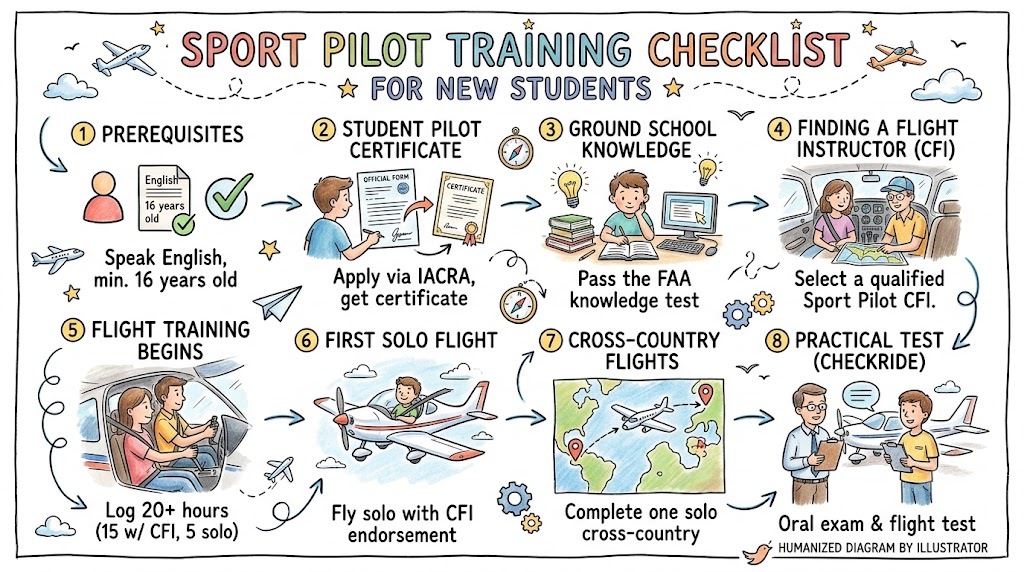
A structured sport pilot training checklist helps new students understand what to expect, what to prepare, and how to approach training with confidence. It ensures that learners are mentally, physically, and administratively ready to begin flying. From medical eligibility to choosing a flight school and understanding basic aviation concepts, a checklist removes confusion and builds a strong foundation for safe and effective learning.
This guide provides a complete checklist for new students who want to begin their journey into aviation through sport pilot training.
Real-world Use Cases
A complete beginner starting sport pilot training uses the checklist to understand requirements before booking their first lesson.
A student preparing for their first flight lesson relies on the checklist to ensure they have proper documents, knowledge, and readiness.
A career changer exploring aviation uses the checklist to compare training requirements and plan their transition.
A hobby flyer joining weekend flying lessons uses it to prepare mentally and practically for recreational flying.
A student struggling with aviation theory uses the checklist to focus on essential ground school topics.
A trainee preparing for their first solo flight uses it to ensure all safety and training milestones are met.
A parent guiding a young aviation learner uses the checklist to ensure structured and safe learning progress.
Evaluation Criteria for Sport Pilot Training Readiness
Before starting training, students should evaluate:
- Medical eligibility and fitness readiness
- Understanding of sport pilot requirements
- Financial preparedness for training costs
- Availability of local flight schools
- Instructor qualification and experience
- Basic aviation knowledge readiness
- Time commitment for training schedule
- Comfort with learning environments
- Communication skills development
- Safety awareness and mindset
- Access to training aircraft
- Ground school support availability
These factors help ensure a smooth and successful training experience.
Medical Eligibility Requirements Understanding
Before beginning sport pilot training, students must understand basic medical requirements.
For example, knowing whether you meet fitness standards helps avoid delays in training enrollment.
Age and Student Pilot Requirements
Students must meet minimum age and identification requirements to begin training.
For example, younger learners may need parental guidance when starting aviation education.
Choosing a Certified Flight School
Selecting the right flight school ensures quality training and safety.
For example, choosing a school with experienced instructors leads to better learning outcomes.
Selecting a Qualified Flight Instructor
A good instructor plays a key role in building confidence and skill.
For example, an experienced instructor can help a nervous beginner learn faster and safely.
Understanding Light Sport Aircraft Basics
Light sport aircraft are simpler and ideal for beginners.
For example, understanding basic controls before flying reduces confusion during early lessons.
Ground School Preparation Checklist
Ground school teaches aviation theory before actual flight.
For example, students learn weather basics and navigation concepts before entering the cockpit.
Weather and Aviation Theory Basics
Understanding weather is essential for safe flying decisions.
For example, learning cloud types helps students decide when it is safe to fly.
Flight Training Schedule Planning
Consistent scheduling improves learning progress.
For example, flying regularly helps students retain skills better than irregular sessions.
Budget and Training Cost Preparation
Training requires financial planning before starting.
For example, understanding hourly flight costs helps avoid unexpected expenses.
Required Identification and Documents
Proper documents are needed before starting training.
For example, valid ID ensures smooth enrollment and record keeping.
Radio Communication Basics with ATC
Learning basic communication prepares students for real flight interaction.
For example, practicing simple radio phrases builds confidence before solo flights.
Pre-flight Safety Inspection Awareness
Students must learn how aircraft are checked before flight.
For example, inspecting fuel and control surfaces ensures safe operation.
Simulator or Ground Practice Preparation
Simulation helps students understand flight controls safely.
For example, practicing in a simulator helps before flying a real aircraft.
First Flight Expectations and Readiness
Understanding first flight expectations reduces anxiety.
For example, knowing what happens during takeoff helps students stay calm.
Logbook Setup and Training Tracking
A logbook tracks flight progress and training hours.
For example, recording each lesson helps students monitor improvement.
Safety Rules and FAA Regulations Awareness
Safety rules are essential for responsible flying.
For example, following FAA guidelines ensures safe and legal flight training.
Aircraft Familiarization Checklist
Knowing aircraft components improves confidence.
For example, understanding cockpit instruments helps reduce confusion during training.
Emergency Procedure Awareness Basics
Students must learn basic emergency responses.
For example, practicing simulated engine failure improves preparedness.
Learning Mindset and Confidence Preparation
A positive mindset is essential for success in aviation training.
For example, staying patient during early mistakes improves long-term learning.
Physical and Mental Readiness
Flying requires focus and alertness.
For example, being well-rested before lessons improves performance.
Prepared vs Unprepared Student
| Factor | Prepared Student | Unprepared Student |
|---|---|---|
| Confidence | High | Low |
| Learning Speed | Fast | Slow |
| Safety Awareness | Strong | Weak |
| Progress | Consistent | Delayed |
Ground School vs Flight Training
| Factor | Ground School | Flight Training |
| Focus | Theory | Practical flying |
| Skill Development | Knowledge-based | Hands-on |
| Stress Level | Low | Moderate |
Simulator vs Real Aircraft
| Factor | Simulator | Real Aircraft |
| Safety | Very High | High with supervision |
| Learning Speed | Fast | Gradual |
| Experience | Controlled | Real-world |
Sport Pilot vs Private Pilot Training
| Factor | Sport Pilot | Private Pilot |
| Complexity | Lower | Higher |
| Cost | Lower | Higher |
| Training Scope | Limited | Broader |
Benefits of Using a Checklist
A sport pilot training checklist helps students:
- Reduce confusion before starting training
- Build confidence early
- Stay organized during lessons
- Improve safety awareness
- Avoid common beginner mistakes
- Track progress efficiently
- Prepare mentally and physically
- Improve learning consistency
- Enhance communication skills
- Ensure smoother training experience
Practical Tips for New Students
- Choose your flight school carefully
- Follow a consistent training schedule
- Focus on basics before advanced topics
- Ask instructors questions freely
- Practice theory regularly
- Stay calm during early mistakes
- Prepare documents in advance
Common Mistakes to Avoid
- Skipping ground school preparation
- Inconsistent flight training schedule
- Ignoring safety instructions
- Not tracking progress in logbook
- Choosing school based only on cost
- Overthinking early training challenges
FAQs
1. What is a sport pilot training checklist?
It is a structured guide that helps new students prepare for flight training with proper planning and readiness.
2. Who can become a sport pilot?
Anyone who meets basic age, medical, and training requirements can pursue sport pilot training.
3. Do I need medical clearance?
Yes, basic medical fitness requirements must be understood before starting training.
4. How much does training cost?
Costs vary depending on flight hours, school, and aircraft used.
5. What is first flight like?
It is a supervised lesson where students learn basic aircraft control.
6. Why is ground school important?
It builds essential aviation knowledge before practical flying.
7. How many flight hours are needed?
Requirements vary but are lower than traditional pilot training paths.
8. Can I train part-time?
Yes, many students train on weekends or part-time schedules.
9. What is solo flight readiness?
It is when an instructor determines a student can fly safely alone.
10. What is the best beginner tip?
Stay consistent, follow instructions, and focus on steady learning.
Conclusion
A sport pilot training checklist is an essential tool for new aviation students who want a smooth and successful start in flying. It helps organize preparation, build confidence, and ensure readiness for both ground and flight training. By following a structured checklist, students can avoid confusion, reduce mistakes, and improve learning efficiency. With proper preparation and the right mindset, sport pilot training becomes a clear, safe, and enjoyable pathway into the world of aviation.

