
Introduction
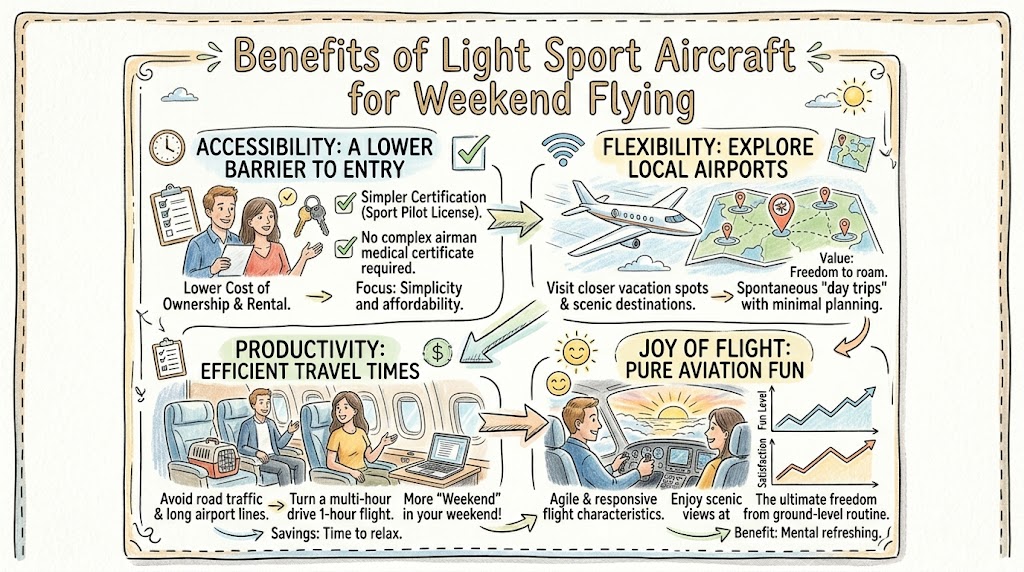
Light Sport Aircraft (LSAs) have revolutionized recreational flying by offering a practical, efficient, and enjoyable option for pilots who want to take to the skies during weekends and short trips. These aircraft are lightweight, easy to operate, and designed for both comfort and convenience, making them ideal for hobbyists and part-time pilots. Unlike larger general aviation aircraft, LSAs combine affordability with reliability, allowing pilots to enjoy the freedom of flight without the steep costs or complex training requirements. Understanding the benefits of LSAs helps recreational pilots maximize their weekend flying experience while maintaining safety and efficiency.
Real-world Use Cases
Weekend pilots often use LSAs for quick trips to nearby airports, scenic flights, or visiting friends and family. For example, a pilot in Southern California can enjoy a Saturday flight along the coast or to neighboring states in just a few hours. Flight clubs and recreational pilots also appreciate LSAs for cross-country practice, aerial photography, and casual sightseeing. The simplicity and accessibility of LSAs enable pilots to enjoy the skies without the logistical challenges associated with larger aircraft.
Evaluation Criteria for Sport Pilots
When selecting an LSA for weekend flying, pilots consider factors such as aircraft range, speed, fuel efficiency, seating capacity, maintenance requirements, and ease of handling. Assessing these criteria ensures a safe, enjoyable, and cost-effective flying experience tailored to weekend or recreational use.
Key Benefits of Light Sport Aircraft for Weekend Flying
1- Affordability
LSAs are generally less expensive to purchase and operate than traditional GA aircraft, making weekend flying financially accessible.
2- Ease of Use
Lightweight design and simplified controls allow pilots to learn and operate LSAs quickly, reducing training time and effort.
3- Fuel Efficiency
Smaller engines and efficient airframes result in lower fuel consumption, reducing operational costs for short recreational trips.
4- Shorter Training Requirements
Sport pilot certification allows pilots to fly LSAs with fewer flight hours, making it easier to enjoy weekend aviation without committing to extensive training.
5- Access to Smaller Airports
LSAs can operate from short or remote airstrips, opening opportunities for more scenic routes and less crowded airports.
6- Low Maintenance Costs
Simpler systems and smaller engines reduce the cost and frequency of maintenance compared to larger aircraft.
7- Recreational Versatility
LSAs are perfect for a variety of recreational activities, including sightseeing, aerial photography, and cross-country weekend trips.
8- Enhanced Freedom and Flexibility
Pilots can plan flights spontaneously, maximizing the flexibility of weekend schedules without waiting for commercial flight availability.
Comparison Notes
Compared to ultralights, LSAs offer greater comfort, range, and safety features while still being easy to fly. Compared to larger GA aircraft, LSAs provide lower costs, less complex operations, and reduced training requirements, making them ideal for weekend and recreational flying.
Practical Tips for Weekend Pilots
- Plan trips according to aircraft range and fuel capacity.
- Check weather conditions before flights to ensure safety.
- Schedule routine inspections and maintenance to avoid unexpected downtime.
- Consider joining a local flight club to access aircraft and share operational knowledge.
- Keep flight logs to track experience and improve skills gradually.
FAQs
1- Do I need a full pilot license to fly an LSA?
No. A sport pilot certificate is sufficient, which requires fewer flight hours than a private pilot license.
2- How much does it cost to operate an LSA on weekends?
Costs are lower than traditional aircraft, with fuel, maintenance, and hangar fees significantly reduced.
3- What is the typical range of an LSA?
Ranges vary by model, typically between 300–700 miles, suitable for weekend trips and short cross-country flights.
4- Are LSAs safe for beginners?
Yes. LSAs are designed for stability, simplified controls, and recreational use, making them safe for certified sport pilots.
5- Can I take passengers on weekend flights?
Most LSAs have one or two seats, allowing a passenger to join for leisure flights.
6- Do LSAs require special hangars?
No. Many LSAs are small enough to fit in standard hangars or tie-down spaces at small airports.
7- How long does it take to train on an LSA?
Training for a sport pilot certificate can be completed in a few months depending on schedule and frequency of lessons.
8- Can LSAs be used for cross-country weekend trips?
Yes. Their range and efficiency make them ideal for short-distance cross-country flights.
9- Are maintenance requirements high for LSAs?
Maintenance is simpler than for larger aircraft, reducing downtime and operational costs.
10- Can LSAs operate in less busy airports?
Yes. LSAs are capable of using shorter and less congested airstrips, enhancing recreational flight options.
Conclusion
Light Sport Aircraft provide an ideal solution for weekend pilots seeking an affordable, flexible, and enjoyable flying experience. With lower costs, simplified operations, fuel efficiency, and access to smaller airports, LSAs allow recreational pilots to maximize flight time and explore the skies safely and efficiently. By prioritizing proper selection, maintenance, and planning, pilots can fully enjoy the freedom and versatility that LSAs offer for weekend aviation adventures.

