
Introduction
Starting a journey in aviation can feel exciting but also overwhelming for many beginners. Traditional pilot training often appears expensive, time-consuming, and complex, especially for those who are unsure whether they want to pursue flying as a career or a hobby. This is where Sport Pilot Training becomes an excellent entry point into aviation.
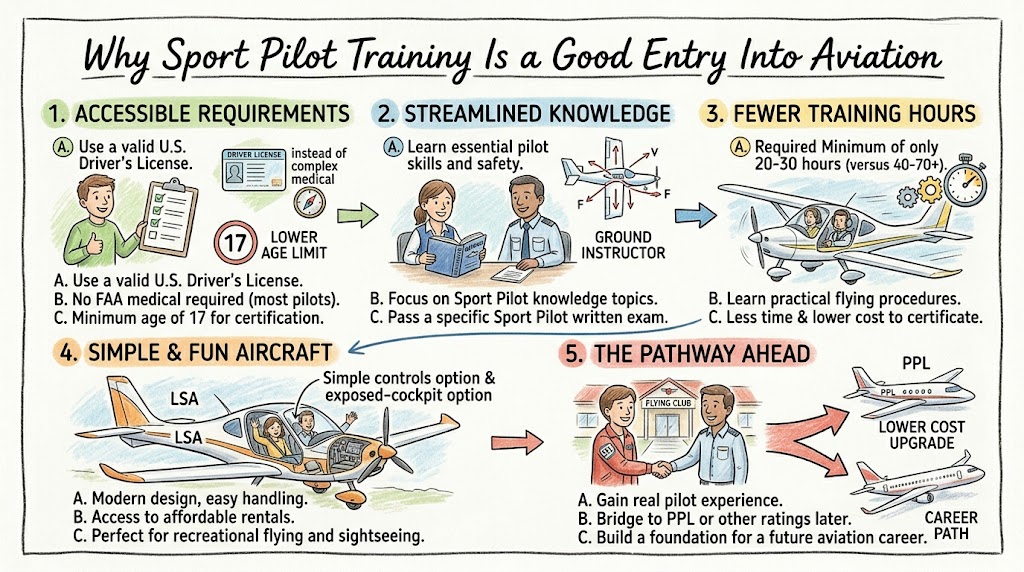
Sport pilot training is designed to make flying more accessible by simplifying requirements, reducing costs, and focusing on essential flying skills. It allows beginners to experience real flight training in a shorter time frame while using light sport aircraft. For many students, this pathway provides the perfect balance between affordability, simplicity, and hands-on flying experience. Instead of immediately committing to advanced certifications, learners can begin with a more relaxed and practical introduction to aviation.
Real-world Use Cases
A complete beginner who has never flown before can use sport pilot training to experience flying in a structured and safe environment without the pressure of a full commercial pathway. A student comparing aviation careers may use this training as a starting point before committing to a Private Pilot License.
A hobby flyer interested in weekend flying can use sport pilot certification to enjoy recreational flying without heavy training requirements. A career changer exploring aviation can test their interest in flying before investing significant time and money.
A student learning basic aircraft handling can build foundational flying skills in light sport aircraft. Parents researching aviation training for their children may see sport pilot training as a safer and more accessible entry option. Even trainees preparing for their first solo flight benefit from the simpler structure and supportive learning environment.
Evaluation Criteria for Choosing Sport Pilot Training
Before choosing sport pilot training, beginners should consider:
- Training cost and budget flexibility
- Aircraft availability and type
- Flight school reputation
- Instructor experience
- Training schedule flexibility
- Medical eligibility requirements
- Learning pace and comfort level
- Transition options to higher licenses
- Local weather and flying conditions
- Ground school support availability
- Safety standards of the training program
- Student progress tracking system
These factors help learners choose a training path that matches their personal goals and comfort level.
Lower Training Cost Compared to Private Pilot License
One of the biggest advantages of sport pilot training is its lower cost compared to traditional private pilot programs. Fewer flight hours and simplified requirements help reduce overall expenses.
For example, a beginner who is unsure about long-term aviation goals can start training without committing to high financial investment.
Reduced Flight Hour Requirements
Sport pilot training requires fewer flight hours than many traditional pilot pathways, allowing students to complete training faster.
For example, a student can reach solo flight readiness sooner because training focuses on essential skills first.
Simplified Medical Requirements
Unlike traditional pilot training, sport pilot certification often has more flexible medical requirements.
For example, students with minor medical concerns may still qualify to fly under sport pilot rules, making aviation more accessible.
Easier Learning Curve for Beginners
Sport pilot training simplifies many advanced aviation concepts to help beginners learn more comfortably.
For example, students focus on basic flight control and safety before moving into complex navigation systems.
Faster Path to First Solo Flight
Because training is structured and simplified, students can often reach their first solo flight faster.
For example, a beginner may fly solo earlier in their training journey compared to traditional pilot programs.
Use of Light Sport Aircraft
Training is conducted using light sport aircraft (LSA), which are simpler and easier to handle.
For example, a student learns basic control techniques in a lightweight aircraft designed specifically for training and recreation.
Basic but Essential Aviation Knowledge
Sport pilot training focuses on core aviation knowledge needed for safe flying.
For example, students learn basic weather interpretation, navigation fundamentals, and aircraft operation principles.
Focus on Visual Flight Rules
Training emphasizes visual flight rules (VFR), which is ideal for beginners learning to fly in clear weather conditions.
For example, a student practices flying by visually referencing landmarks and horizon orientation.
Reduced Training Complexity
The overall structure of sport pilot training is less complex than full private pilot programs.
For example, students are not immediately introduced to advanced instrument flying procedures.
Shorter Training Duration
Because requirements are reduced, students can complete training in less time.
For example, a learner with consistent training sessions may achieve certification faster than traditional pathways.
Lower Operational Costs for Students
Operating light sport aircraft costs less in fuel, maintenance, and rental fees.
For example, flight schools can offer more affordable lesson pricing due to reduced aircraft operating costs.
Ideal for Recreational Flying
Sport pilot training is perfect for individuals who want to fly for enjoyment rather than career purposes.
For example, a weekend flyer can enjoy scenic flights without pursuing advanced certifications.
Opportunity to Build Foundational Skills
Students gain essential flying skills that can later support advanced training if desired.
For example, a learner mastering takeoff and landing fundamentals builds confidence for future aviation growth.
Transition Pathway to Private Pilot License
Sport pilot certification can serve as a stepping stone toward higher aviation licenses.
For example, a student may later decide to continue training for a Private Pilot License after gaining experience.
Access to Local Flight Schools
Many flight schools offer sport pilot programs, making training more accessible geographically.
For example, beginners can start training at nearby airports without needing specialized institutions.
Less Stressful Training Environment
Sport pilot training is designed to reduce pressure and help beginners learn comfortably.
For example, students progress at a manageable pace without overwhelming technical demands.
Strong Emphasis on Safety Fundamentals
Safety remains a core focus even in simplified training programs.
For example, students learn pre-flight checks, basic emergency awareness, and safe decision-making early.
Suitable for Hobby Pilots and Weekend Flyers
This training path is ideal for those who want aviation as a hobby.
For example, a weekend flyer can enjoy aviation without committing to full-time pilot training.
Sport Pilot vs Private Pilot License
| Factor | Sport Pilot Training | Private Pilot License |
|---|---|---|
| Cost | Lower | Higher |
| Training Time | Shorter | Longer |
| Complexity | Simplified | Advanced |
| Medical Requirements | More flexible | Stricter |
| Aircraft Type | Light Sport Aircraft | Standard aircraft |
| Career Path | Limited | Broad |
Light Sport Aircraft vs Standard Training Aircraft
| Factor | Light Sport Aircraft | Standard Aircraft |
| Weight | Lighter | Heavier |
| Controls | Simpler | More complex |
| Cost | Lower | Higher |
| Training Ease | Beginner-friendly | Advanced learning |
| Usage | Recreational training | Professional training |
Beginner Training vs Advanced Aviation Training
| Factor | Beginner Training | Advanced Training |
| Focus | Basic skills | Complex operations |
| Stress Level | Low | Higher |
| Duration | Short | Long |
| Learning Curve | Gentle | Steep |
Recreational vs Career Aviation Training
| Factor | Recreational | Career-focused |
| Goal | Enjoy flying | Professional pilot career |
| Training Depth | Basic | Extensive |
| Commitment | Low | High |
Benefits of Sport Pilot Training
Sport pilot training helps beginners:
- Enter aviation quickly
- Reduce financial pressure
- Build confidence in flying
- Learn essential aviation skills
- Experience real flight early
- Improve safety awareness
- Explore aviation as a hobby
- Transition gradually to advanced training
Practical Tips for Beginners
- Choose a reputable flight school
- Start with consistent training sessions
- Focus on basic flight control first
- Ask instructors for regular feedback
- Track progress carefully
- Understand medical eligibility early
- Stay consistent with practice
Common Mistakes to Avoid
- Overthinking complex aviation theory early
- Skipping consistent practice sessions
- Ignoring instructor feedback
- Choosing training only based on cost
- Underestimating safety procedures
FAQs
1. What is sport pilot training?
Sport pilot training is a simplified aviation training path that allows beginners to learn flying using light sport aircraft with reduced requirements.
2. Who can become a sport pilot?
Anyone who meets basic eligibility requirements, including age, training, and medical fitness standards, can pursue sport pilot training.
3. Is sport pilot training cheaper?
Yes, it is generally more affordable than traditional private pilot training due to fewer flight hour requirements and simpler aircraft usage.
4. How long does training take?
Training duration varies but is usually shorter than private pilot programs due to reduced requirements.
5. Do I need a medical exam?
Medical requirements are generally more flexible compared to traditional pilot training.
6. What aircraft are used?
Training is conducted using light sport aircraft designed for simplicity and safety.
7. Can I fly solo during training?
Yes, students can fly solo after meeting instructor approval and required skill levels.
8. What is the difference between sport and private pilot training?
Sport pilot training is simpler, faster, and more affordable, while private pilot training is more advanced and comprehensive.
9. Can I upgrade later?
Yes, sport pilot training can be a stepping stone toward a private pilot license.
10. Is it good for beginners?
Yes, it is one of the best entry points for beginners who want to start flying easily and affordably.
Conclusion
Sport pilot training is an excellent entry point into aviation because it simplifies the learning process while still providing real flying experience. It reduces cost, shortens training time, and makes aviation more accessible to beginners who may feel overwhelmed by traditional pilot programs. By focusing on essential skills, safety fundamentals, and practical flying experience, it helps students build confidence early in their aviation journey. Whether someone wants to pursue aviation as a hobby or a future career, sport pilot training provides a strong and supportive foundation for starting in the world of flight.

