
Introduction
Buying a Light Sport Aircraft can be an exciting step for recreational pilots, sport pilots, weekend flyers, flying clubs, and first-time aircraft owners. LSAs are popular because they are often easier to operate, more affordable to maintain, and well-suited for personal flying, local trips, and training environments. For many aviation beginners, a Light Sport Aircraft can be a practical entry point into aircraft ownership.
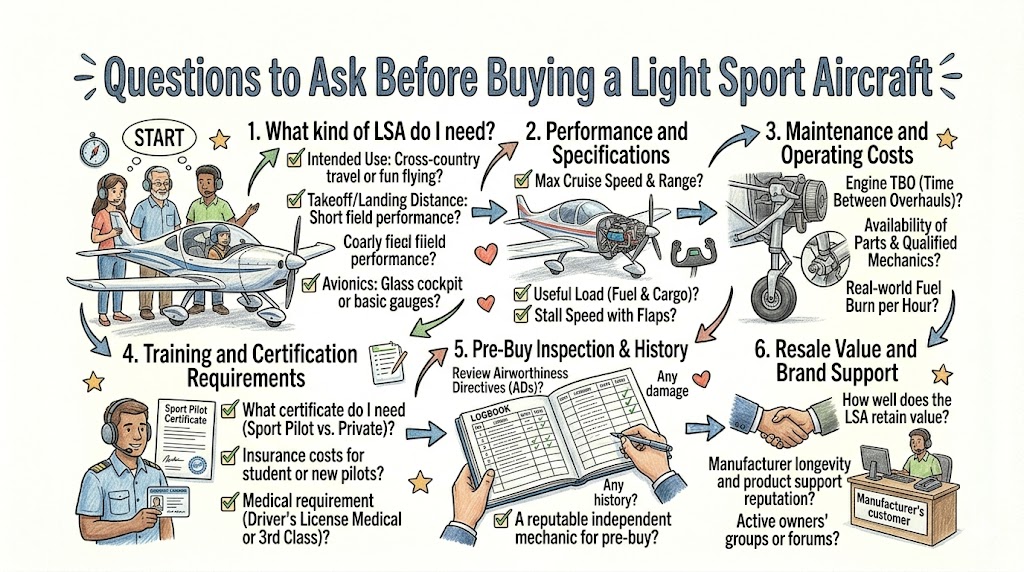
However, buying an LSA should never be based only on appearance, price, or excitement. Every aircraft has its own maintenance history, performance limits, useful load, avionics setup, engine condition, documentation quality, and ownership costs. Asking the right questions before purchase helps buyers avoid safety risks, expensive surprises, unsuitable aircraft choices, and long-term maintenance problems. Whether you are buying new, pre-owned, or evaluating an aircraft for a flight school or flying club, careful research leads to safer, smarter, and more enjoyable ownership.
Real-world Use Cases
A weekend pilot may want a Light Sport Aircraft for short local flights, scenic trips, and relaxed recreational flying. In this case, comfort, fuel efficiency, ease of operation, and maintenance simplicity may matter more than speed or advanced avionics.
A sport pilot comparing new and pre-owned aircraft may focus on condition, documentation, warranty support, and parts availability. A flight school may need an LSA that is durable, easy to maintain, and suitable for frequent training flights. A retired pilot may want a practical aircraft that supports affordable flying without unnecessary complexity.
A flying club may compare multiple LSA options based on useful load, insurance cost, operating expenses, maintenance requirements, and member training needs. These examples show why every buyer must ask detailed questions before making a decision.
Evaluation Criteria for Buying a Light Sport Aircraft
Before buying a Light Sport Aircraft, buyers should evaluate:
- Aircraft condition
- LSA compliance and category fit
- Maintenance history
- Complete logbooks and records
- Engine health
- Useful load
- Avionics and instrument setup
- Parts availability
- Inspection requirements
- Insurance options
- Operating cost
- Training or transition needs
- Airport suitability
- Resale potential
The best LSA is not always the cheapest or newest aircraft. It is the aircraft that safely matches your flying goals, budget, experience level, and long-term ownership plans.
1- Does the Aircraft Meet Light Sport Aircraft Requirements?
Before buying, confirm that the aircraft properly fits the Light Sport Aircraft category. This matters because LSA rules affect who can fly the aircraft, how it can be used, and what operating limitations apply.
For example, a sport pilot must ensure the aircraft matches the privileges and limitations of sport pilot flying. If the aircraft does not meet the correct category requirements, it may not fit the buyer’s license, training plan, or intended use.
2- Is the Aircraft New or Pre-Owned?
New and pre-owned LSAs both have advantages. A new aircraft may offer modern equipment, cleaner history, manufacturer support, and updated features. A pre-owned Light Sport Aircraft may cost less upfront but requires closer inspection.
For example, a first-time buyer may prefer a well-maintained used LSA to manage cost, while a flight school may prefer a newer aircraft with strong factory support and predictable maintenance planning.
3- What Is the Aircraft’s Maintenance History?
Maintenance history tells you how well the aircraft has been cared for. Regular maintenance, proper inspections, and timely repairs show responsible ownership.
For example, if an aircraft has skipped inspections or has repeated unresolved issues, it may create higher costs after purchase. A clean maintenance history gives buyers more confidence in safety and reliability.
4- Are Logbooks and Records Complete?
Aircraft logbooks are essential. They record inspections, repairs, engine work, avionics updates, component replacements, and other important service details.
For example, a pre-owned LSA with incomplete records may look attractive because of a lower price, but missing documentation can create uncertainty during maintenance, insurance review, resale, or future inspections.
5- What Is the Total Cost of Ownership?
The purchase price is only one part of aircraft ownership. Buyers should consider fuel, hangar or tie-down fees, insurance, inspections, maintenance, parts, repairs, avionics updates, and training costs.
For example, a low-cost aircraft may become expensive if parts are difficult to find or if the engine needs major work soon after purchase. Always evaluate long-term ownership cost, not just the initial price.
6- Is the Aircraft Suitable for My Flying Goals?
Your flying goals should guide the purchase. A weekend flyer may need a simple, comfortable aircraft for local flying. A flying club may need durability and easy scheduling. A flight school may need a training-friendly aircraft with predictable maintenance.
For example, if you plan short local flights, a simple recreational aircraft may be enough. If you want longer cross-country trips, cabin comfort, useful load, fuel range, and avionics become more important.
7- What Is the Aircraft’s Useful Load?
Useful load is one of the most important factors when buying a Light Sport Aircraft. It affects how much weight the aircraft can safely carry, including passengers, fuel, baggage, and equipment.
For example, a buyer planning two-person trips must check whether the aircraft can safely carry both occupants, fuel, and luggage within limits. A good-looking aircraft may not be practical if useful load is too limited.
8- What Avionics and Instruments Are Included?
Avionics affect safety, navigation, communication, and overall flying experience. Some LSAs have basic panels, while others include advanced glass cockpit systems.
For example, a beginner pilot may prefer simple and easy-to-read instruments, while a more experienced recreational pilot may want modern navigation tools, traffic awareness, or upgraded communication equipment. Make sure the avionics match your comfort and flying style.
9- What Engine Type and Condition Does It Have?
The engine is one of the most important and expensive parts of any aircraft. Buyers should ask about engine type, operating hours, service history, inspections, known issues, and expected maintenance needs.
For example, an LSA with a strong airframe but questionable engine condition may require costly attention soon after purchase. Engine health should always be checked carefully before buying.
10- Are Replacement Parts Available?
Parts availability affects maintenance time, cost, and long-term aircraft usability. Some aircraft models have strong manufacturer support, while others may have limited parts access.
For example, a flying club using an LSA frequently needs quick access to replacement parts. If parts are hard to source, even minor repairs can keep the aircraft grounded longer than expected.
11- What Inspections Are Required?
Every aircraft requires inspections to remain safe and properly maintained. Buyers should understand inspection schedules, maintenance requirements, and who is qualified to perform the work.
For example, a first-time aircraft owner should know what recurring inspections are needed and how much they may cost. This helps prevent surprises after purchase.
12- Is the Aircraft Easy to Maintain?
Maintenance simplicity can make ownership more enjoyable and cost-effective. Some LSAs are easier to inspect, repair, and service than others.
For example, a recreational pilot who flies occasionally may prefer an aircraft with simple systems and accessible maintenance support. A complex aircraft may offer more features but also require more time and cost to maintain.
13- What Training or Transition Flying Is Recommended?
Even experienced pilots may need transition training before flying a new aircraft type. Every LSA has its own handling characteristics, avionics layout, landing behavior, and performance profile.
For example, a pilot moving from a heavier general aviation aircraft into a lighter LSA may need time to adjust to different control response, wind sensitivity, and landing technique. Training improves safety and confidence.
14- What Insurance Options Are Available?
Insurance availability and cost can vary based on aircraft type, pilot experience, training history, storage location, and intended use.
For example, a first-time owner may find that some insurers require transition training or specific pilot experience before offering coverage. Always check insurance before finalizing the purchase.
15- Can the Aircraft Operate from My Preferred Airport?
Not every aircraft is ideal for every airport. Runway length, surface type, elevation, weather patterns, hangar availability, and local operating conditions should be considered.
For example, if you plan to operate from a smaller airfield, confirm that the aircraft’s performance is suitable for that runway and environment. Airport compatibility can affect both safety and convenience.
Benefits of Asking the Right Questions
Asking the right questions before buying a Light Sport Aircraft helps buyers:
- Avoid unsuitable aircraft choices
- Reduce long-term ownership surprises
- Improve safety confidence
- Understand maintenance needs
- Match the aircraft to flying goals
- Plan operating costs more accurately
- Protect aircraft value
- Improve insurance readiness
- Make better training decisions
- Enjoy a smoother ownership experience
A thoughtful buying process leads to better ownership satisfaction and safer flying.
Informed vs Uninformed LSA Buying Decisions
| Factor | Informed Buying | Uninformed Buying |
|---|---|---|
| Safety Confidence | Aircraft condition is carefully checked | Safety may be assumed without proof |
| Maintenance Planning | Records and future needs are reviewed | Unexpected repairs may appear later |
| Cost Control | Ownership costs are understood | Budget surprises are more likely |
| Performance Expectations | Useful load and range are checked | Aircraft may not fit real flying needs |
| Documentation Quality | Logbooks and records are reviewed | Missing records may create problems |
| Resale Value | Strong documentation supports value | Poor records may reduce buyer confidence |
| Ownership Satisfaction | Aircraft matches mission and budget | Buyer may regret the choice later |
Practical Tips Before Buying a Light Sport Aircraft
Inspect the Aircraft Carefully
A visual inspection can reveal signs of wear, corrosion, damage, leaks, poor repairs, or neglected maintenance. Do not rush the inspection process.
Review Aircraft Records
Check logbooks, maintenance entries, inspection history, engine records, avionics updates, and repair notes. Complete records are essential for ownership confidence.
Compare Ownership Costs
Look beyond purchase price. Include fuel, storage, insurance, inspections, maintenance, replacement parts, training, and unexpected repairs.
Check Useful Load and Performance
Make sure the aircraft can safely carry your typical passengers, fuel, baggage, and equipment. Performance should match your airport and flying environment.
Evaluate Avionics and Engine Condition
Modern avionics can improve convenience, but engine condition often has a larger impact on cost and reliability. Review both carefully.
Compare New and Pre-Owned Options
New aircraft may offer modern features and cleaner history. Pre-owned aircraft may be more affordable but require deeper inspection and documentation review.
Get a Pre-Buy Inspection
A pre-buy inspection by a qualified professional can identify issues that may not be obvious to the buyer. It can help prevent expensive mistakes.
Confirm Insurance Before Purchase
Do not wait until after buying to explore insurance. Confirm availability, cost, pilot requirements, and training conditions early.
Common Mistakes to Avoid
Avoid these common LSA buying mistakes:
- Buying based only on price
- Ignoring useful load
- Skipping the pre-buy inspection
- Accepting incomplete logbooks
- Overlooking engine condition
- Not checking parts availability
- Forgetting insurance requirements
- Choosing avionics that are too complex
- Ignoring airport suitability
- Buying an aircraft that does not match flying goals
A smart buyer focuses on safety, mission fit, documentation, and long-term value.
FAQs
1- What is a Light Sport Aircraft?
A Light Sport Aircraft is a category of aircraft designed for lighter, simpler, and often more recreational flying. It is commonly used by sport pilots, recreational flyers, flight schools, and aircraft ownership beginners.
2- Should I buy a new or used LSA?
A new LSA may offer modern features and cleaner history, while a used LSA may reduce upfront cost. A pre-owned aircraft should be inspected carefully, especially for maintenance history, engine condition, and documentation quality.
3- Why are maintenance records important?
Maintenance records show how the aircraft has been cared for over time. Complete records help confirm inspections, repairs, engine work, avionics updates, and overall aircraft condition.
4- What is useful load and why does it matter?
Useful load is the weight the aircraft can safely carry beyond its empty weight. It includes passengers, fuel, baggage, and equipment, so it directly affects whether the aircraft fits your real flying needs.
5- How much does LSA ownership cost?
Ownership cost includes more than the purchase price. Buyers should budget for fuel, storage, insurance, inspections, maintenance, parts, training, and unexpected repairs.
6- How important is engine condition?
Engine condition is extremely important because engine repairs can be expensive and safety-critical. Buyers should review engine hours, service history, inspections, and any known issues before purchase.
7- Should avionics influence my buying decision?
Yes, but avionics should match your flying style and experience level. Simple panels may suit beginners, while more advanced systems may help experienced pilots with navigation and situational awareness.
8- Do I need insurance before buying an LSA?
You should check insurance availability before finalizing the purchase. Insurance cost and requirements may depend on aircraft type, pilot experience, training history, and intended use.
9- Is a pre-buy inspection necessary?
Yes, a pre-buy inspection is strongly recommended. It can reveal hidden maintenance issues, documentation gaps, engine concerns, airframe damage, or expensive repairs before you commit to the purchase.
10- What are common mistakes when buying an LSA?
Common mistakes include buying only on price, skipping inspection, ignoring useful load, accepting incomplete records, overlooking insurance, and choosing an aircraft that does not match the buyer’s real flying goals.
Conclusion
Buying a Light Sport Aircraft can be a rewarding step for sport pilots, recreational flyers, flight schools, flying clubs, and first-time aircraft owners. However, the best ownership experience starts with careful questions before purchase. Buyers should evaluate aircraft condition, useful load, maintenance history, records, engine health, avionics, insurance, parts availability, and total ownership cost. A good-looking aircraft is not always the right aircraft if it does not match your mission, budget, or safety expectations. By asking the right questions and getting a proper pre-buy inspection, buyers can make smarter decisions, reduce long-term surprises, and enjoy safer, more confident flying.

