
Introduction
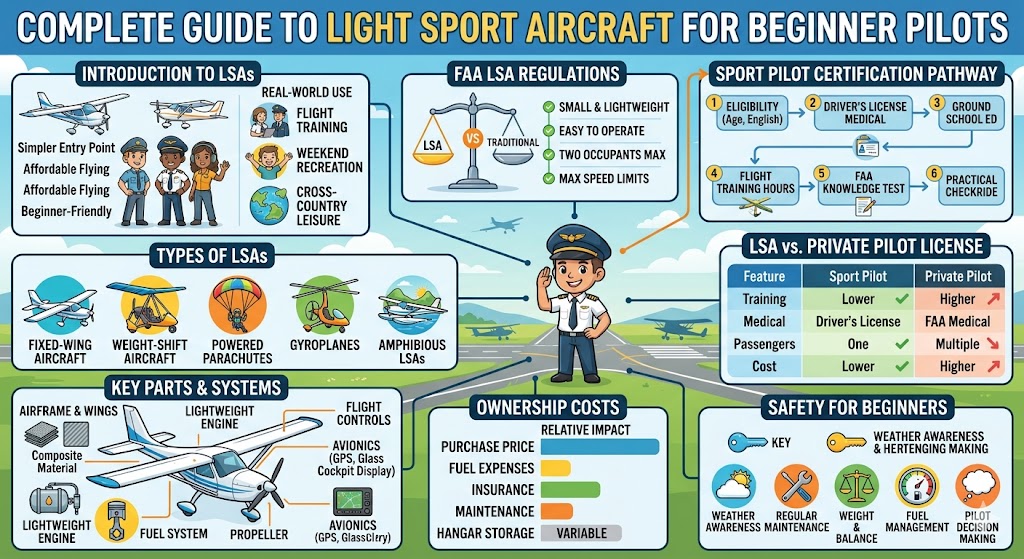
Light Sport Aircraft have transformed recreational aviation by making flying more accessible, affordable, and beginner-friendly. Over the last several years, many aspiring pilots, aviation hobbyists, and recreational flyers have turned to Light Sport Aircraft, commonly called LSAs, because they provide a simpler entry point into aviation compared to traditional aircraft categories.
For many beginners, becoming a pilot can initially seem expensive and complicated. Traditional flight training programs often involve significant costs, advanced certification requirements, and complex aircraft systems. Light Sport Aircraft help reduce many of these barriers by offering simplified aircraft designs, lower operating costs, easier maintenance requirements, and streamlined pilot certification pathways.
LSAs are now widely used for:
- Flight training
- Recreational flying
- Weekend cross-country trips
- Aviation clubs
- Personal aircraft ownership
- Sport Pilot certification programs
Despite their growing popularity, many beginner pilots still have questions about Light Sport Aircraft regulations, pilot licensing requirements, aircraft types, operating costs, safety considerations, and ownership responsibilities.
This complete guide explains everything beginner pilots should know about Light Sport Aircraft, including FAA regulations, Sport Pilot certification, aircraft systems, operating costs, safety practices, ownership considerations, and how to choose the right LSA.
Real-world use cases include:
- Beginner pilot flight training
- Weekend recreational flying
- Affordable personal aircraft ownership
- Cross-country leisure travel
- Sport Pilot certification
- Aviation club participation
- Aviation hobby flying
Evaluation Criteria for Buyers
Before choosing a Light Sport Aircraft, beginner pilots should evaluate:
- Aircraft performance
- Safety systems
- Operating costs
- Fuel efficiency
- Maintenance requirements
- Training suitability
- Manufacturer support
- Parts availability
- Resale value
- Pilot experience requirements
Best for: Student pilots, recreational aviators, Sport Pilot candidates, aviation hobbyists, and first-time aircraft owners.
Not ideal for: Commercial airline operations, heavy cargo transportation, or high-capacity passenger operations.
What Are Light Sport Aircraft?
Light Sport Aircraft are small, lightweight aircraft designed primarily for recreational and sport aviation purposes. These aircraft operate under specific FAA regulations intended to simplify pilot training and reduce operational complexity.
Main Characteristics of LSAs
Light Sport Aircraft are generally:
- Smaller than traditional aircraft
- Easier to operate
- More fuel efficient
- Less expensive to maintain
- Simpler to certify and fly
FAA Light Sport Aircraft Regulations
The FAA created the Light Sport Aircraft category to encourage recreational aviation participation while maintaining operational safety standards.
How LSAs Differ From Traditional Aircraft
Compared to conventional general aviation aircraft, LSAs typically offer:
- Lower operating costs
- Simpler systems
- Reduced weight
- Lower training requirements
- Easier maintenance
Simplified Pilot Certification
The Sport Pilot certification process associated with LSAs requires fewer training hours than many traditional pilot pathways.
Why Light Sport Aircraft Are Popular
Lower Training Costs
Flight training in LSAs is often more affordable due to:
- Lower fuel consumption
- Simpler aircraft systems
- Reduced maintenance expenses
Simplified Certification
The Sport Pilot pathway reduces some certification requirements while still providing a rewarding flying experience.
Lower Operating Costs
LSAs generally consume less fuel and require simpler maintenance procedures.
Recreational Flying Freedom
Many recreational pilots enjoy the simplicity and flexibility of Light Sport flying.
Easier Maintenance
Many LSAs use modern lightweight designs that simplify inspections and repairs.
Modern Aircraft Designs
Modern LSAs often include:
- Glass cockpit systems
- Composite materials
- Advanced avionics
- Efficient engines
Growing Aviation Community
The Light Sport aviation community continues expanding globally through clubs, training schools, and aviation events.
Understanding FAA Light Sport Aircraft Requirements
Maximum Weight Limits
LSAs must remain within FAA-defined weight limitations.
Maximum Seating Capacity
Most Light Sport Aircraft are limited to:
- Two occupants
- Pilot and one passenger
Speed Restrictions
FAA regulations limit maximum flight speeds for LSAs.
Landing Gear Requirements
Aircraft must meet approved landing gear configuration standards.
Aircraft Certification Standards
LSAs must comply with specific manufacturing and operational requirements.
Sport Pilot License Requirements
Eligibility Requirements
Sport Pilot applicants must meet:
- Minimum age requirements
- English language proficiency standards
Medical Requirements
Many Sport Pilots can operate using a valid driver’s license rather than a traditional aviation medical certificate.
Flight Training Requirements
Training includes:
- Flight instruction
- Solo operations
- Ground school education
- Navigation practice
FAA Knowledge Test
Students complete a written examination covering aviation knowledge topics.
Practical Flight Test
Pilots must demonstrate operational competency during a practical evaluation.
Sport Pilot vs Private Pilot License
| Feature | Sport Pilot License | Private Pilot License |
|---|---|---|
| Training Requirements | Lower | Higher |
| Medical Requirements | Simplified | FAA Medical Required |
| Passenger Limit | One Passenger | Multiple Passengers |
| Aircraft Eligibility | Light Sport Aircraft | Broader Aircraft Access |
| Operating Restrictions | More Limited | Greater Flexibility |
| Typical Cost | Lower | Higher |
Types of Light Sport Aircraft
Fixed-Wing Aircraft
These are the most common Light Sport Aircraft.
Characteristics
- Traditional airplane design
- Easy training platform
- Strong cross-country capability
Weight-Shift Aircraft
These aircraft use pilot body movement to influence aircraft control.
Advantages
- Unique flying experience
- Lightweight design
Powered Parachutes
Powered parachutes combine engines with parachute-style wings.
Benefits
- Simpler operation
- Recreational focus
Gyroplanes
Gyroplanes use rotating rotor systems for lift generation.
Features
- Unique handling characteristics
- Enhanced low-speed control
Amphibious LSAs
These aircraft can operate on both land and water.
Advantages
- Versatile recreational capability
- Adventure flying opportunities
Common Parts and Systems of a Light Sport Aircraft
Airframe
The airframe forms the primary structural body of the aircraft.
Wings
Wings generate lift and support stable flight operations.
Engine Systems
LSA engines are typically lightweight and fuel efficient.
Common Engine Types
- Air-cooled engines
- Modern lightweight piston engines
Propeller Systems
Propellers convert engine power into forward thrust.
Avionics
Modern LSAs often feature:
- GPS systems
- Glass cockpit displays
- Communication radios
- Engine monitoring systems
Fuel Systems
Fuel systems safely store and deliver fuel to the engine.
Electrical Systems
Electrical systems power avionics and lighting components.
Flight Controls
Flight controls allow pilots to maneuver the aircraft safely.
How Flight Training Works in a Light Sport Aircraft
Ground School
Students learn aviation theory including:
- Navigation
- Weather
- Regulations
- Aircraft systems
Flight Instruction
Students gradually develop flying skills under instructor supervision.
Solo Training
Students complete solo flights after demonstrating operational competence.
Cross-Country Training
Pilots learn navigation and route planning skills.
FAA Checkride Preparation
Training concludes with preparation for FAA practical examinations.
How Much Does Light Sport Aircraft Ownership Cost?
LSA ownership costs vary depending on aircraft type and operational goals.
Aircraft Purchase Price
Pricing depends on:
- Aircraft condition
- Avionics configuration
- Manufacturer
- Aircraft age
Insurance
Insurance pricing depends on pilot experience and aircraft type.
Fuel Expenses
LSAs generally consume less fuel than larger aircraft.
Maintenance
Simplified systems often reduce maintenance complexity.
Hangar Costs
Storage costs vary by airport location.
Annual Inspections
Aircraft require regular inspections for operational safety.
Avionics Upgrades
Modern avionics installations may increase overall ownership costs.
Light Sport Ownership Cost Comparison
| Expense Category | Typical Cost Impact |
|---|---|
| Aircraft Purchase | Major Investment |
| Fuel | Lower Than Traditional Aircraft |
| Insurance | Moderate |
| Maintenance | Relatively Lower |
| Hangar Storage | Variable |
| Avionics Upgrades | Optional |
New vs Used Light Sport Aircraft
| Feature | New Aircraft | Used Aircraft |
|---|---|---|
| Purchase Price | Higher | Lower |
| Warranty Coverage | Usually Included | Limited |
| Technology Features | Modern | Varies |
| Maintenance Expectations | Lower Initially | May Be Higher |
| Resale Considerations | Strong | Dependent on Condition |
Safety Considerations for Beginner Pilots
Weather Awareness
Weather conditions significantly impact Light Sport operations.
Aircraft Maintenance
Regular inspections improve aircraft reliability and safety.
Weight and Balance
Improper loading can affect aircraft performance and stability.
Fuel Management
Fuel planning is critical for safe operations.
Emergency Procedures
Pilots must understand emergency response procedures.
Pilot Decision Making
Safe aviation requires disciplined judgment and operational awareness.
Common Mistakes Beginner Pilots Make
- Skipping weather briefings
- Poor fuel planning
- Overloading aircraft
- Rushing flight training
- Ignoring maintenance schedules
- Poor flight planning
- Inadequate crosswind preparation
- Weak communication skills
- Delaying safety training
- Overconfidence during early flight experience
How to Choose the Right Light Sport Aircraft
Flight Training Goals
Choose aircraft aligned with your operational objectives.
Budget Considerations
Evaluate both purchase and operational costs.
Aircraft Performance
Consider:
- Cruise speed
- Range
- Payload capacity
- Climb performance
Maintenance Requirements
Some aircraft require more specialized support than others.
Manufacturer Support
Reliable support simplifies ownership and maintenance.
Availability of Parts
Parts availability affects long-term operational reliability.
Local Training Resources
Access to instructors and maintenance support is important.
Questions Buyers Should Ask Before Purchasing
- What are the operating costs?
- Is maintenance support available locally?
- What training is recommended?
- Are parts readily available?
- How fuel efficient is the aircraft?
- What avionics systems are installed?
- What is the aircraft’s maintenance history?
- What inspections are required?
- What pilot experience level is recommended?
- Is transition training available?
The Role of Technology in Modern Light Sport Aircraft
Glass Cockpit Systems
Digital flight displays improve situational awareness.
Digital Engine Monitoring
Modern systems provide real-time engine performance data.
GPS Navigation
Advanced navigation systems improve route planning and safety.
Flight Planning Apps
Mobile aviation applications simplify operational preparation.
Modern Avionics
Technology continues improving pilot workload management.
Safety Enhancements
Modern LSAs increasingly integrate advanced safety systems.
Future Trends in Light Sport Aviation
Electric Light Sport Aircraft
Electric propulsion technologies continue advancing rapidly.
Advanced Composite Materials
Modern composites improve efficiency and reduce weight.
Smart Cockpit Technology
Future cockpit systems will continue becoming more advanced.
Sustainable Aviation
Environmental efficiency is becoming increasingly important in recreational aviation.
Improved Safety Systems
Future aircraft will continue integrating advanced operational safety technologies.
Frequently Asked Questions
1. What is a Light Sport Aircraft?
A Light Sport Aircraft is a lightweight recreational aircraft designed under specific FAA operational and certification standards.
2. Can beginners fly LSAs?
Yes. LSAs are specifically designed to provide beginner-friendly flying experiences.
3. What is a Sport Pilot License?
A Sport Pilot License allows pilots to operate Light Sport Aircraft under simplified certification requirements.
4. How much training is required?
Training requirements vary depending on student progress and certification goals.
5. Are LSAs safe?
Properly maintained LSAs operated within regulations can provide safe and enjoyable aviation experiences.
6. How much does ownership cost?
Ownership costs vary depending on aircraft type, maintenance needs, storage, and operational usage.
7. Can LSAs be used for cross-country flying?
Yes. Many LSAs are capable of recreational cross-country operations.
8. What fuel do LSAs use?
Fuel requirements depend on engine type and aircraft configuration.
9. Are maintenance costs lower?
In many cases, LSA maintenance costs are lower than larger traditional aircraft.
10. What is the best LSA for beginners?
The best aircraft depends on training goals, budget, operational needs, and pilot preferences.
Conclusion
Light Sport Aircraft have opened new opportunities for beginner pilots and recreational aviation enthusiasts by making flying more affordable, accessible, and enjoyable. With simplified certification pathways, lower operating costs, modern aircraft technologies, and strong recreational flying capabilities, LSAs provide an excellent entry point into aviation for first-time pilots. Whether pursuing a Sport Pilot License, weekend recreational flying, cross-country adventures, or affordable aircraft ownership, Light Sport Aircraft offer a practical and rewarding aviation experience. Understanding FAA regulations, aircraft systems, safety procedures, operating costs, and training requirements is essential for making informed decisions as a new pilot. As aviation technology continues evolving through modern avionics, lightweight materials, electric propulsion systems, and advanced safety enhancements, the future of Light Sport aviation will continue becoming even more exciting and accessible for the next generation of recreational pilots.

