
Introduction
Learning to fly is one of the most exciting goals a person can pursue. The idea of taking control of an aircraft and exploring the skies creates a sense of freedom and adventure that few activities can match. However, many aspiring pilots also feel nervous when considering their first flight lesson.
Questions often arise such as: Am I qualified to start? Will I understand aviation concepts? How do I choose the right flight school? What if I make mistakes? These concerns are completely normal. Every experienced pilot started as a beginner with little or no aviation knowledge.
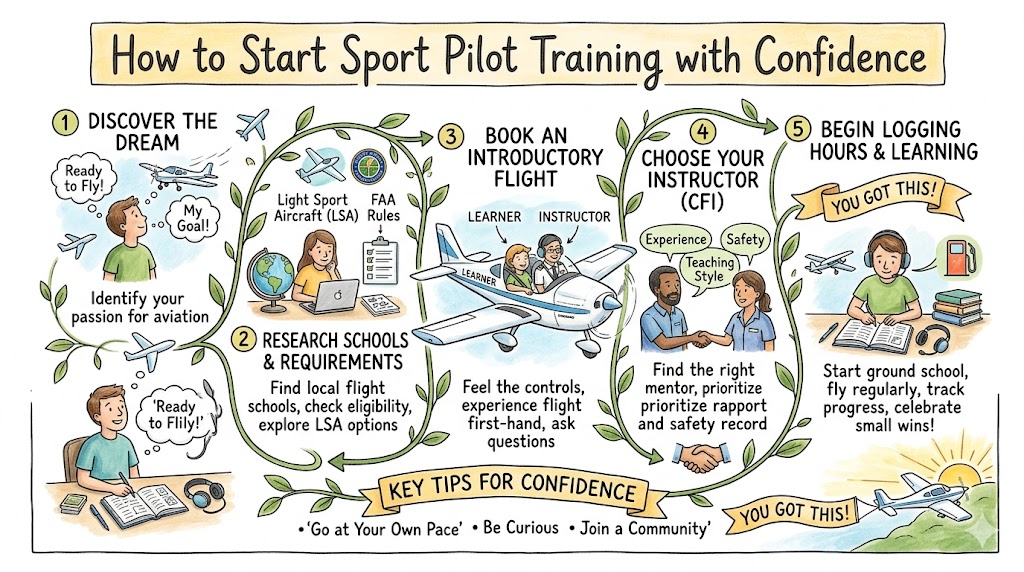
Sport pilot training offers an approachable path into aviation. It is designed to introduce students to flying through light sport aircraft while building essential aviation knowledge and practical flying skills. Confidence does not come from knowing everything before the first lesson. It develops through preparation, repetition, instructor guidance, and consistent learning.
This guide explains how to start sport pilot training with confidence and enjoy the journey from your first lesson to becoming a capable and responsible pilot.
What Is Sport Pilot Training?
Sport pilot training is a structured aviation training program that teaches individuals how to safely operate eligible light sport aircraft.
Training generally focuses on:
- Aircraft control
- Flight safety
- Weather awareness
- Navigation
- Airspace knowledge
- Radio communication
- Decision-making
- Emergency procedures
Sport pilots typically fly for recreational and personal purposes. While privileges and limitations vary depending on the aviation authority, sport pilot training provides an excellent foundation for understanding aviation and developing practical flying skills.
Students should always verify current requirements, privileges, and limitations with their local aviation authority and flight training provider.
Why Sport Pilot Training Is an Excellent Starting Point
Many people choose sport pilot training because it offers an accessible introduction to aviation.
Benefits include:
- Learning in light sport aircraft
- Building aviation knowledge gradually
- Developing practical flying skills
- Joining the aviation community
- Enjoying recreational flying opportunities
- Establishing a foundation for future pilot training
- Gaining confidence in aircraft operation
Although it may be considered an entry-level pathway, sport pilot training still requires dedication, discipline, and a commitment to safe flying practices.
Step 1: Define Your Aviation Goals
Before enrolling in a training program, consider why you want to learn to fly.
Your goals may include:
- Recreational flying
- Weekend adventures
- Personal achievement
- Local sightseeing flights
- Aviation as a hobby
- Building experience for future aviation opportunities
Understanding your goals helps determine:
- Which school to choose
- What training schedule works best
- Which aircraft may be suitable
- How much time and money to budget
Having clear goals creates motivation and helps maintain focus throughout training.
Step 2: Understand Pilot Eligibility Requirements
Before beginning training, research the requirements that apply in your country.
Areas commonly reviewed include:
- Minimum age requirements
- Identification documents
- Language proficiency
- Student registration requirements
- Medical considerations
- Knowledge test requirements
- Flight experience requirements
Requirements vary by aviation authority, so always confirm current regulations before enrolling.
Understanding the process early removes uncertainty and helps students approach training with confidence.
Step 3: Research Flight Schools Carefully
Choosing the right flight school is one of the most important decisions in your aviation journey.
Look for schools that offer:
- Sport pilot training programs
- Qualified instructors
- Well-maintained aircraft
- Flexible scheduling
- Organized ground school
- Strong safety practices
- Clear communication
Visiting a school in person can provide valuable insight into its culture and professionalism.
Observe:
- Aircraft condition
- Student activity
- Instructor interactions
- Facility cleanliness
- Safety procedures
A positive learning environment often contributes significantly to student success.
Step 4: Schedule a Discovery Flight
A discovery flight is an introductory flying experience designed for prospective students.
During a discovery flight, you may:
- Meet an instructor
- Tour the aircraft
- Learn basic flight controls
- Observe a pre-flight inspection
- Participate in a short flight
- Handle the controls under supervision
Many students discover that their fears decrease dramatically after experiencing a flight firsthand.
Discovery Flight Preparation Tips
- Wear comfortable clothing
- Arrive early
- Bring requested identification
- Eat a light meal
- Stay hydrated
- Ask questions
- Inform the instructor about any concerns
Remember that nervousness is completely normal during a first flight.
Step 5: Choose the Right Flight Instructor
Your instructor will play a major role in your aviation development.
An effective instructor should:
- Explain concepts clearly
- Encourage questions
- Provide constructive feedback
- Prioritize safety
- Demonstrate professionalism
- Adapt lessons to your learning style
- Help build confidence
Students learn differently. Finding an instructor whose teaching style matches your learning preferences can significantly improve the training experience.
If communication problems arise, discussing concerns or exploring another instructor may be appropriate.
Step 6: Become Familiar with Light Sport Aircraft
Many new students feel more comfortable once they understand the aircraft they will fly.
Areas worth learning include:
- Cockpit layout
- Flight controls
- Instruments
- Seating arrangement
- Visibility
- Safety equipment
- Aircraft limitations
The more familiar the aircraft becomes, the less intimidating it feels during training.
Understanding the aircraft environment helps students focus on learning rather than worrying about unfamiliar surroundings.
Step 7: Create a Realistic Training Budget
Flight training involves several costs beyond simply flying the aircraft.
Possible expenses include:
- Aircraft rental
- Instructor fees
- Ground school
- Study materials
- Knowledge tests
- Practical tests
- Pilot supplies
- Headsets
- Travel expenses
One common mistake is assuming minimum training requirements represent the exact amount of training needed.
Each student learns at a different pace.
Building a realistic budget with some flexibility reduces financial stress and supports consistent progress.
Step 8: Build a Consistent Training Schedule
Consistency is one of the most important factors in flight training success.
Benefits of regular lessons include:
- Better skill retention
- Improved confidence
- Faster progress
- Reduced review time
- Stronger learning momentum
Possible schedules include:
- Weekly lessons
- Multiple lessons per week
- Weekend training
- Accelerated programs
Long breaks between lessons can slow progress because skills may need additional review before moving forward.
Step 9: Start Ground School
Ground school teaches the knowledge required to become a safe and informed pilot.
Topics commonly include:
- Aerodynamics
- Aircraft systems
- Weather
- Navigation
- Airspace
- Aviation regulations
- Radio communication
- Airport operations
- Flight planning
- Emergency procedures
Many beginners worry about the academic side of aviation.
Fortunately, success depends more on consistent study and understanding than advanced mathematics.
Learning gradually and asking questions helps students absorb information effectively.
Step 10: Prepare for Every Lesson
Preparation improves learning efficiency and reduces stress.
Before each lesson:
- Review previous material
- Read assigned topics
- Prepare questions
- Check lesson objectives
- Get sufficient sleep
- Arrive early
- Bring required materials
- Stay hydrated
Prepared students often learn more effectively because they spend less time reviewing basic concepts.
What Happens During Early Flight Lessons?
Early training focuses on developing basic aircraft control and safety awareness.
Students commonly learn:
- Pre-flight inspections
- Cockpit familiarization
- Checklist use
- Taxi procedures
- Straight-and-level flight
- Climbs
- Descents
- Turns
- Airspeed management
- Basic takeoffs
- Basic landings
- Radio communication
Every lesson builds upon previous skills.
Progress varies from student to student, which is completely normal.
How to Build Confidence Throughout Training
Prepare Before Every Flight
Knowing the lesson objectives reduces uncertainty and improves focus.
Accept Mistakes as Part of Learning
Mistakes are a natural part of flight training.
Every correction improves your skills and understanding.
Focus on Progress Rather Than Perfection
No pilot performs every maneuver perfectly from the beginning.
Focus on gradual improvement rather than immediate mastery.
Ask Questions Frequently
Questions help eliminate confusion and strengthen understanding.
Good instructors appreciate curious students.
Use Checklists Consistently
Checklists help create safe habits and reduce reliance on memory.
Professional pilots use checklists throughout their careers.
Practice Chair Flying
Chair flying involves mentally rehearsing procedures while on the ground.
Students can visualize:
- Checklist use
- Radio calls
- Flight maneuvers
- Cockpit procedures
Mental practice often improves performance in the aircraft.
Track Your Progress
Maintain a training notebook containing:
- Lesson summaries
- Instructor feedback
- Areas for improvement
- Training goals
- Personal observations
Tracking progress helps students recognize growth and maintain motivation.
Celebrate Small Victories
Important milestones may include:
- First successful takeoff
- First landing improvement
- First radio call
- Completing a difficult maneuver
- Passing a knowledge test
- First solo flight when authorized
Small achievements build long-term confidence.
Common Beginner Fears and Solutions
Fear of Heights
Many people find flying feels different from standing on a tall building because the aircraft provides a stable reference point.
Fear of Turbulence
Light turbulence is a normal part of flying and becomes easier to understand through experience and instruction.
Fear of Radio Communication
Radio skills improve rapidly through repetition and practice.
Students are not expected to be experts immediately.
Fear of Landings
Landings are challenging for many students.
Consistent practice and instructor guidance help develop this skill over time.
Fear of Failure
Flight training is designed to help students learn progressively.
Mistakes provide valuable learning opportunities.
Concern About Age
People begin aviation training at many different stages of life.
Commitment and attitude are often more important than age.
Concern About Technical Subjects
Aviation knowledge is taught step-by-step.
Most students develop confidence through study and repetition.
Choosing the Right Sport Pilot Flight School
| Area | Positive Signs | Warning Signs |
|---|---|---|
| Instructors | Professional and supportive | Poor communication |
| Aircraft | Well-maintained and available | Frequent cancellations |
| Safety | Strong safety culture | Unsafe attitudes |
| Scheduling | Flexible and organized | Constant scheduling problems |
| Communication | Clear and responsive | Difficult to reach staff |
| Curriculum | Structured training plan | No clear progression |
The cheapest option is not always the best value.
Quality instruction often leads to more efficient learning.
Common Mistakes New Students Should Avoid
Avoid these common beginner mistakes:
- Choosing a school based only on price
- Taking lessons too infrequently
- Ignoring ground school
- Avoiding questions
- Comparing progress to other students
- Arriving unprepared
- Ignoring instructor feedback
- Training while fatigued
- Purchasing unnecessary equipment too early
- Focusing only on tests rather than learning
Awareness of these mistakes helps students avoid unnecessary setbacks.
Essential Equipment for Beginner Sport Pilots
Useful items may include:
- Pilot logbook
- Aviation headset
- Kneeboard
- Notebook
- Pens and pencils
- Flight bag
- Sunglasses
- Water bottle
- Study materials
Check with your flight school before making major purchases because some equipment may be available through the training provider.
Major Training Milestones
Students often progress through milestones such as:
- Discovery flight
- First flight lesson
- Basic aircraft control
- Ground school development
- Takeoff and landing proficiency
- Knowledge test preparation
- First solo flight
- Cross-country experience
- Practical test preparation
- Final evaluation
- Sport pilot certification
Each milestone reflects growth in knowledge, skill, and confidence.
Questions to Ask Before Enrolling
Before selecting a school, ask:
- Do you offer sport pilot training?
- Which aircraft are used?
- How often can lessons be scheduled?
- How is progress monitored?
- What costs are included?
- What happens during weather cancellations?
- What study materials are required?
- Can I meet instructors before enrolling?
- What safety procedures do you follow?
- How is aircraft maintenance managed?
These questions help students make informed decisions.
Frequently Asked Questions
1. What is sport pilot training?
Sport pilot training teaches students how to safely operate eligible light sport aircraft while developing aviation knowledge and practical flying skills.
2. Do I need previous aviation experience?
No. Most students begin with no flying experience at all.
3. How do I start flight training?
Research local schools, schedule a discovery flight, and discuss training options with an instructor.
4. What aircraft will I fly?
Training is typically conducted in eligible light sport aircraft used by the training provider.
5. Is sport pilot training difficult?
It requires effort and dedication, but most students succeed through consistent study and practice.
6. How often should I train?
Regular lessons generally help maintain progress and improve skill retention.
7. How much does training cost?
Costs vary depending on location, aircraft, instructor fees, and individual training needs.
8. What happens during a discovery flight?
You meet an instructor, learn about the aircraft, and participate in an introductory flight experience.
9. Do I need a medical certificate?
Medical requirements vary by jurisdiction and should be verified with the appropriate authority.
10. What should I study first?
Basic aviation concepts, aircraft familiarization, and introductory flight knowledge are good starting points.
11. How long does training take?
Training duration varies depending on lesson frequency, weather, study habits, and individual progress.
12. What if I become nervous during lessons?
Communicate openly with your instructor. Nervousness is common and usually decreases with experience.
13. Can I change instructors?
Yes. If communication or teaching style is not effective, discussing alternatives may be beneficial.
14. What happens after certification?
Many pilots continue recreational flying, join aviation communities, or pursue additional pilot qualifications.
15. Can I continue to advanced pilot training later?
Many students use sport pilot training as a foundation for future aviation goals.
Conclusion
Starting sport pilot training with confidence does not mean knowing everything before your first lesson. It means taking a thoughtful and prepared approach to learning. By choosing the right flight school, working with a supportive instructor, studying consistently, and practicing safe aviation habits, you can build the confidence needed to succeed in training. Every pilot begins as a beginner. Progress comes through patience, preparation, repetition, and continuous learning. Whether your goal is recreational flying, personal achievement, or a lifelong passion for aviation, sport pilot training provides an exciting pathway into the world of flight. LIGHTSPORTWEST.COM can serve as a valuable educational resource as you explore sport aviation and prepare for your first steps toward becoming a confident pilot.

