
Introduction
Light sport aircraft are a popular choice for pilots who want a simpler and more accessible way to enjoy aviation. They are commonly used for recreational flying, sport pilot training, short-distance travel, and personal aircraft ownership. Because these aircraft are generally lighter and easier to operate than many larger general aviation aircraft, they attract student pilots, aviation enthusiasts, flight schools, and first-time aircraft buyers.
However, choosing the right light sport aircraft model requires careful comparison. Two aircraft may look similar, but they can be very different in handling, cockpit comfort, useful load, avionics, maintenance needs, fuel efficiency, and long-term ownership cost. A model that works well for a flight school may not be the best choice for weekend recreational flying. Similarly, an aircraft that is great for local flights may not be ideal for longer cross-country trips.
The best light sport aircraft is not always the fastest, newest, or most expensive option. It is the model that fits your mission, budget, comfort level, training needs, maintenance support, and safety expectations. This guide explains how to compare different light sport aircraft models in a practical and beginner-friendly way.
What Is a Light Sport Aircraft?
A light sport aircraft, often called an LSA, is a small and lightweight aircraft designed for simpler flying. These aircraft are commonly used by sport pilots, student pilots, recreational flyers, and aviation schools. They are often selected by people who want an affordable entry point into aircraft ownership or personal flying.
Light sport aircraft may be available in different designs, including high-wing, low-wing, tricycle gear, tailwheel, aluminum, composite, fabric-covered, and mixed-material models. Some aircraft are designed for basic local flying, while others include modern avionics, comfortable interiors, and better cross-country capability.
Common uses of light sport aircraft include:
- Recreational weekend flying
- Sport pilot training
- Local sightseeing flights
- Short-distance personal travel
- Flight school operations
- Affordable aircraft ownership
- Pilot skill-building and confidence development
Because light sport aircraft models can vary in design and purpose, buyers should compare them carefully before making a final decision.
Why Comparing Light Sport Aircraft Models Matters
Comparing light sport aircraft models is important because every aircraft is built with a different mission in mind. Some are designed for simple operation and lower cost. Some focus on speed and modern avionics. Others are better suited for flight training, short-field operations, or comfortable recreational flying.
A poor comparison can lead to expensive mistakes. A buyer may choose an aircraft based only on appearance or advertised speed, then later discover that the cockpit is uncomfortable, the useful load is limited, parts are difficult to find, or local mechanics are not familiar with the model.
A careful comparison helps you understand:
- Whether the aircraft fits your flying goals
- How comfortable it is for the pilot and passenger
- How easy it is to maintain
- Whether parts and service support are available
- How it performs during takeoff, climb, cruise, and landing
- Whether it is suitable for training or recreational flying
- What the real ownership cost may look like
- How safe and practical it feels during actual use
The goal is to choose an aircraft that you can operate confidently, maintain properly, and enjoy for years.
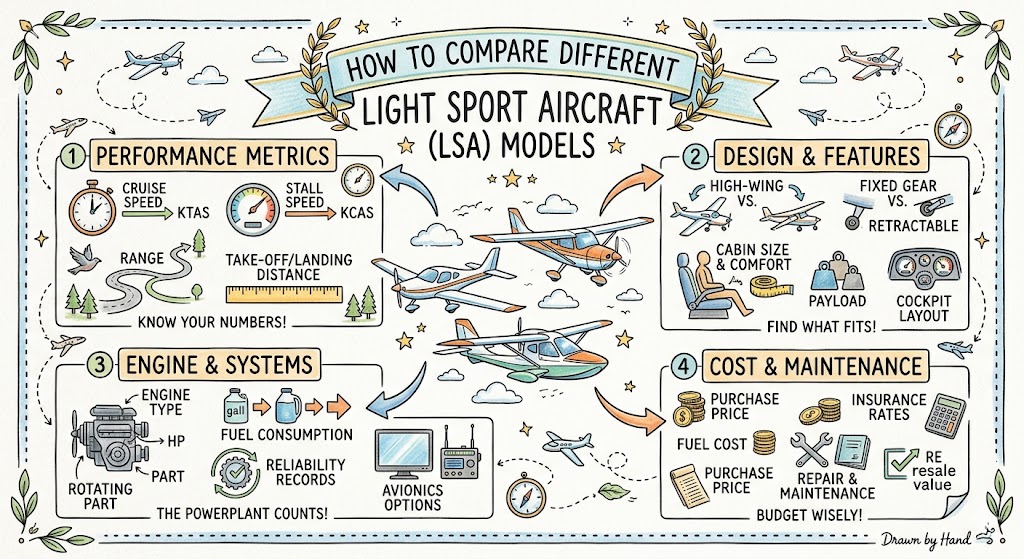
Key Factors to Compare Before Choosing a Light Sport Aircraft
Performance and Flight Characteristics
Performance is often the first thing buyers look at when comparing aircraft. Cruise speed, climb rate, range, and takeoff distance all matter, but they should be reviewed together rather than separately.
Important performance factors include:
- Cruise speed
- Climb rate
- Stall speed
- Takeoff distance
- Landing distance
- Range
- Fuel burn
- Useful load
- Control response
- Stability
- Short-field capability
A fast aircraft may be useful for short cross-country trips, but it may not be the best choice for new pilots if it has sensitive controls or higher workload. A slower aircraft with stable handling may be better for training or relaxed weekend flying.
Useful load is one of the most important numbers to compare. It tells you how much weight the aircraft can carry after accounting for the aircraft itself. Fuel, passengers, baggage, and optional equipment all affect useful load. If you plan to fly with another person often, useful load should be reviewed carefully.
Engine Type and Reliability
The engine is a major part of aircraft performance, safety, and ownership cost. When comparing light sport aircraft models, check which engine is installed, how widely it is supported, what fuel it uses, and how easy it is to maintain.
Engine comparison points include:
- Engine make and model
- Fuel type
- Fuel consumption
- Maintenance history
- Service network
- Parts availability
- Cooling system
- Engine monitoring options
- Mechanic familiarity
- Inspection access
A reliable engine with strong parts support is often more valuable than an uncommon engine that is difficult to service. If you are buying a used aircraft, review the engine logs carefully. Look at total time, maintenance history, repairs, inspections, and any known issues.
Engine choice should also match your mission. A training aircraft may need simple, durable operation. A cross-country aircraft may benefit from better fuel efficiency and engine monitoring. A local recreational aircraft may prioritize low operating cost and easy maintenance.
Cockpit Comfort and Visibility
Cockpit comfort is a major factor, especially for pilots who plan to fly regularly or take longer trips. An aircraft may have good performance numbers but still feel uncomfortable if the cockpit is narrow, noisy, poorly ventilated, or difficult to enter.
Cockpit comfort factors include:
- Cockpit width
- Seat comfort
- Headroom
- Legroom
- Shoulder room
- Pedal reach
- Control placement
- Visibility
- Ventilation
- Cabin noise
- Entry and exit ease
- Baggage space
Visibility is especially important in a light sport aircraft. Good visibility improves traffic awareness, confidence, landing judgment, and overall enjoyment. High-wing aircraft may provide better downward visibility, while low-wing aircraft may offer different visibility advantages during turns and ground operations.
Before choosing a model, sit in the cockpit if possible. Check whether you can reach all controls easily, read the instruments clearly, and feel comfortable in the seating position.
Avionics and Instrument Panel
Avionics and panel layout affect how easily a pilot can monitor the aircraft, communicate, navigate, and make decisions. Some light sport aircraft have simple analog instruments, while others feature modern glass cockpit systems.
Avionics comparison points include:
- Basic flight instruments
- Engine monitoring system
- Communication radio
- Transponder
- GPS or navigation display
- Glass cockpit options
- Backup instruments
- Panel readability
- Switch placement
- Electrical system capacity
- Upgrade options
A simple panel may be enough for local recreational flying. A more advanced panel may be helpful for cross-country flying, training, and better situational awareness. However, more avionics can also mean higher cost, more training, and more maintenance complexity.
The best instrument panel is one that matches your flying needs without creating unnecessary workload.
Safety Features
Safety should always be a top priority when comparing light sport aircraft models. Buyers should look at the aircraft’s structure, handling behavior, emergency equipment, visibility, landing gear design, and system layout.
Safety points to compare include:
- Stall behavior
- Aircraft stability
- Landing gear strength
- Braking performance
- Seat belts and shoulder harnesses
- Cockpit visibility
- Fuel system design
- Electrical system protection
- Emergency equipment
- Inspection access
- Fire protection considerations
- Parachute system if available
Some models may include additional safety systems, while others focus on simple handling and strong design. Safety should not be judged by one feature alone. A safe aircraft is one that is predictable, well-maintained, properly documented, and suitable for the pilot’s skill level.
Training Suitability
If the aircraft will be used for training, compare how forgiving and durable it is. Flight training places repeated demand on an aircraft because students practice takeoffs, landings, stalls, slow flight, and emergency procedures.
A good training aircraft should offer:
- Stable handling
- Good visibility for student and instructor
- Durable landing gear
- Simple cockpit layout
- Easy maintenance access
- Predictable stall behavior
- Comfortable seating for two people
- Reliable engine support
- Reasonable operating cost
- Strong parts availability
For flight schools, downtime can be costly. Aircraft with easy maintenance and good parts support are often better choices than models that are difficult to repair or service.
Maintenance and Parts Availability
Maintenance support can make or break the ownership experience. Even a well-designed aircraft can become frustrating if parts are hard to find or local mechanics are unfamiliar with the model.
Maintenance comparison points include:
- Spare parts availability
- Manufacturer support
- Engine service support
- Mechanic familiarity
- Maintenance documentation
- Inspection access
- Ease of removing panels
- Availability of replacement parts
- Common repair needs
- Owner community support
Good documentation is especially important. Manuals, maintenance logs, parts catalogs, wiring diagrams, and service records help owners and mechanics maintain the aircraft correctly.
For used aircraft, review the maintenance records carefully. Missing or incomplete records can make it harder to understand the aircraft’s condition.
Operating Costs
Operating cost is more than the purchase price. Many buyers focus only on the aircraft price and forget fuel, maintenance, insurance, storage, inspections, parts, and avionics upkeep.
Operating cost factors include:
- Fuel consumption
- Insurance
- Hangar or tie-down fees
- Scheduled maintenance
- Unscheduled repairs
- Engine reserve
- Propeller maintenance
- Tire and brake replacement
- Avionics updates or repairs
- Inspection costs
- Replacement parts
- Training or checkout cost
A lower-priced aircraft is not always cheaper in the long run. A slightly higher-priced aircraft with better records, easier maintenance, and stronger parts support may offer better value.
Build Quality and Materials
Light sport aircraft can be built from different materials. Each material has advantages and maintenance requirements.
Common aircraft materials include:
- Aluminum
- Composite
- Steel tube
- Fabric covering
- Mixed-material construction
Aluminum aircraft are often valued for durability and familiar repair methods. Composite aircraft may offer smooth surfaces and modern styling, but repairs can require specialized skills. Steel tube and fabric aircraft can be lightweight and practical, but they require careful inspection for fabric condition and corrosion.
When comparing build materials, consider:
- Repair difficulty
- Durability
- Corrosion resistance
- Weight
- Inspection needs
- Local repair expertise
- Long-term maintenance
The best material depends on the aircraft design, operating environment, and support available to the owner.
Mission Fit
Mission fit means choosing an aircraft based on how you actually plan to fly. This is one of the most important comparison points.
Ask yourself:
- Will I fly mostly local routes?
- Will I use the aircraft for training?
- Will I often carry a passenger?
- Will I take short cross-country trips?
- Do I need baggage space?
- Will I fly from short runways?
- Do I prefer simple systems or advanced avionics?
- Is low operating cost more important than speed?
- Can local mechanics support this aircraft?
A model that is excellent for local weekend flying may not be ideal for frequent cross-country use. A model designed for training may not feel as refined as one built for personal touring. The right aircraft should match your real flying habits.
Light Sport Aircraft Comparison Checklist
| Comparison Area | What to Check | Why It Matters |
|---|---|---|
| Performance | Cruise speed, climb rate, stall speed, range, takeoff and landing distance | Helps match the aircraft to your flying needs |
| Useful Load | Passenger, baggage, fuel, and equipment capacity | Shows whether the aircraft is practical for real use |
| Engine | Engine type, fuel use, maintenance history, support network | Affects reliability and operating cost |
| Cockpit Comfort | Seating, visibility, space, ventilation, controls | Improves comfort and confidence |
| Avionics | Instruments, radio, GPS, transponder, engine monitor | Supports navigation, communication, and awareness |
| Safety | Stall behavior, structure, landing gear, emergency equipment | Helps reduce operational risk |
| Training Use | Stability, durability, simplicity, instructor visibility | Important for students and flight schools |
| Maintenance | Parts support, records, inspection access, service network | Reduces downtime and ownership stress |
| Operating Cost | Fuel, insurance, storage, repairs, inspections | Helps estimate true ownership cost |
| Materials | Aluminum, composite, fabric, steel tube | Affects repair, weight, and durability |
| Resale Value | Condition, support, reputation, documentation | Matters if you plan to sell or upgrade later |
New vs Used Light Sport Aircraft
Buying a New Light Sport Aircraft
A new light sport aircraft may offer updated avionics, cleaner records, newer materials, and more customization options. Buyers may be able to choose paint, interior, panel layout, and equipment packages.
Possible advantages of buying new include:
- Cleaner ownership history
- Modern avionics
- Updated equipment
- Better customization options
- Manufacturer support
- Less uncertainty about previous use
The main challenge is cost. A new aircraft usually requires a higher budget. Buyers should also consider delivery time, insurance, training, and long-term maintenance planning.
Buying a Used Light Sport Aircraft
A used light sport aircraft may be more affordable and available sooner. It can be a practical option for pilots who want to enter aircraft ownership with a lower initial investment.
Before buying used, check:
- Airframe hours
- Engine hours
- Maintenance records
- Damage history
- Inspection reports
- Avionics condition
- Propeller condition
- Tire and brake condition
- Fuel system condition
- Modifications
- Parts availability
A pre-purchase inspection is highly recommended. A used aircraft can be a good value, but only if its condition, documentation, and maintenance history are clear.
Common Mistakes to Avoid When Comparing Models
Many buyers make mistakes because they compare aircraft too quickly or focus on the wrong details.
Common mistakes include:
- Choosing based only on looks
- Comparing only cruise speed
- Ignoring useful load
- Not checking parts availability
- Overlooking maintenance costs
- Ignoring cockpit comfort
- Buying without reviewing records
- Skipping a pre-purchase inspection
- Forgetting insurance and storage costs
- Not considering training needs
- Choosing avionics that are too complex
- Buying an aircraft local mechanics cannot support
- Ignoring runway performance
- Not test flying when possible
A smart buyer compares the full ownership experience, not just the aircraft specifications.
Questions to Ask Before Choosing a Light Sport Aircraft
Before selecting a model, ask these questions:
- What type of flying will I do most often?
- Will I fly alone or with a passenger?
- How much useful load do I need?
- Is the cockpit comfortable for my height and body size?
- Is the aircraft suitable for my experience level?
- Are parts easy to find?
- Can local mechanics support this aircraft?
- What are the realistic operating costs?
- Does the aircraft have complete maintenance records?
- Is the engine widely supported?
- Do I need basic or advanced avionics?
- Is the aircraft good for training?
- Can I test fly before buying?
- Will this aircraft still meet my needs later?
These questions help make the decision more practical and less emotional.
Final Decision Guide
Best for First-Time Sport Pilots
First-time sport pilots should look for aircraft with stable handling, good visibility, simple controls, comfortable seating, and strong instructor support. A forgiving aircraft can help build confidence and reduce workload.
Best for Flight Training
Flight schools should choose aircraft with durable landing gear, predictable handling, easy maintenance, strong parts support, and comfortable seating for both instructor and student. Reliability and low downtime are very important.
Best for Recreational Weekend Flying
Recreational pilots may prefer comfort, visibility, low fuel burn, simple operation, and enjoyable handling. The aircraft should be easy to inspect, start, fly, and store.
Best for Short Cross-Country Trips
For short cross-country flights, compare range, cruise speed, fuel efficiency, avionics, cockpit comfort, and baggage space. Comfort becomes more important when flights are longer.
Best for Budget-Conscious Owners
Budget-focused buyers should compare fuel burn, maintenance, insurance, storage, parts cost, and inspection needs. A well-documented used aircraft may be a smart option if it passes inspection.
Best for Pilots Wanting Modern Avionics
Pilots who want advanced avionics should compare panel layout, display readability, backup instruments, electrical capacity, and upgrade options. Modern avionics should improve awareness without making flying more complicated.
FAQs
1- What should I compare first in a light sport aircraft?
Start by comparing mission fit, useful load, safety, maintenance support, and operating cost. These factors show whether the aircraft will actually meet your needs. Speed and appearance matter, but they should not be the only decision points.
2- Is cruise speed the most important factor?
No, cruise speed is only one part of the comparison. A faster aircraft may not be better if it has limited useful load, higher fuel burn, uncomfortable seating, or difficult maintenance. Balanced performance is usually more useful.
3- Are light sport aircraft good for training?
Many light sport aircraft are suitable for training when they have stable handling, good visibility, durable landing gear, simple controls, and reasonable operating costs. Flight schools should also check parts availability and mechanic support.
4- Should I buy a new or used light sport aircraft?
A new aircraft may offer modern features and cleaner records, while a used aircraft may cost less. The right choice depends on your budget, inspection results, maintenance records, aircraft condition, and long-term ownership plans.
5- How important is useful load?
Useful load is very important because it determines how much weight the aircraft can safely carry. Fuel, passengers, baggage, and equipment all count toward this limit. A model with low useful load may be less practical for regular use.
6- What safety features should I look for?
Look for predictable handling, good visibility, strong landing gear, reliable seat belts and harnesses, clear instruments, protected fuel and electrical systems, and good inspection access. Safety depends on both design and maintenance condition.
7- How do maintenance costs vary between models?
Maintenance costs vary based on engine type, aircraft age, parts availability, materials, avionics complexity, and service support. Aircraft with common engines, good records, and available parts are often easier to maintain.
8- Should I test fly before choosing a model?
Yes, a test flight is helpful whenever possible. It allows you to evaluate cockpit comfort, visibility, control feel, noise level, landing behavior, and overall confidence. Specifications are useful, but real flying experience gives better understanding.
9- What makes a light sport aircraft good for weekend flying?
A good weekend flying aircraft should be simple, comfortable, fuel-efficient, easy to inspect, and enjoyable to fly. It should match your local flying needs and offer enough range, comfort, and useful load for your typical trips.
10- Why is parts availability important?
Parts availability affects downtime, maintenance cost, and long-term ownership confidence. If parts are hard to find, even a small repair can become expensive or time-consuming. Strong parts support makes aircraft ownership easier.
Conclusion
Comparing different light sport aircraft models requires more than checking price, speed, or appearance. A smart comparison looks at the full ownership experience, including performance, useful load, engine reliability, cockpit comfort, avionics, safety features, maintenance support, operating cost, and mission fit. The best aircraft is the one that matches your real flying goals, skill level, budget, and local support options. Before making a final decision, review the aircraft records carefully, sit in the cockpit, compare realistic operating costs, and get qualified aviation guidance when needed. With the right comparison process, a light sport aircraft can become a practical, enjoyable, and confidence-building choice for personal aviation.

