
Introduction
Learning to fly an aircraft is a dream shared by many aviation enthusiasts. For people who want to experience the freedom of personal flying without pursuing a traditional professional pilot pathway, the Sport Pilot Certificate offers an accessible entry point into aviation.
The Sport Pilot category was designed to make recreational flying more approachable while maintaining strong safety standards. It allows qualified pilots to operate approved Light-Sport Aircraft (LSA) after completing appropriate training and demonstrating the required knowledge and skills.
For many students, earning a Sport Pilot Certificate is the first step toward becoming a confident aviator. It provides an opportunity to learn aircraft control, navigation, communication, weather awareness, and aviation decision-making in a structured training environment.
What Is a Sport Pilot Certificate?
A Sport Pilot Certificate is a type of pilot certification that allows individuals to fly specific categories of lightweight aircraft designed for recreational and personal aviation.
The certification focuses on providing pilots with the knowledge and skills needed to safely operate Light-Sport Aircraft while enjoying personal flying activities.
Sport Pilot training emphasizes:
- Aircraft handling
- Basic navigation
- Aviation safety
- Communication procedures
- Weather awareness
- Flight planning
- Decision-making skills
Unlike advanced pilot certifications designed for complex aircraft operations, the Sport Pilot pathway is focused primarily on recreational flying and building foundational aviation skills.
Understanding Light-Sport Aircraft
Light-Sport Aircraft are lightweight aircraft designed for recreational aviation and flight training.
These aircraft are popular among new pilots because they often provide:
- Simple operation
- Efficient performance
- Comfortable training environments
- Lower operating complexity
- Excellent learning platforms
Common uses include:
- Flight training
- Recreational flying
- Local flights
- Aviation exploration
- Personal travel where permitted
The aircraft available for Sport Pilot operations depend on applicable aviation regulations and aircraft certification categories.
Who Should Consider a Sport Pilot Certificate?
A Sport Pilot Certificate can be a great option for individuals who want to experience aviation without immediately pursuing more advanced certifications.
It may be suitable for:
First-Time Aviation Students
People with no previous flying experience can use Sport Pilot training as an introduction to aircraft operations.
Recreational Flyers
Those interested in flying for enjoyment, sightseeing, and personal aviation may find this certification a good fit.
Aviation Enthusiasts
People who enjoy aircraft and want hands-on flying experience often choose the Sport Pilot pathway.
Career Explorers
Some students begin with Sport Pilot training to understand whether aviation is the right long-term interest before pursuing additional certificates.
Older Aviation Students
Many adults choose Sport Pilot training because it provides a structured and rewarding way to enter aviation.
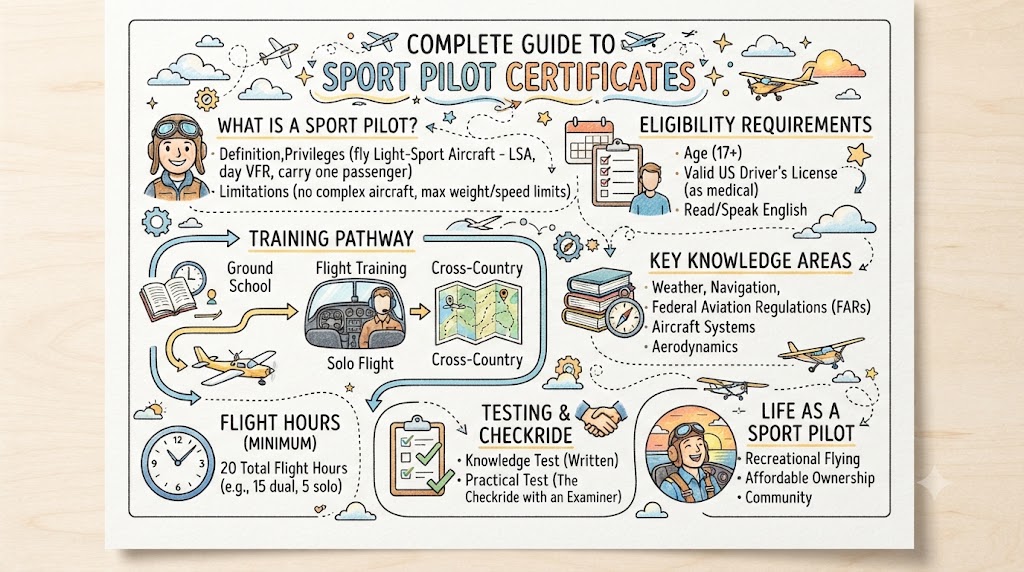
Eligibility Requirements for a Sport Pilot Certificate
Requirements can vary depending on aviation authority and location, but generally include meeting certain age, language, training, and knowledge requirements.
Common requirements may include:
- Meeting minimum age requirements
- Ability to communicate effectively
- Completing required flight training
- Completing required ground instruction
- Passing knowledge testing
- Demonstrating practical flight skills
Students should always confirm current requirements with their local aviation authority or flight instructor.
Sport Pilot Training Process
Becoming a Sport Pilot involves both classroom education and practical flight experience.
The training journey generally includes the following stages.
Discovery Flight
Many students begin with an introductory flight.
This experience allows future pilots to:
- Experience aircraft controls
- Meet an instructor
- Understand the training environment
- Decide whether aviation is the right choice
A discovery flight helps students experience flying before committing to a complete training program.
Ground School Training
Ground school provides the theoretical knowledge required for safe flight operations.
Students typically learn about:
Aerodynamics
Understanding how aircraft generate lift, control movement, and respond during flight.
Aircraft Systems
Learning basic aircraft components, instruments, and operating principles.
Weather
Understanding weather conditions, forecasts, and aviation weather decisions.
Navigation
Learning how pilots plan routes and determine aircraft position.
Aviation Regulations
Understanding operating rules, safety procedures, and pilot responsibilities.
Flight Planning
Learning how to prepare for safe and efficient flights.
Flight Instruction
Practical flight lessons allow students to apply classroom knowledge in an aircraft.
Training commonly includes:
- Aircraft familiarization
- Preflight inspections
- Taxi procedures
- Takeoffs
- Landings
- Flight maneuvers
- Navigation exercises
- Emergency procedures
- Radio communication
Students gradually develop confidence under instructor supervision.
Solo Flight Experience
Solo flight is an important milestone in pilot training.
Before flying alone, students must demonstrate sufficient knowledge, skill, and decision-making ability.
Solo training helps develop:
- Confidence
- Independence
- Aircraft control skills
- Responsibility
Knowledge Test and Practical Evaluation
Before earning a Sport Pilot Certificate, students generally complete:
Knowledge Evaluation
This tests understanding of aviation concepts, regulations, weather, navigation, and safety.
Practical Flight Evaluation
An examiner evaluates the student’s ability to safely operate the aircraft and demonstrate required flight skills.
Successful completion leads to certification.
Skills Developed During Sport Pilot Training
Sport Pilot training develops important aviation skills that form the foundation for safe flying.
Aircraft Control
Students learn how to operate aircraft during different phases of flight.
Communication
Pilots practice professional communication with instructors, air traffic services, and other aviation personnel.
Navigation
Students learn how to plan and conduct flights safely.
Weather Decision-Making
Understanding weather helps pilots make safer choices before and during flights.
Risk Management
Students learn how to evaluate conditions and make responsible aviation decisions.
Emergency Procedures
Training introduces pilots to appropriate responses during abnormal situations.
Privileges of a Sport Pilot Certificate
The privileges of a Sport Pilot Certificate depend on applicable regulations, aircraft category, and operating conditions.
Generally, Sport Pilots may be able to:
- Fly approved Light-Sport Aircraft
- Conduct recreational flights
- Carry passengers according to applicable rules
- Build aviation experience
- Continue developing flying skills
Pilots must always operate within the limitations associated with their certification and aircraft.
Limitations of a Sport Pilot Certificate
Like every aviation certificate, Sport Pilot privileges come with limitations.
Possible limitations include:
- Aircraft category restrictions
- Weather restrictions
- Passenger limitations
- Operational restrictions
- Experience requirements
Understanding these limitations helps pilots make safe and informed decisions.
Medical Considerations
Health and fitness are important parts of aviation safety.
Sport Pilot applicants should understand:
- Applicable medical requirements
- Personal health responsibilities
- Aviation safety considerations
Requirements may differ depending on location and individual circumstances, so students should consult qualified aviation professionals.
Cost of Becoming a Sport Pilot
The cost of earning a Sport Pilot Certificate depends on several factors, including:
- Flight school rates
- Aircraft rental costs
- Instructor fees
- Ground school materials
- Examination expenses
- Training frequency
Students who train consistently may progress more efficiently because regular practice helps maintain skills.
Before starting training, students should discuss estimated costs and create a realistic training budget.
Choosing the Right Flight School
Selecting the right training environment is one of the most important decisions for new pilots.
Consider:
Experienced Instructors
Qualified instructors help students develop safe flying habits.
Aircraft Condition
Well-maintained training aircraft contribute to a better learning experience.
Safety Culture
A strong safety-focused environment should always be a priority.
Training Availability
Flexible scheduling helps students maintain consistent progress.
Student Support
A supportive learning environment improves confidence and motivation.
Tips for Success During Sport Pilot Training
New students can improve their training experience by:
- Flying regularly
- Studying between lessons
- Asking questions
- Preparing before each flight
- Practicing communication skills
- Reviewing instructor feedback
- Maintaining organized notes
- Developing good safety habits
Consistency is one of the most important factors in successful flight training.
Common Misconceptions About Sport Pilot Certificates
“Sport Pilots Are Not Real Pilots”
Sport Pilots complete structured training and must demonstrate aviation knowledge and practical flying skills.
“Sport Pilot Training Is Too Easy”
While the training may be designed for accessibility, students must still develop important aviation skills and safety awareness.
“Only Young People Can Learn to Fly”
People from many backgrounds begin aviation training at different stages of life.
“Light-Sport Aircraft Are Not Capable Aircraft”
Light-Sport Aircraft are designed for specific aviation purposes and can provide excellent platforms for training and recreation.
Sport Pilot Certificate vs Private Pilot Certificate
| Feature | Sport Pilot Certificate | Private Pilot Certificate |
|---|---|---|
| Primary Purpose | Recreational flying | Broader personal flying privileges |
| Training Complexity | More simplified pathway | More extensive training |
| Aircraft Options | Limited aircraft categories | Wider aircraft options |
| Training Focus | Light recreational aircraft | More diverse aircraft operations |
| Cost | Generally lower | Generally higher |
| Training Scope | Basic aviation skills | Expanded aviation skills |
| Passenger Operations | Subject to limitations | Broader privileges |
| Aircraft Experience | Light-Sport Aircraft focus | Multiple aircraft categories |
| Flight Planning | Basic to moderate | More advanced |
| Navigation Skills | Required | More extensive |
| Weather Knowledge | Required | More comprehensive |
| Future Progression | Can support further learning | Broader aviation pathway |
| Recreational Use | Strong focus | Strong focus |
| Operational Flexibility | More limited | Greater flexibility |
| Training Requirements | Different requirements | More extensive requirements |
Sample Sport Pilot Training Journey
A typical training journey may include:
Step 1: Discovery Flight
Experience flying and meet an instructor.
Step 2: Enrollment
Begin structured training.
Step 3: Ground School
Learn aviation theory and regulations.
Step 4: Flight Lessons
Develop aircraft handling skills.
Step 5: Solo Preparation
Build confidence and independence.
Step 6: Knowledge Test
Demonstrate aviation understanding.
Step 7: Practical Evaluation
Show safe flying ability.
Step 8: Certificate Completion
Begin recreational flying within approved privileges.
Frequently Asked Questions
1. What is a Sport Pilot Certificate?
A Sport Pilot Certificate allows qualified individuals to fly approved Light-Sport Aircraft after completing required training and evaluations.
2. Who can become a Sport Pilot?
People who meet applicable eligibility requirements and successfully complete training may pursue a Sport Pilot Certificate.
3. What aircraft can Sport Pilots fly?
Sport Pilots typically operate approved Light-Sport Aircraft within the limitations of their certification.
4. How is Sport Pilot training different from Private Pilot training?
Sport Pilot training focuses on lightweight recreational aircraft, while Private Pilot training provides broader aircraft and operational privileges.
5. Is Sport Pilot training suitable for beginners?
Yes. Many students use Sport Pilot training as their first introduction to aviation.
6. How long does Sport Pilot training take?
Training duration varies based on student progress, lesson frequency, weather, and individual learning ability.
7. What skills will I learn?
Students learn aircraft control, navigation, communication, safety procedures, weather awareness, and flight planning.
8. Can I continue training after earning a Sport Pilot Certificate?
Yes. Many pilots continue their aviation education by pursuing additional certificates and ratings.
9. How do I choose a flight school?
Consider instructors, aircraft condition, safety standards, scheduling, and student support.
10. What should I expect during training?
Students should expect classroom learning, practical flight lessons, instructor feedback, and gradual skill development.
Conclusion
A Sport Pilot Certificate provides an exciting pathway into aviation by combining structured training, practical flying experience, and the opportunity to enjoy recreational aircraft operations. It allows aspiring pilots to develop essential aviation skills while building confidence in a safe and supportive learning environment.
For beginners, aviation enthusiasts, and recreational flyers, Sport Pilot training can be the foundation of a lifelong connection with flying. Choosing an experienced flight school with qualified instructors and well-maintained aircraft is an important step toward becoming a safe and capable pilot.

