
Introduction
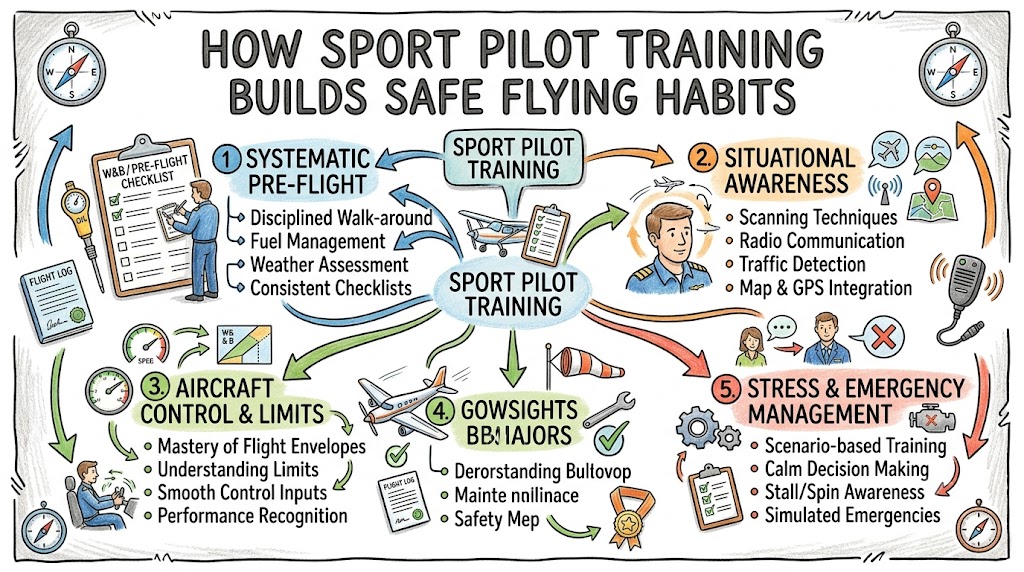
Learning to fly is an exciting milestone, and sport pilot training provides an accessible path into aviation for many aspiring pilots. While mastering aircraft controls is an important part of the journey, the primary goal of any quality flight training program is to develop safe flying habits that remain with pilots throughout their aviation experience.
Safe flying is not based on a single skill. Instead, it is built through consistent instruction, disciplined procedures, careful planning, good decision-making, and continuous learning. During sport pilot training, students gradually develop habits that help them operate light-sport aircraft responsibly while understanding the importance of safety before, during, and after every flight.
This guide explains how sport pilot training helps students build safe flying habits, why these habits matter, and how they contribute to becoming a confident and responsible recreational pilot.
Understanding Sport Pilot Training
Sport pilot training introduces students to the knowledge and practical skills needed to safely operate light-sport aircraft.
Training generally includes:
- Flight fundamentals
- Aircraft familiarization
- Pre-flight inspections
- Flight planning
- Aircraft control
- Navigation basics
- Weather awareness
- Aviation safety practices
From the first lesson, safety remains the foundation of every training activity.
Why Safe Flying Habits Matter
Safe habits reduce the likelihood of mistakes and help pilots respond effectively to changing situations.
Developing these habits helps students:
- Improve flight safety
- Build confidence
- Make better decisions
- Reduce workload
- Improve learning
- Develop professional discipline
Strong habits become automatic with regular practice.
Building Strong Pre-Flight Habits
Every successful flight begins before the engine starts.
Students learn to complete systematic pre-flight preparations.
Aircraft Inspection
A careful inspection helps identify visible issues before flight.
Typical inspection items include:
- Fuel quantity and quality
- Oil level
- Tires
- Flight controls
- Propeller
- Lights
- Exterior condition
Developing a consistent inspection routine supports safer operations.
Weather Review
Students learn to evaluate weather conditions before every flight.
Important considerations include:
- Wind
- Visibility
- Cloud conditions
- Temperature
- Forecast changes
Understanding weather improves flight planning and decision-making.
Flight Planning
Good planning includes:
- Route selection
- Fuel planning
- Airport information
- Alternate options
- Flight objectives
Preparation reduces unnecessary surprises during flight.
Using Checklists
Checklists help ensure important tasks are completed consistently.
Students quickly learn that checklists improve safety rather than slow operations.
Learning Proper Aircraft Control
Aircraft control skills develop gradually through regular instruction.
Students practice:
Taxiing
Safe ground movement teaches steering, braking, and airport awareness.
Takeoff
Training focuses on:
- Runway alignment
- Smooth acceleration
- Proper rotation
- Initial climb
Straight-and-Level Flight
Students learn to maintain stable altitude, heading, and airspeed.
Turns
Coordinated turns improve aircraft handling and control.
Climbs and Descents
Controlled altitude changes become smoother with practice.
Landing
Landing combines many previously learned skills and requires careful attention to planning and aircraft control.
Developing Situational Awareness
Situational awareness means understanding what is happening both inside and outside the aircraft.
Students monitor:
- Aircraft position
- Other traffic
- Airport activity
- Terrain
- Weather
- Aircraft instruments
Maintaining awareness helps pilots recognize developing situations early.
Communication Skills
Clear communication contributes directly to flight safety.
Students practice:
- Listening carefully
- Speaking clearly
- Basic radio communication
- Asking questions
- Following instructor guidance
Good communication reduces misunderstandings during training.
Decision-Making Skills
Pilots make many decisions before and during every flight.
Sport pilot students learn how to evaluate:
- Weather conditions
- Fuel requirements
- Aircraft condition
- Personal readiness
- Operational limitations
Learning to make careful decisions builds long-term confidence.
Following Checklists Consistently
Checklists support safe operations throughout every flight.
Students become familiar with:
Before-Start Checklist
Preparing aircraft systems before engine start.
Taxi Checklist
Confirming aircraft readiness before ground movement.
Before-Takeoff Checklist
Ensuring the aircraft is properly configured for departure.
Landing Checklist
Preparing for a safe approach and landing.
Post-Flight Checklist
Securing the aircraft after every flight.
Using checklists consistently helps prevent missed steps.
Learning from Flight Instructors
Flight instructors guide students throughout training.
Their role includes:
- Demonstrating procedures
- Correcting mistakes
- Building confidence
- Explaining aviation concepts
- Encouraging safe habits
Constructive feedback helps students improve with every lesson.
Building Confidence Gradually
Confidence develops through preparation and experience rather than rushing progress.
Students gain confidence by:
- Completing regular lessons
- Practicing consistently
- Learning from mistakes
- Reviewing instructor feedback
- Building skills step by step
Steady progress creates capable pilots.
Developing Good Cockpit Discipline
Cockpit discipline means maintaining organized and professional behavior during flight.
Students learn to:
- Stay focused
- Avoid unnecessary distractions
- Follow procedures
- Monitor instruments
- Prioritize tasks
Good discipline contributes to safer operations.
Understanding Personal Limitations
Responsible pilots recognize their own limitations.
Students learn to consider:
- Experience level
- Weather conditions
- Fatigue
- Aircraft capability
- Personal comfort
Knowing when not to fly is an important safety habit.
Common Mistakes New Sport Pilots Make
Many student pilots experience similar challenges.
Common examples include:
- Rushing procedures
- Skipping checklist items
- Poor preparation
- Weak communication
- Ignoring weather
- Becoming overconfident
- Inconsistent study habits
Recognizing these mistakes helps students improve more quickly.
Tips for Developing Better Flying Habits
Several simple practices support long-term success.
Practice Regularly
Consistent flying reinforces previously learned skills.
Review Every Lesson
Reflecting on instructor feedback improves future performance.
Stay Organized
Maintain training materials, logbooks, and notes carefully.
Learn from Mistakes
Every lesson provides valuable learning opportunities.
Continue Studying
Ground knowledge supports practical flying ability.
Maintain a Safety Mindset
Safety should guide every decision both inside and outside the cockpit.
Benefits of Strong Safety Habits
Developing good habits provides lasting advantages.
Safer Flights
Prepared pilots make better operational decisions.
Greater Confidence
Preparation reduces stress during training.
Better Decision-Making
Experience and structured learning improve judgment.
Lower Workload
Consistent habits simplify cockpit tasks.
Faster Learning
Organized students often progress more efficiently.
Lifelong Aviation Discipline
The habits learned during sport pilot training continue benefiting pilots throughout their aviation journey.
Safe Flying Habit Checklist
Before Every Flight:
- Review weather
- Complete aircraft inspection
- Check fuel
- Review route
- Use checklists
During Flight:
- Maintain situational awareness
- Monitor instruments
- Communicate clearly
- Follow procedures
- Stay focused
After Every Flight:
- Complete post-flight checklist
- Record flight details
- Review lesson performance
- Discuss improvements with instructor
Frequently Asked Questions
1. What is sport pilot training?
Sport pilot training teaches students how to safely operate light-sport aircraft while developing strong aviation knowledge and practical flying skills.
2. Why are safe flying habits important?
Good habits improve consistency, reduce errors, strengthen decision-making, and support safe flight operations throughout a pilot’s experience.
3. How do checklists improve safety?
Checklists help ensure important procedures are completed correctly and consistently before, during, and after each flight.
4. What skills do sport pilot students learn?
Students develop aircraft control, communication, navigation, weather awareness, decision-making, and safety management skills.
5. How can I improve situational awareness?
Regular scanning, monitoring traffic, observing weather, checking instruments, and maintaining focus all contribute to better awareness.
6. Why is instructor feedback valuable?
Instructors identify improvement areas, reinforce good habits, and help students build confidence through practical guidance.
7. What mistakes should beginners avoid?
Students should avoid rushing procedures, skipping checklists, neglecting preparation, ignoring weather information, and becoming overconfident.
8. How often should I practice?
Consistent training helps reinforce skills, maintain confidence, and improve long-term flying ability.
9. Why is weather planning important?
Weather directly affects flight safety. Understanding conditions helps pilots make informed decisions before departure.
10. How long does it take to develop good flying habits?
Good habits develop gradually through consistent instruction, regular practice, instructor feedback, and ongoing learning throughout flight training.
Conclusion
Sport pilot training is about much more than learning how to fly a light-sport aircraft. It provides students with the opportunity to build safe flying habits that form the foundation of responsible aviation. Through structured instruction, careful preparation, disciplined use of checklists, effective communication, sound decision-making, and continuous practice, students develop the skills needed to become confident and safety-conscious pilots.
Whether flying for recreation or using sport pilot training as the first step toward additional aviation goals, developing strong safety habits from the beginning creates a solid foundation for enjoyable and responsible flying throughout a pilot’s aviation journey.

