
Introduction
Flying an aircraft is a dream for many aviation enthusiasts who want the freedom to explore the skies, experience personal flight, and develop valuable aviation skills. However, becoming a pilot does not always require starting with the most advanced certification pathway. For individuals interested in recreational flying, a Sport Pilot Certificate provides an accessible entry point into aviation.
A Sport Pilot Certificate allows qualified pilots to operate approved light-sport aircraft while enjoying many of the experiences that make aviation exciting. It provides opportunities for personal flying, carrying passengers, exploring local destinations, building flight confidence, and becoming part of the aviation community.
At the same time, sport pilot privileges come with specific limitations. Aircraft eligibility, operating conditions, passenger rules, and flight activities must follow applicable aviation regulations. Understanding these privileges and restrictions helps aspiring pilots decide whether sport aviation is the right path for them.
What Is a Sport Pilot Certificate?
A Sport Pilot Certificate is a pilot certification designed for individuals who want to fly light-sport aircraft for recreational purposes.
It provides a pathway for aviation enthusiasts who want to experience personal flying without pursuing the broader requirements associated with advanced pilot certificates.
A sport pilot learns essential aviation skills, including:
- Aircraft control
- Flight planning
- Navigation
- Weather awareness
- Aviation safety
- Pilot decision-making
The certificate demonstrates that the pilot has completed required training and can safely operate eligible aircraft within defined limitations.
Specific requirements and privileges vary depending on the aviation authority and location.
Why Choose a Sport Pilot Certificate?
Many aviation beginners choose sport pilot training because it provides a practical introduction to flying.
Benefits may include:
- Easier entry into recreational aviation
- Lower aircraft operating complexity
- Opportunity to build flying experience
- Access to light-sport aircraft
- Development of aviation skills
For many pilots, sport aviation becomes the foundation for continued learning and additional certifications.
Who Can Become a Sport Pilot?
While requirements vary by aviation authority, applicants generally need to meet several areas of eligibility.
Common requirements may include:
- Meeting minimum age requirements
- Completing required flight training
- Passing aviation knowledge assessments
- Demonstrating flight skills
- Meeting applicable medical eligibility standards
Before beginning training, students should review current requirements with approved flight instructors or aviation authorities.
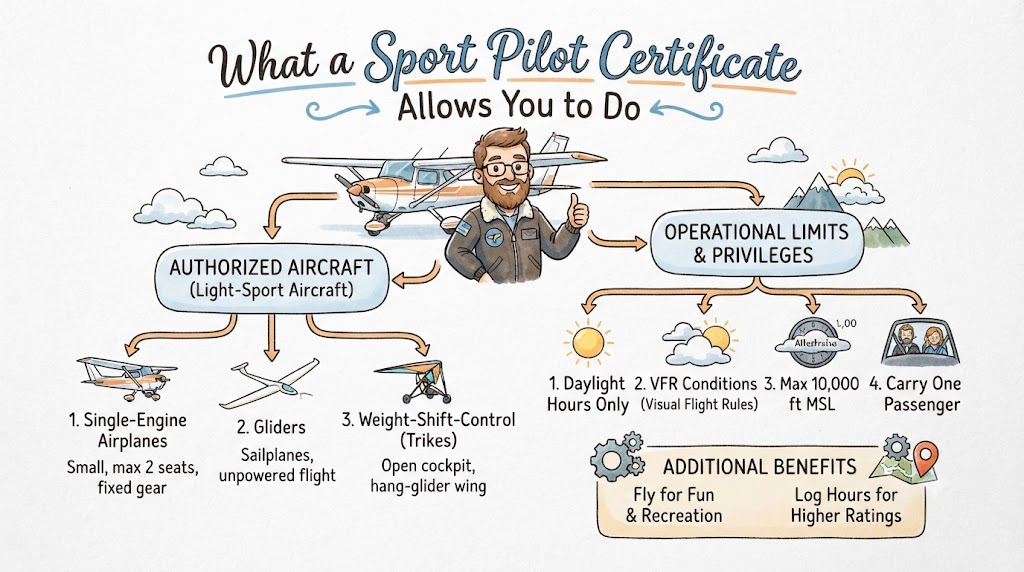
What Can You Do With a Sport Pilot Certificate?
1. Fly Light-Sport Aircraft
One of the main privileges of a Sport Pilot Certificate is the ability to fly eligible light-sport aircraft.
Light-sport aircraft are designed for recreational aviation and generally focus on:
- Simpler operation
- Efficient flying
- Personal aviation enjoyment
- Lower operational complexity
These aircraft are commonly used for:
- Local flights
- Training
- Sightseeing
- Recreational trips
The exact aircraft eligibility depends on applicable aviation rules.
2. Carry Passengers
A Sport Pilot Certificate generally allows pilots to carry passengers within applicable limitations.
This means pilots can share their aviation experience with:
- Friends
- Family members
- Aviation enthusiasts
However, carrying passengers comes with important responsibilities.
Pilots must consider:
- Weather conditions
- Aircraft performance
- Passenger safety
- Flight planning
- Personal experience level
A pilot remains responsible for making safe operational decisions.
3. Enjoy Recreational Flying
Sport pilots can use their aircraft for personal aviation activities.
Examples include:
- Weekend flying
- Scenic flights
- Exploring nearby destinations
- Visiting aviation events
- Enjoying outdoor aviation experiences
Sport aviation provides a way for pilots to experience the freedom and enjoyment of flying.
4. Build Aviation Experience
A Sport Pilot Certificate helps individuals develop important flying skills.
Pilots can improve:
- Aircraft handling ability
- Navigation skills
- Weather decision-making
- Communication skills
- Aviation confidence
Many pilots use sport flying as a foundation for future aviation development.
5. Participate in Aviation Communities
Sport aviation has a strong community of pilots, builders, and enthusiasts.
Sport pilots may participate in:
- Aviation gatherings
- Flying clubs
- Aircraft events
- Educational activities
These communities provide opportunities to learn and connect with other aviation enthusiasts.
Aircraft Types Sport Pilots Can Fly
Sport pilots typically operate aircraft that meet light-sport aircraft requirements.
Common characteristics may include:
- Limited weight category
- Specific performance capabilities
- Approved aircraft categories
- Recreational aviation design
Examples may include:
- Small fixed-wing aircraft
- Certain powered aircraft
- Other approved light aircraft categories
Aircraft eligibility depends on applicable aviation regulations.
Understanding Sport Pilot Certificate Limitations
A Sport Pilot Certificate provides valuable privileges, but it also includes important limitations.
Aircraft Limitations
Sport pilots must operate aircraft that meet certification requirements.
Considerations include:
- Aircraft category
- Weight limitations
- Performance capability
- Operating restrictions
Not every aircraft is eligible for sport pilot operations.
Weather and Operating Conditions
Sport pilots must operate within conditions appropriate for their certification and aircraft capabilities.
Important factors include:
- Visibility
- Weather conditions
- Pilot experience
- Aircraft limitations
Good judgment and proper planning are essential parts of safe flying.
Passenger Limitations
Sport pilots must understand passenger-related restrictions.
Important responsibilities include:
- Ensuring aircraft readiness
- Providing passenger safety information
- Evaluating flight conditions
- Operating within certification limitations
Commercial Operation Restrictions
A Sport Pilot Certificate is primarily designed for recreational flying.
Pilots should understand that certain activities may require additional certifications or permissions.
Professional aviation activities may require more advanced pilot qualifications.
Sport Pilot Certificate Training Requirements
Becoming a sport pilot involves both theoretical learning and practical flight experience.
Ground School Training
Ground training helps students understand aviation fundamentals.
Topics may include:
- Aircraft systems
- Weather
- Navigation
- Flight planning
- Aviation regulations
- Safety procedures
Strong aviation knowledge helps pilots make better decisions.
Flight Training
Practical training develops real-world flying skills.
Students learn:
- Aircraft controls
- Takeoffs and landings
- Flight maneuvers
- Airport operations
- Emergency procedures
- Solo flight preparation
Training focuses on developing safe and confident pilots.
Knowledge Examination
Students generally need to demonstrate aviation knowledge through testing.
Common subjects may include:
- Aviation rules
- Weather information
- Navigation principles
- Aircraft operations
- Flight safety
Practical Flight Evaluation
The practical evaluation assesses whether a student can safely operate an aircraft.
It may evaluate:
- Aircraft control
- Flight procedures
- Decision-making
- Safety practices
- Operational awareness
Sport Pilot Certificate vs Private Pilot Certificate
| Feature | Sport Pilot Certificate | Private Pilot Certificate |
|---|---|---|
| Main Purpose | Recreational flying | Broader personal aviation |
| Aircraft Options | Limited eligible aircraft | Wider aircraft access |
| Training Scope | More focused | More extensive |
| Flight Experience | Lower requirement | Higher requirement |
| Passenger Privileges | Limited by regulations | Broader privileges |
| Aircraft Performance | Light-sport focus | More aircraft categories |
| Career Use | Generally recreational | Foundation for advanced paths |
| Training Complexity | Simpler pathway | More comprehensive |
| Aircraft Flexibility | Limited | Greater flexibility |
| Flying Goals | Personal enjoyment | Broader aviation opportunities |
| Knowledge Depth | Basic professional foundation | More advanced knowledge |
| Operating Limitations | More restrictions | Fewer restrictions |
| Training Time | Often shorter | Usually longer |
| Cost Considerations | Often lower | Often higher |
| Advancement Options | Can continue training | Supports advanced aviation pathways |
Benefits of Earning a Sport Pilot Certificate
Accessible Entry Into Aviation
Sport pilot training allows beginners to experience aviation without immediately pursuing the most advanced certification path.
Lower Complexity
Light-sport aircraft often provide simpler operating environments that can be suitable for recreational flying.
Personal Aviation Freedom
Pilots can enjoy:
- Scenic flights
- Weekend trips
- Aviation experiences
- Flight exploration
Skill Development
Sport flying helps develop:
- Confidence
- Discipline
- Safety awareness
- Aviation knowledge
Common Mistakes New Sport Pilots Should Avoid
Ignoring Weather Conditions
Weather awareness is essential for every pilot.
Flying Beyond Experience Level
Pilots should always operate within their training and comfort level.
Poor Aircraft Preparation
Proper inspections and planning are important before every flight.
Neglecting Continued Learning
Good pilots continue improving their knowledge and skills.
How to Start Sport Pilot Training
A beginner-friendly pathway may include:
Step 1: Research Sport Aviation
Learn about aircraft types, training options, and certification requirements.
Step 2: Find a Qualified Flight Instructor
Choose an instructor or training organization with appropriate experience.
Step 3: Complete Ground Training
Build aviation knowledge before and during flight training.
Step 4: Practice Flight Skills
Develop aircraft handling and decision-making abilities.
Step 5: Complete Required Testing
Demonstrate knowledge and practical flying skills.
Frequently Asked Questions
1. What is a Sport Pilot Certificate?
A Sport Pilot Certificate allows qualified pilots to fly eligible light-sport aircraft for recreational aviation activities.
2. What can you do with a Sport Pilot Certificate?
Sport pilots can fly approved light-sport aircraft, carry passengers within limitations, and enjoy personal flying activities.
3. Can sport pilots carry passengers?
Yes, sport pilots may carry passengers according to applicable regulations and operating limitations.
4. What aircraft can sport pilots fly?
Sport pilots generally fly aircraft that meet light-sport aircraft requirements.
5. Is a Sport Pilot Certificate good for beginners?
Yes, it is designed as an accessible pathway for individuals interested in recreational flying.
6. Can sport pilots fly anywhere?
Flight operations depend on aircraft capabilities, weather conditions, regulations, and pilot qualifications.
7. Can a sport pilot become a private pilot later?
Many pilots continue training and pursue additional certifications.
8. How long does sport pilot training take?
Training duration depends on student progress, flight frequency, weather, and instructor availability.
9. What skills do sport pilots learn?
Sport pilots learn aircraft control, navigation, weather awareness, safety procedures, and flight planning.
10. Is sport aviation only for hobby flying?
Sport aviation is mainly recreational, but it also helps pilots build valuable aviation experience.
Conclusion
A Sport Pilot Certificate opens the door to recreational aviation by allowing qualified pilots to fly eligible light-sport aircraft, experience personal flight, carry passengers within limitations, and develop important aviation skills.
For beginners, sport aviation provides an enjoyable way to enter the flying community while learning the fundamentals of safe aircraft operation. However, understanding the certificate’s privileges and limitations is essential for responsible flying.
Choosing the right training path, working with experienced instructors, and continuing to develop aviation knowledge can help pilots enjoy a rewarding flying experience.

