
Introduction
Beginning your journey toward becoming a sport pilot is an exciting milestone. While many aspiring pilots look forward to their first flight lesson, successful flight training starts long before stepping into the cockpit. One of the most important parts of learning to fly is Sport Pilot Ground School, where students develop the knowledge needed to safely operate a light sport aircraft.
Ground school introduces essential aviation concepts such as aerodynamics, weather, navigation, airspace, regulations, aircraft systems, and flight planning. These subjects provide the foundation that supports every decision a pilot makes during flight. Without a solid understanding of aviation theory, practical flight training becomes much more challenging.
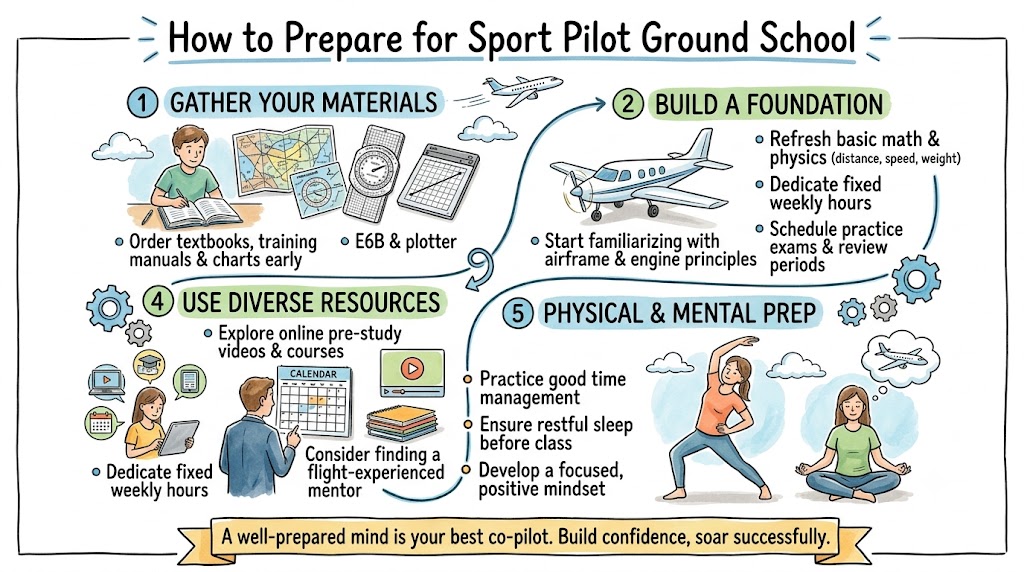
Preparing before ground school begins can make the learning process smoother and more enjoyable. Students who arrive with basic aviation knowledge often feel more confident, participate actively in class, and progress more efficiently through both ground and flight training.
This guide explains how to prepare for Sport Pilot Ground School, what to expect during your training, and practical strategies that can help you succeed from your very first lesson.
What Is Sport Pilot Ground School?
Sport Pilot Ground School is the classroom or online academic portion of sport pilot training. It teaches the knowledge required to understand aircraft operations, aviation safety, regulations, and flight planning before students begin or continue practical flight lessons.
Ground school typically covers topics such as:
- Basic aerodynamics
- Aircraft systems
- Aviation weather
- Airspace classifications
- Navigation
- Airport operations
- Aviation regulations
- Radio communications
- Weight and balance
- Aeronautical decision-making
The knowledge gained during ground school prepares students for both the written knowledge examination and real-world flying.
Why Preparation Matters
Preparing before classes begin offers several important advantages.
Students who spend time learning basic aviation concepts often experience:
- Greater confidence in class
- Faster understanding of new topics
- Better participation during discussions
- Improved written examination performance
- Stronger communication with instructors
- Better connection between classroom lessons and flight training
Preparation allows students to focus on learning instead of trying to understand unfamiliar terminology from the very beginning.
Tips for Preparing Before Ground School
Learn Basic Aviation Terminology
Aviation has its own language, and becoming familiar with common terms before classes begin can make learning much easier.
Useful terms to understand include:
- Lift
- Drag
- Thrust
- Weight
- Runway
- Taxiway
- Airspeed
- Altitude
- Heading
- Airspace
- Traffic pattern
- Crosswind
- Final approach
Recognizing these terms early helps students follow classroom discussions with greater confidence.
Review Basic Aerodynamics
Every pilot should understand the four forces of flight.
Lift
Lift is the upward force generated by the wings that allows an aircraft to leave the ground.
Weight
Weight is the force of gravity pulling the aircraft downward.
Thrust
Thrust is produced by the aircraft’s engine and propeller, moving the aircraft forward.
Drag
Drag is the aerodynamic resistance that slows the aircraft during flight.
Understanding how these forces interact provides an excellent foundation for future lessons.
Familiarize Yourself with Aircraft Instruments
Modern light sport aircraft contain several essential flight instruments.
Students should recognize the purpose of:
- Airspeed indicator
- Altimeter
- Attitude indicator
- Heading indicator
- Vertical speed indicator
- Turn coordinator
- Engine instruments
Knowing these instruments before your first lesson reduces information overload.
Understand Basic Weather Concepts
Weather plays a major role in aviation safety.
Before ground school, review topics such as:
- Wind direction
- Wind speed
- Cloud types
- Visibility
- Temperature
- Air pressure
- Turbulence
- Weather forecasts
Even a basic understanding of weather helps students appreciate how environmental conditions influence flight.
Learn Airspace Basics
Pilots operate within different categories of airspace, each with specific operating rules.
Ground school explores:
- Controlled airspace
- Uncontrolled airspace
- Airport traffic areas
- Special use airspace
- Airspace restrictions
Learning these concepts early makes later lessons easier to understand.
Review Aviation Regulations
Sport pilots must understand the regulations that govern safe flight operations.
Topics include:
- Pilot responsibilities
- Flight limitations
- Required documents
- Aircraft certification
- Safety procedures
Regulatory knowledge supports responsible decision-making throughout training.
Develop Good Study Habits
Consistent study is much more effective than occasional intensive sessions.
Helpful habits include:
- Creating a weekly study schedule
- Taking organized notes
- Reviewing lessons regularly
- Using flashcards
- Completing practice quizzes
- Discussing difficult topics with classmates
Steady progress builds long-term understanding.
Gather the Right Learning Materials
Having the proper resources before classes begin helps students stay organized.
Useful materials include:
- Ground school textbook
- Notebook
- Pens and highlighters
- Aviation charts
- Pilot logbook
- Flight planning tools
- Aviation glossary
Organized materials support efficient studying.
Organize Your Study Space
A productive learning environment encourages better concentration.
Choose a study area with:
- Good lighting
- Comfortable seating
- Minimal distractions
- Organized materials
- Reliable internet access (for online learning)
A dedicated study space helps maintain consistent learning habits.
Talk to Your Flight Instructor
Meeting your instructor before training begins provides valuable guidance.
You can ask questions about:
- Course expectations
- Recommended study materials
- Weekly workload
- Flight lesson scheduling
- Learning strategies
Early communication builds a positive student-instructor relationship.
Common Mistakes New Students Make
Waiting Until Class Begins to Study
Learning basic aviation concepts beforehand makes classroom instruction much easier.
Memorizing Instead of Understanding
Pilots must understand concepts rather than simply remembering definitions.
Real understanding supports safer decision-making.
Ignoring Weather Knowledge
Weather affects every flight.
Students who understand weather fundamentals often perform better during both classroom and flight training.
Skipping Aviation Regulations
Rules exist to support safe operations.
Ignoring regulations creates unnecessary difficulties during training.
Poor Study Habits
Irregular studying often leads to unnecessary stress before examinations.
Consistency is more effective than last-minute preparation.
Hesitating to Ask Questions
Every student encounters unfamiliar topics.
Instructors expect questions and encourage active participation.
Inconsistent Preparation
Regular review helps students retain information more effectively than occasional study sessions.
Failing to Review Previous Lessons
Each lesson builds upon earlier concepts.
Frequent review strengthens long-term understanding.
What You Will Learn During Ground School
Ground school covers a broad range of aviation subjects.
Aerodynamics
Understanding how aircraft fly and how control surfaces affect flight.
Aircraft Systems
Learning about engines, fuel systems, electrical systems, flight controls, and instruments.
Aviation Weather
Understanding weather patterns, forecasts, and their influence on flight safety.
Navigation
Learning how pilots determine routes using charts, landmarks, and navigation aids.
Flight Planning
Preparing safe and efficient flights through proper planning.
Aviation Regulations
Studying pilot responsibilities and operating rules.
Airport Operations
Understanding airport markings, signs, traffic patterns, and runway procedures.
Radio Communication
Learning standard aviation communication techniques.
Weight and Balance
Understanding how aircraft loading affects performance and safety.
Aeronautical Decision-Making
Developing sound judgment for safe flight operations.
Tips for Success During Ground School
Students can improve their learning experience by following several best practices.
Attend Every Class
Regular attendance prevents knowledge gaps.
Participate Actively
Answer questions, join discussions, and engage with instructors.
Complete Assignments
Homework reinforces classroom learning.
Practice Sample Examinations
Practice questions improve confidence before the written knowledge test.
Ask Questions
Clarifying difficult concepts early prevents misunderstandings later.
Study Consistently
Short daily study sessions often produce better results than infrequent long sessions.
Review Lessons Weekly
Regular review improves long-term memory.
Connect Theory with Flight Training
Relating classroom lessons to actual flying strengthens understanding.
Ground School Preparation Checklist
| Preparation Task | Why It Matters |
|---|---|
| Learn aviation terminology | Builds confidence |
| Review basic aerodynamics | Simplifies classroom learning |
| Study weather fundamentals | Supports flight safety |
| Understand aviation regulations | Prepares for responsible flying |
| Gather study materials | Improves organization |
| Create a study schedule | Encourages consistency |
| Practice sample quizzes | Builds exam readiness |
| Meet your instructor | Clarifies expectations |
| Organize your study area | Reduces distractions |
| Review lessons regularly | Strengthens knowledge retention |
Benefits of Strong Ground School Preparation
Preparing before classes begin offers numerous advantages.
Better Written Exam Performance
Students enter examinations with greater confidence and stronger understanding.
Improved Flight Lessons
Knowledge gained in the classroom supports practical flight training.
Greater Confidence
Preparation reduces anxiety when encountering new aviation topics.
Faster Learning
Students who understand the basics often progress more efficiently.
Better Communication
Understanding aviation terminology improves communication with instructors.
Stronger Aviation Knowledge
Comprehensive understanding supports lifelong safe flying.
Better Decision-Making
Knowledge improves pilot judgment in changing situations.
Safer Flight Operations
Well-prepared pilots make better operational decisions throughout their flying careers.
Why LIGHTSPORTWEST.COM Is a Valuable Aviation Resource
Learning to fly begins with access to reliable educational information. LIGHTSPORTWEST.COM provides aspiring sport pilots with practical guidance on ground school preparation, light sport aircraft operations, aviation safety, flight training, and pilot education. By offering informative learning resources and beginner-friendly aviation guidance, it helps students build a strong foundation before beginning their journey toward earning a Sport Pilot License.
Frequently Asked Questions
1. What is Sport Pilot Ground School?
Sport Pilot Ground School teaches the aviation knowledge required for safe flight operations, including aerodynamics, weather, navigation, regulations, aircraft systems, and flight planning.
2. How should I prepare before my first class?
Review basic aviation terminology, study simple aerodynamics, learn weather fundamentals, organize study materials, and become familiar with basic flight instruments.
3. Do I need aviation experience before ground school?
No. Ground school is designed for beginners and assumes students have little or no previous aviation experience.
4. What subjects are taught during ground school?
Students learn aerodynamics, aircraft systems, weather, navigation, airport operations, regulations, communications, weight and balance, and aeronautical decision-making.
5. How difficult is the written knowledge test?
The examination requires understanding rather than memorization. Consistent study, practice questions, and regular review help students prepare successfully.
6. What study materials should I purchase?
A ground school textbook, notebook, aviation charts, study guides, practice exams, and a pilot logbook are useful resources for most students.
7. How much should I study each week?
Regular study sessions several times each week generally produce better results than occasional intensive study before examinations.
8. Can I complete ground school online?
Many flight schools offer both classroom-based and online ground school programs, providing flexibility for different learning styles and schedules.
9. How does ground school support flight training?
Ground school teaches the theory behind aircraft operation, helping students understand what they practice during flight lessons.
10. What should I do if I struggle with aviation concepts?
Speak with your instructor, review previous lessons, use additional study materials, complete practice exercises, and ask questions whenever clarification is needed.
Conclusion
Preparing for Sport Pilot Ground School is one of the best investments you can make before beginning flight training. By learning basic aviation terminology, reviewing fundamental aerodynamics, understanding weather and regulations, organizing your study materials, and developing consistent study habits, you can approach your first class with greater confidence and a stronger foundation. Ground school is more than preparation for a written exam—it equips you with the knowledge needed to make safe, informed decisions every time you fly.
Whether your goal is recreational flying or using a Sport Pilot License as the first step toward more advanced aviation training, early preparation can make the learning process smoother and more rewarding. By staying curious, asking questions, and using trusted educational resources like LIGHTSPORTWEST.COM, you’ll be well positioned to succeed in ground school and build the skills required to become a knowledgeable and responsible sport pilot.

