
Introduction
Light sport aircraft (LSA) have transformed recreational and personal aviation. They offer simplicity, affordability, and accessibility, making it easier for student pilots, hobbyists, and first-time aircraft owners to enjoy the freedom of flying. However, with a wide range of models, configurations, and features available, selecting the right light sport aircraft can be challenging. Choosing the wrong aircraft can lead to uncomfortable flights, higher operating costs, maintenance headaches, or even compromised safety.
This guide helps pilots and aviation enthusiasts make informed decisions when selecting a light sport aircraft. From evaluating performance and safety features to reviewing maintenance, comfort, and operating costs, this guide covers all the critical factors for choosing an aircraft that matches your flying goals.
Real-World Use Cases
- Student Pilots: Learn to fly safely with an aircraft suited to training requirements.
- Recreational Flyers: Enjoy weekend trips and leisure flights with comfort and reliability.
- Flight Schools: Use LSAs to train new pilots efficiently while keeping operating costs low.
- First-Time Aircraft Owners: Manage ownership without complexity or excessive maintenance demands.
- Retired Pilots or Hobbyists: Continue flying in a manageable, easy-to-handle aircraft.
- Aviation Clubs: Provide accessible flying options for members without high financial barriers.
Evaluation Criteria for Buyers
When choosing a light sport aircraft, buyers should consider:
- Intended Use: Training, recreational flights, cross-country trips, or club sharing.
- Safety Features: Stall resistance, parachute systems, braking, and visibility.
- Aircraft Performance: Cruise speed, range, fuel efficiency, and climb rate.
- Useful Load: Pilot, passenger, fuel, and baggage capacity.
- Cabin Comfort: Seating, visibility, ergonomics, and noise levels.
- Maintenance Requirements: Inspection frequency, ease of servicing, and parts availability.
- Avionics and Cockpit Layout: Navigation, radios, displays, and ease of use.
- Manufacturer Reputation: Reliability, customer support, and warranty coverage.
- Training Suitability: Suitable for beginner or advanced pilot training.
- Resale Value: Popularity, maintenance history, and long-term performance.
Best for
This guide is best for student pilots, sport pilots, recreational flyers, flight schools, aviation clubs, and first-time aircraft buyers who want a safe, practical, and cost-effective flying option that aligns with their mission and experience level.
Not Ideal for
Light sport aircraft are not ideal for buyers needing high-speed business travel, long-range multi-passenger flights, heavy payloads, or airline-style commercial operations. They are designed for simplicity, recreation, and personal flying efficiency.
What Is a Light Sport Aircraft?
A light sport aircraft is a small, easy-to-fly plane that meets FAA weight, speed, and seating limits. LSAs are popular because they are less complex, have lower operating costs, and often do not require full private pilot certification to operate. They are commonly used for:
- Recreational flying
- Flight training for student pilots
- Short cross-country trips
- Personal ownership for hobbyists
Before buying, always verify specifications, weight limits, and operating instructions with the manufacturer and FAA rules.
Why Choosing the Right Light Sport Aircraft Matters
Selecting the right LSA impacts multiple aspects of ownership:
- Flight Safety: Properly matched aircraft reduces accident risk.
- Pilot Confidence: Easier handling increases comfort and learning efficiency.
- Training Quality: Ensures compatibility with flight instruction goals.
- Operating Cost: Efficient aircraft reduce fuel, maintenance, and hangar expenses.
- Fuel Efficiency: Optimized performance lowers operating costs.
- Maintenance Planning: Easier access to parts and service reduces downtime.
- Comfort and Visibility: Important for longer flights and enjoyable flying.
- Mission Suitability: Aircraft should meet your intended flying patterns.
- Long-Term Aircraft Value: Popular, well-maintained models maintain better resale value.
Key Factors to Consider Before Buying a Light Sport Aircraft
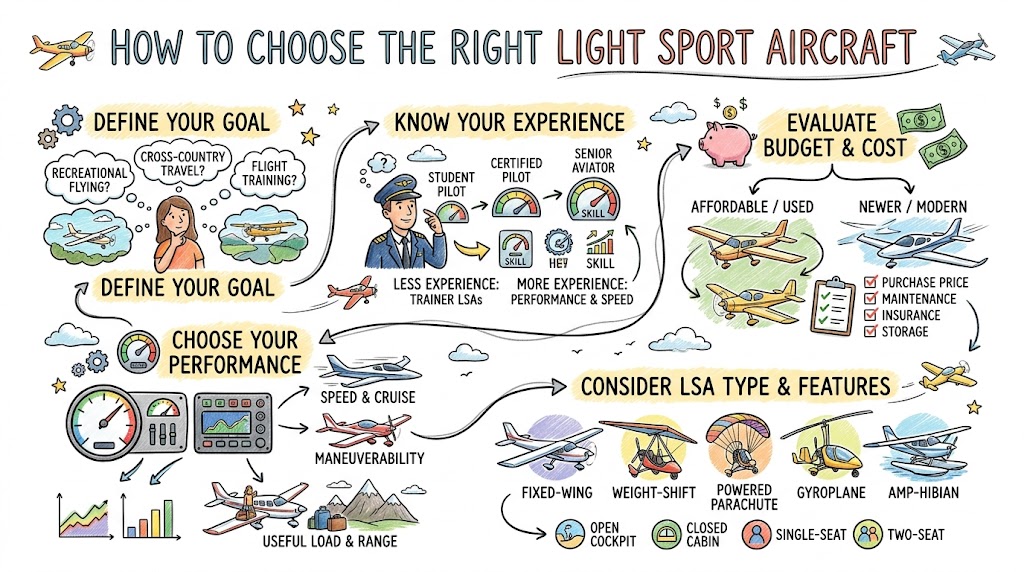
1- Define Your Flying Mission
- Local recreational flights
- Cross-country travel
- Flight training purposes
- Weekend trips or club use
- Ownership goals for leisure or education
2- Evaluate Aircraft Performance
- Cruise speed and climb rate
- Stall speed and handling characteristics
- Required runway length for takeoff and landing
- Maximum range and endurance
- Fuel burn and efficiency
3- Check Useful Load and Cabin Capacity
- Pilot and passenger weight limits
- Fuel and baggage load
- Cabin space for comfort on longer trips
4- Review Safety Features
- Stall-resistant design or spin recovery capabilities
- Visibility from cockpit
- Emergency parachute systems
- Reliable braking and emergency alerts
- Ergonomic cockpit layout
5- Compare New vs Used Light Sport Aircraft
| Factor | New LSA | Used LSA | Buyer Recommendation |
|---|---|---|---|
| Safety | Latest design standards, full warranty | Depends on previous usage | Use new for training or critical safety systems |
| Cost | Higher upfront | Lower upfront | Balance savings vs inspection needs |
| Maintenance | Minimal initial maintenance | May require service, inspections | Inspect used aircraft thoroughly |
| Avionics | Latest options and updates | May require upgrades | Evaluate compatibility with training or mission |
| Customization | Manufacturer-approved options | Limited | Choose new if customization matters |
| Availability | Immediate delivery | Often available | Depends on urgency |
| Inspection Needs | Standard QA | Full pre-purchase inspection required | Essential for used aircraft |
6- Inspect Build Quality and Materials
- Composite construction, aluminum airframes, or fabric-covered designs
- Corrosion protection and structural integrity
- Fit, finish, and paint quality
7- Review Avionics and Cockpit Layout
- Glass cockpit or analog instruments
- GPS, radios, and transponder functionality
- Engine monitoring and autopilot options
- Visibility and ease of operation
8- Consider Maintenance and Parts Availability
- Service network and support
- Replacement parts availability
- Mechanic familiarity with the aircraft type
- Inspection requirements
9- Understand Operating Costs
- Fuel consumption
- Hangar or tie-down fees
- Insurance, maintenance, and inspection costs
- Training or upgrade expenses
10- Take a Test Flight and Pre-Purchase Inspection
- Evaluate handling, comfort, and control response
- Assess cockpit ergonomics and visibility
- Review maintenance records and inspection history
- Have a qualified aviation professional conduct a pre-purchase inspection
Light Sport Aircraft Comparison Table
| Buying Factor | What to Check | Why It Matters | Buyer Tip |
|---|---|---|---|
| Performance | Speed, climb, stall, range | Determines suitability for mission | Compare specs across models |
| Useful Load | Weight capacity, baggage | Impacts comfort and fuel load | Prioritize weight for pilot/passenger + fuel |
| Safety | Design, brakes, parachutes | Reduces accident risk | Check safety features thoroughly |
| Avionics | GPS, radios, displays | Flight planning and navigation | Ensure compatible with training or mission |
| Maintenance | Parts availability, inspections | Reduces downtime | Choose aircraft with accessible support |
| Comfort | Cabin space, visibility, seating | Affects enjoyment and fatigue | Consider cockpit ergonomics |
| Cost | Purchase price, fuel, insurance | Impacts affordability | Calculate total operating cost |
| Resale Value | Popularity, condition | Protects investment | Check historical resale trends |
| Service Support | Mechanic familiarity, network | Quick repair access | Confirm nearby service options |
Common Mistakes Buyers Should Avoid
- Choosing only based on purchase price
- Ignoring useful load and weight limits
- Skipping a pre-purchase inspection
- Not taking a test flight before buying
- Overlooking maintenance history and part availability
- Selecting an aircraft that doesn’t match intended mission
- Underestimating insurance, storage, and operating costs
- Ignoring cockpit comfort and visibility
- Overlooking manufacturer reputation
- Not consulting experienced pilots or mechanics
Tips for First-Time Light Sport Aircraft Buyers
- Define your flying mission clearly before choosing an aircraft
- Set a realistic budget for purchase and operating costs
- Compare multiple models and manufacturers
- Talk to current owners for real-world insights
- Check parts and service availability in your area
- Review aircraft records carefully
- Prioritize safety, performance, and comfort over aesthetics alone
- Work with experienced aviation professionals for advice
- Consider training needs, licensing, and certification requirements
- Avoid rushing the buying decision; test flights and inspections are essential
Frequently Asked Questions
1. What is a light sport aircraft?
A light sport aircraft is a small, lightweight plane designed for recreational and training purposes, with simplified operating rules and lower certification requirements than traditional aircraft.
2. Who should buy a light sport aircraft?
Student pilots, recreational flyers, flight schools, aviation clubs, and hobbyists looking for cost-effective, easy-to-fly aircraft suitable for personal flying or training.
3. Is a light sport aircraft good for beginners?
Yes, LSAs are designed for ease of operation, predictable handling, and manageable weight, making them ideal for student pilots and first-time owners.
4. Should I buy a new or used light sport aircraft?
New aircraft offer modern features, warranty, and less maintenance, while used aircraft can reduce upfront cost. Always inspect used aircraft thoroughly.
5. What should I check before buying a used LSA?
Inspect maintenance records, airframe condition, avionics, control systems, engine hours, fuel system, and overall flightworthiness with a qualified professional.
6. How much does it cost to own a light sport aircraft?
Costs vary based on aircraft model, fuel, insurance, maintenance, hangar, and operational usage. Plan for both purchase and ongoing operating expenses.
7. Can LSAs be used for flight training?
Yes, LSAs are widely used in recreational and sport pilot training programs due to ease of handling, safety, and cost-efficiency.
8. What safety features should I look for?
Check stall characteristics, visibility, braking systems, emergency parachute systems (if available), and avionics alerts to enhance safety.
9. How important is useful load when choosing an aircraft?
Useful load determines how much weight you can safely carry, including pilot, passenger, fuel, and baggage. It impacts comfort, flight range, and performance.
10. How do I choose the best LSA for my needs?
Evaluate your mission, budget, performance requirements, comfort, training needs, maintenance support, and safety features. Compare models, take test flights, and consult experienced pilots.
Conclusion
Choosing the right light sport aircraft requires careful consideration of mission goals, safety, performance, useful load, comfort, avionics, maintenance, operating costs, and long-term ownership goals. By comparing multiple models, conducting test flights, reviewing maintenance records, and consulting aviation professionals, buyers can select an aircraft that provides enjoyable, safe, and reliable flying experiences. A well-chosen LSA enhances pilot confidence, reduces operational costs, and ensures long-term satisfaction with your personal or training aircraft.

