
Introduction
Light Sport Aircraft, commonly known as LSAs, have become one of the most popular choices in recreational aviation. These aircraft offer a practical and enjoyable way for pilots to experience personal flying without the higher costs and operational complexity associated with larger airplanes. For many aviation enthusiasts, LSAs represent freedom, accessibility, and the excitement of flying in a simpler and more affordable form.
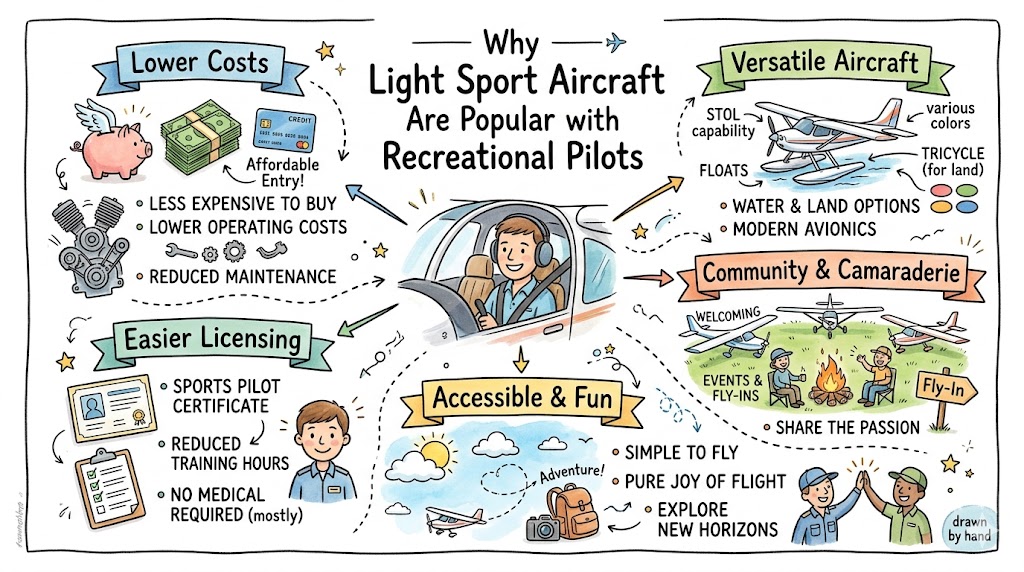
Recreational pilots are increasingly choosing Light Sport Aircraft because they combine lower operating costs, manageable training requirements, fuel efficiency, and fun flying characteristics. Whether someone wants to enjoy weekend scenic flights, build flight experience, explore local airports, or enter aviation ownership for the first time, LSAs provide a flexible and approachable solution. Their lightweight design, responsive handling, and ability to operate from smaller airports make them especially attractive for pilots who value recreational flying over commercial or business operations.
As aviation communities continue growing and more pilots seek affordable access to the skies, Light Sport Aircraft remain an important part of modern personal aviation. This guide explains why LSAs are so popular, how they compare with traditional small aircraft, and what recreational pilots should consider before choosing one.
Real-World Use Cases
Light Sport Aircraft support a wide range of recreational and personal aviation activities.
- Weekend recreational flying: Pilots use LSAs for short local flights and personal enjoyment.
- Scenic cross-country trips: Many recreational pilots fly LSAs for sightseeing and regional exploration.
- Pilot training and time building: Flight schools often use LSAs for affordable pilot training.
- Flying clubs and shared ownership: LSAs are popular among aviation clubs due to lower operating costs.
- Short regional travel: Pilots use LSAs to visit nearby towns, airports, and aviation events.
- Aviation hobby flying: Hobbyists enjoy the simplicity and fun handling of LSAs.
- Sport pilot license training: LSAs are closely connected with sport pilot certification programs.
- Rural or small-airport operations: Their lightweight design allows operation from smaller airports and airfields.
- Photography and sightseeing flights: Excellent visibility makes LSAs useful for scenic and photography flying.
- Entry-level personal aviation ownership: Many first-time aircraft owners choose LSAs because they are easier to maintain and operate.
Evaluation Criteria for Recreational Pilots
Before purchasing or training in a Light Sport Aircraft, recreational pilots should evaluate several important factors.
- Aircraft handling characteristics: Responsive and stable handling improves pilot confidence.
- Purchase and operating costs: Buyers should compare acquisition, fuel, insurance, and maintenance expenses.
- Fuel efficiency: LSAs typically use less fuel than traditional aircraft.
- Maintenance requirements: Simpler engines and systems can reduce maintenance complexity.
- Cockpit comfort and seating: Cabin space and visibility affect flight enjoyment.
- Safety features: Pilots should evaluate aircraft design, stability, and available safety systems.
- Flight range and cruise speed: Match aircraft capability to intended flying style.
- Storage and hangar requirements: Consider airport storage availability and costs.
- Training and certification requirements: Understand sport pilot and recreational training rules.
- Availability of replacement parts: Reliable support improves long-term ownership.
- Manufacturer reputation: Established manufacturers often provide better support and reliability.
- Flight mission suitability: The aircraft should match the pilot’s actual flying goals.
Best for
This guide is best for recreational pilots, student pilots, aviation hobbyists, and first-time aircraft owners who want an affordable and enjoyable way to experience personal aviation. It is especially useful for pilots interested in scenic flying, local travel, aviation clubs, and sport pilot certification. It also helps individuals comparing LSAs with traditional small aircraft.
Not Ideal for
This guide is not ideal for pilots needing heavy payload capacity, high-speed business travel, large passenger capability, or advanced commercial aviation performance. Light Sport Aircraft are designed primarily for recreational and sport flying rather than complex operational missions. Pilots requiring long-range or multi-passenger transportation may need larger aircraft categories.
What Is a Light Sport Aircraft
A Light Sport Aircraft is a small, lightweight aircraft category designed for recreational and sport flying. LSAs are intended to be easier to operate, more affordable, and more accessible for pilots compared to many traditional aircraft.
Typical LSA characteristics include:
- Usually one or two seats
- Lightweight airframe design
- Simpler aircraft systems
- Lower operating speeds
- Lower maximum weight limits
- Fuel-efficient engines
- Day VFR operations in many cases
- Easier pilot certification pathways
Many LSAs use piston engines and lightweight materials to improve efficiency and reduce ownership costs. Their simple flight controls and reduced system complexity make them attractive to beginner and recreational pilots.
Why Recreational Pilots Prefer Light Sport Aircraft
1- Lower Cost of Ownership
One of the biggest reasons pilots choose LSAs is affordability. Compared to larger aircraft, Light Sport Aircraft generally have:
- Lower purchase prices
- Reduced fuel consumption
- Lower insurance costs
- Simpler maintenance requirements
- Lower hangar and storage costs
For many recreational pilots, these savings make aircraft ownership possible for the first time. Instead of spending heavily on larger airplanes, pilots can enjoy personal aviation at a more manageable cost.
Lower operating expenses also encourage more frequent flying. Pilots often feel more comfortable flying regularly when hourly operating costs remain reasonable.
2- Easier Pilot Certification
Light Sport Aircraft are closely associated with the sport pilot certificate, which is often viewed as a more accessible entry point into aviation.
Compared to traditional private pilot training, sport pilot programs may involve:
- Fewer training hours
- Simpler aircraft systems
- Reduced training complexity
- More affordable instruction costs
This makes recreational flying more approachable for people who want to enjoy aviation without pursuing advanced commercial or airline careers.
Many pilots appreciate that LSAs allow them to enter aviation with a lower barrier to entry while still developing valuable flying skills.
3- Fuel Efficiency
Fuel efficiency is another major advantage of LSAs. Their lightweight construction and smaller engines allow them to consume less fuel than many traditional small aircraft.
Benefits include:
- Lower hourly operating costs
- Longer recreational flying within budget
- Reduced environmental impact
- More affordable cross-country flying
For recreational pilots who fly frequently, fuel savings can become significant over time.
4- Simpler Aircraft Systems
LSAs are designed with simplicity in mind. Many models use straightforward avionics, controls, and engine systems that are easier for beginner pilots to understand.
Simpler systems provide advantages such as:
- Easier training
- Reduced cockpit workload
- Lower maintenance complexity
- Faster familiarization for new pilots
This simplicity helps recreational pilots focus more on enjoying the flying experience and building confidence.
5- Fun and Enjoyable Flying Experience
Many pilots choose LSAs simply because they are enjoyable to fly. Their lightweight design often creates responsive handling and strong visibility.
Recreational flying benefits include:
- Scenic low-altitude flying
- Open cockpit feel in some models
- Smooth handling
- Strong visibility for sightseeing
- Relaxed recreational operation
Pilots frequently describe LSAs as exciting, engaging, and enjoyable aircraft for personal aviation adventures.
6- Access to Smaller Airports
LSAs can often operate from smaller airports, rural airfields, and less congested regional airports. This provides several practical advantages.
Benefits include:
- Easier airport access
- Reduced traffic congestion
- Simpler ground operations
- Lower airport costs
- More flexibility for recreational trips
Many recreational pilots enjoy visiting smaller airports because they provide a more relaxed and community-oriented aviation environment.
7- Lower Maintenance Complexity
Maintenance requirements for LSAs are often less complicated than those for larger aircraft. Simpler systems and lightweight construction help reduce service complexity.
Advantages include:
- Easier inspections
- Reduced maintenance downtime
- Lower repair costs
- Simpler engine servicing
Although proper maintenance remains essential, many pilots appreciate the reduced operational burden of LSAs.
8- Great for Flight Training
Flight schools increasingly use LSAs for pilot training because they are cost-effective and beginner-friendly.
Training advantages include:
- Lower rental costs
- Simpler flight characteristics
- Affordable fuel consumption
- Modern cockpit layouts
- Easier skill development
Students often build confidence more quickly in aircraft that are easier to understand and operate.
9- Growing Aviation Community
The Light Sport Aircraft segment has developed a strong recreational aviation community.
Pilots benefit from:
- Flying clubs
- Recreational aviation groups
- Sport pilot communities
- Aviation events and gatherings
- Shared ownership programs
This sense of community helps new pilots stay engaged and connected within aviation culture.
10- Flexible Recreational Use
LSAs support a wide variety of recreational activities beyond simple local flights.
Popular activities include:
- Sightseeing flights
- Photography flying
- Regional exploration
- Weekend trips
- Aviation tourism
- Casual personal transportation
Their flexibility makes LSAs attractive for pilots who value freedom and enjoyable flying experiences.
Comparison Table: Light Sport Aircraft vs Traditional Small Aircraft
| Feature | Light Sport Aircraft | Traditional Small Aircraft | Advantage for Recreational Pilots |
|---|---|---|---|
| Purchase Cost | Lower | Higher | LSAs are more affordable |
| Fuel Use | Lower fuel consumption | Higher fuel burn | Reduced operating cost |
| Training Complexity | Simpler | More advanced systems | Easier for beginners |
| Maintenance | Lower complexity | More complex systems | Reduced downtime |
| Cruise Speed | Moderate | Higher | Sufficient for recreation |
| Payload Capacity | Limited | Higher | Traditional aircraft better for heavy loads |
| Airport Access | Smaller airports possible | Larger airports common | More flexibility |
| Recreational Value | Very high | Depends on mission | LSAs optimized for fun flying |
| Insurance Cost | Often lower | Usually higher | Better affordability |
| Ease of Ownership | Simpler | More demanding | Ideal for hobby pilots |
Common Types of Light Sport Aircraft
Fixed-Wing LSAs
These are the most common LSAs and resemble traditional small airplanes. They are widely used for training, sightseeing, and personal recreation.
Amphibious LSAs
These aircraft can operate from both land and water. Recreational pilots often use them for adventure flying and remote access.
Weight-Shift Aircraft
Weight-shift aircraft use pilot body movement to help control flight. They are lightweight and commonly used for recreational sport flying.
Powered Parachutes
Powered parachutes combine an engine with a parachute wing. They provide slow-speed recreational flying and scenic visibility.
Gyroplanes
Gyroplanes use an unpowered rotor for lift and an engine-driven propeller for thrust. They offer unique handling and recreational appeal.
Experimental Light Sport Aircraft
Experimental LSAs allow additional customization and are often used by aviation enthusiasts interested in building or modifying aircraft.
Tips for Choosing the Right Light Sport Aircraft
- Define your flying goals before selecting an aircraft.
- Compare operating costs including fuel, storage, and maintenance.
- Test cockpit comfort and seating layout.
- Evaluate maintenance support and parts availability.
- Review safety features and aircraft reputation.
- Check training availability for your chosen aircraft model.
- Consider storage and hangar requirements.
- Fly different models before purchasing whenever possible.
- Understand weather limitations associated with lightweight aircraft.
- Join local aviation communities to learn from experienced pilots.
Common Mistakes Recreational Pilots Should Avoid
Choosing Aircraft Only by Appearance
An attractive aircraft may not match your actual flying needs. Function and safety matter more than appearance.
Ignoring Operating Costs
Purchase price is only part of ownership cost. Fuel, insurance, storage, and maintenance should also be considered.
Underestimating Weather Limitations
LSAs are lightweight aircraft and can be more sensitive to wind and weather conditions.
Skipping Proper Flight Training
Proper instruction is essential even for simpler aircraft categories. Safe flying depends on skill and preparation.
Overloading Aircraft Weight Limits
Exceeding weight limits can affect performance and safety.
Ignoring Maintenance Schedules
Regular inspections and maintenance are essential for safe operation.
Buying Without Test Flights
Pilots should experience different aircraft models before making ownership decisions.
Failing to Review Insurance Requirements
Insurance availability and costs vary depending on aircraft type and pilot experience.
Not Planning Storage or Hangar Space
Airport storage availability and costs should be evaluated before purchase.
Choosing Aircraft Unsuitable for Actual Flying Needs
The aircraft should match the pilot’s real mission profile and flying style.
Frequently Asked Questions
1. What makes Light Sport Aircraft popular?
LSAs are popular because they offer affordable ownership, simpler operation, fuel efficiency, and enjoyable recreational flying experiences. They make personal aviation more accessible for many pilots.
2. Are LSAs cheaper to operate than traditional aircraft?
Yes. LSAs generally use less fuel, have lower maintenance costs, and often lower insurance expenses compared to larger traditional aircraft.
3. What license is required to fly a Light Sport Aircraft?
Many LSAs can be flown with a sport pilot certificate, depending on local regulations and aircraft category requirements.
4. Are Light Sport Aircraft safe?
LSAs can be safe when properly maintained, operated within limits, and flown by trained pilots following safe operating procedures.
5. Can LSAs be used for cross-country flights?
Yes. Many recreational pilots use LSAs for scenic and regional cross-country flights within the aircraft’s operational capabilities.
6. How much fuel do LSAs typically use?
Fuel consumption varies by aircraft model and engine type, but LSAs usually consume less fuel than larger traditional small aircraft.
7. Are LSAs good for beginner pilots?
Yes. Their simpler systems and manageable handling make LSAs attractive for beginner and student pilots.
8. What are the limitations of Light Sport Aircraft?
LSAs generally have lower payload capacity, moderate cruise speed, weather limitations, and simpler operational capabilities compared to larger aircraft.
9. Can LSAs operate from small airports?
Yes. Many LSAs are well-suited for smaller airports and regional airfields.
10. What should buyers consider before purchasing an LSA?
Buyers should evaluate operating costs, maintenance support, safety features, comfort, aircraft handling, and intended recreational use.
Conclusion
Light Sport Aircraft continue to grow in popularity because they provide recreational pilots with an affordable, enjoyable, fuel-efficient, and accessible way to experience aviation. Their lower operating costs, manageable training requirements, simple systems, and fun flying characteristics make them ideal for hobby pilots, student aviators, and first-time aircraft owners. Whether used for weekend flights, scenic travel, local airport exploration, or aviation club activities, LSAs offer freedom and flexibility without the complexity associated with larger aircraft. For pilots seeking personal aviation experiences focused on recreation, adventure, and practical ownership, Light Sport Aircraft remain one of the most attractive options in modern recreational flying.

