
Introduction
Taking your first flight lesson is an exciting step toward becoming a pilot. Whether you dream of flying for recreation, earning a sport pilot certificate, or beginning a long-term aviation career, your first lesson is where the journey begins. It is completely normal to feel a mix of excitement, curiosity, and nervousness before stepping into the cockpit for the first time.
Many new students wonder what will happen during the lesson, what they should bring, what they should wear, and whether they will actually get to fly the aircraft. Preparing ahead of time helps reduce anxiety and allows you to focus on learning instead of worrying about the unknown.
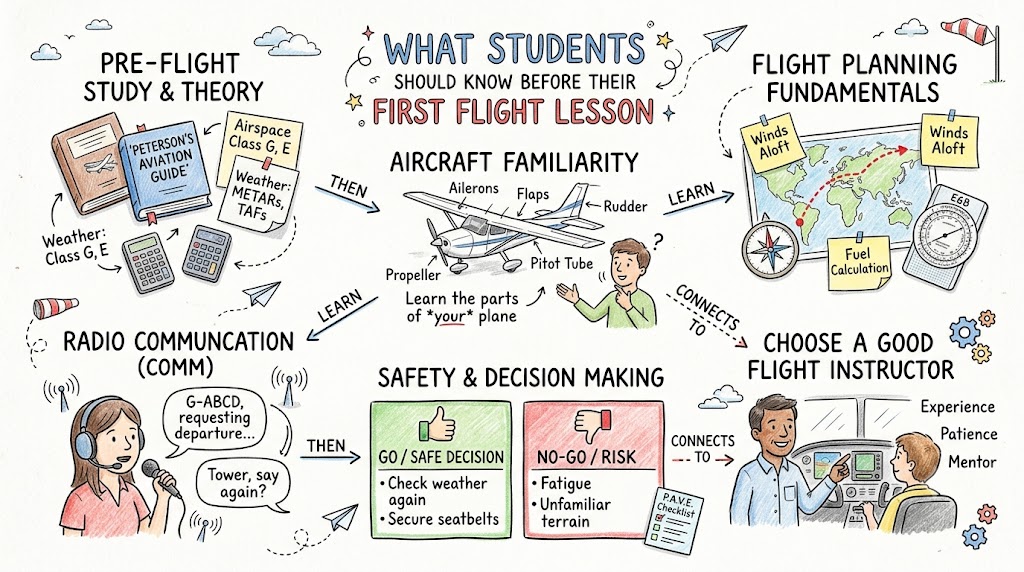
This guide explains everything students should know before their first flight lesson, including how to prepare physically and mentally, what to expect from the training experience, and how to build confidence from day one.
Why Preparation Matters
Flight training involves much more than simply learning to control an aircraft. It teaches discipline, decision-making, communication, and safety awareness.
Preparing before your first lesson helps you:
- Feel more confident
- Understand instructor guidance more easily
- Improve concentration
- Build safe aviation habits
- Learn more efficiently
- Enjoy the overall experience
Even a little preparation can make your first lesson more productive and enjoyable.
What Happens During Your First Flight Lesson?
Although every flight school follows its own training process, most first lessons include several common stages.
Meet Your Flight Instructor
Your instructor will introduce themselves, explain the lesson plan, and discuss your aviation goals. This is also the perfect time to ask questions and share any concerns you may have.
Ground Briefing
Before entering the aircraft, your instructor will explain:
- Basic flight principles
- Safety procedures
- Weather conditions
- Lesson objectives
- Communication procedures
The briefing helps you understand what will happen during the flight.
Aircraft Introduction
You’ll become familiar with the training aircraft, including:
- Cockpit layout
- Primary flight controls
- Flight instruments
- Engine controls
- Safety equipment
- Seating adjustments
This introduction helps you feel comfortable before takeoff.
Pre-Flight Inspection
Every flight begins with a thorough aircraft inspection.
You will learn how pilots examine:
- Fuel quantity and quality
- Oil levels
- Tires
- Flight controls
- Propeller
- Lights
- Aircraft exterior
Developing this habit early reinforces the importance of aviation safety.
Taxi and Takeoff
After the inspection, your instructor will demonstrate:
- Engine start procedures
- Taxi operations
- Run-up checks
- Radio communication
- Takeoff
Depending on the lesson, you may assist with some of these tasks under supervision.
Basic Flight Experience
During the flight, you may practice:
- Straight-and-level flight
- Gentle turns
- Climbs
- Descents
- Maintaining altitude
- Basic aircraft handling
Many students have the opportunity to briefly control the aircraft with guidance from the instructor.
Landing and Debrief
After landing, your instructor will discuss:
- What you learned
- Skills to improve
- Questions you may have
- What to expect during future lessons
This review is an important part of the learning process.
Learn Basic Aviation Terms
You do not need to memorize every aviation term before your first lesson, but becoming familiar with common words helps you follow your instructor more easily.
Useful beginner terms include:
- Cockpit
- Yoke
- Rudder
- Ailerons
- Elevator
- Throttle
- Flaps
- Runway
- Taxi
- Airspeed
- Altitude
- Checklist
- Traffic pattern
Understanding these terms builds confidence during instruction.
Get Plenty of Rest
Flying requires focus and concentration.
A good night’s sleep helps improve:
- Alertness
- Decision-making
- Learning ability
- Memory
- Reaction time
Avoid scheduling your first lesson after a long or exhausting day whenever possible.
Eat a Healthy Meal Before Flying
Proper nutrition contributes to a comfortable flying experience.
Before your lesson:
- Eat a light meal
- Drink plenty of water
- Avoid excessive caffeine
- Avoid alcohol
- Don’t fly on an empty stomach
Balanced nutrition helps maintain energy throughout the lesson.
Dress Comfortably
Choose clothing that allows you to move freely inside the cockpit.
Recommended clothing includes:
- Comfortable shirt
- Long pants or weather-appropriate clothing
- Closed-toe shoes
- Sunglasses
- Light jacket if necessary
Avoid:
- Flip-flops
- High heels
- Restrictive clothing
- Clothing that limits movement
Comfort helps you focus on learning.
Bring the Right Items
Preparing a small flight bag helps reduce stress.
Consider bringing:
- Government-issued identification
- Notebook
- Pen
- Sunglasses
- Water bottle
- Flight school paperwork
- Aviation headset (if requested)
- Medical certificate (if applicable)
Ask your flight school if additional items are recommended.
Understand the Light Sport Aircraft
Many students begin their aviation journey in light sport aircraft because they are designed to be efficient, responsive, and beginner-friendly.
These aircraft generally offer:
- Simple cockpit layouts
- Excellent visibility
- Predictable handling
- Lower operating costs
- Efficient flight characteristics
Learning in a light sport aircraft helps students develop strong flying fundamentals.
Understand the Importance of Pre-Flight Inspection
Every safe flight begins before the engine starts.
Your instructor will demonstrate how to inspect:
Fuel
Check quantity and quality.
Oil
Verify proper engine oil levels.
Tires
Inspect inflation and condition.
Flight Controls
Ensure smooth movement without obstruction.
Propeller
Look for damage or unusual wear.
Exterior
Inspect the aircraft for leaks, dents, or loose components.
This inspection becomes part of every future flight.
Listen Carefully to Your Flight Instructor
Good communication is one of the most valuable skills in aviation.
Your instructor is there to help you succeed.
Always:
- Listen carefully
- Ask questions
- Follow instructions
- Accept constructive feedback
- Stay engaged throughout the lesson
Learning improves when communication is open and respectful.
Stay Calm and Enjoy the Experience
Feeling nervous is completely normal.
Helpful ways to stay relaxed include:
- Take slow breaths
- Focus on instructor guidance
- Look outside the aircraft
- Accept that mistakes are part of learning
- Enjoy the opportunity to fly
Confidence develops naturally with experience.
Common Mistakes First-Time Flight Students Make
Being aware of common mistakes helps you avoid them.
Examples include:
- Arriving late
- Expecting perfection
- Wearing uncomfortable clothing
- Forgetting identification
- Being afraid to ask questions
- Becoming overwhelmed
- Ignoring instructor advice
- Not reviewing the lesson afterward
Every lesson is designed to help you improve.
Tips for Getting the Most from Your First Lesson
A few simple habits can make a significant difference.
Take Notes
Write down important concepts after the lesson while they are still fresh in your mind.
Review Your Lesson
Spend time reviewing:
- Flight terminology
- Aircraft systems
- Instructor feedback
Ask Questions
Questions help deepen understanding.
Your instructor expects beginners to be curious.
Stay Positive
Progress happens one lesson at a time.
Celebrate each improvement, no matter how small.
Train Consistently
Regular lessons help reinforce skills and improve confidence.
Long breaks between lessons may slow learning.
Benefits of Preparing Before Your First Flight Lesson
Preparation offers many long-term advantages.
Greater Confidence
Knowing what to expect helps reduce uncertainty.
Better Learning
Prepared students absorb information more effectively.
Improved Safety Awareness
Understanding procedures supports safe aviation habits.
Reduced Stress
Preparation allows you to focus on enjoying the experience.
Faster Skill Development
Students who prepare outside the cockpit often progress more efficiently.
Strong Communication
Understanding basic aviation language improves interaction with instructors.
First Flight Lesson Checklist
Before Leaving Home:
- Sleep well
- Eat a healthy meal
- Drink water
- Wear comfortable clothing
- Bring identification
- Pack sunglasses
- Carry a notebook
- Arrive early
At the Flight School:
- Meet your instructor
- Complete paperwork
- Attend the briefing
- Participate in the aircraft inspection
- Ask questions
- Stay relaxed
- Enjoy the experience
Frequently Asked Questions
1. What happens during my first flight lesson?
Most first lessons include a ground briefing, aircraft introduction, pre-flight inspection, basic flight experience, and a post-flight review with your instructor.
2. How long does a first lesson usually last?
A typical first lesson may last between one and three hours, including classroom instruction, flight time, and a debrief.
3. What should I wear?
Wear comfortable clothing suitable for the weather, closed-toe shoes, and sunglasses if needed. Avoid restrictive clothing or footwear.
4. Do I need any previous flying experience?
No. Flight training is designed specifically for beginners with no prior aviation experience.
5. Will I actually fly the aircraft?
Many instructors allow students to briefly control the aircraft during the lesson while providing close supervision and guidance.
6. What should I bring?
Bring a government-issued ID, any required paperwork, a notebook, water, and any additional items recommended by your flight school.
7. Will I get motion sickness?
Some students experience mild discomfort initially, but most adapt quickly. Eating lightly and staying hydrated can help improve comfort.
8. How should I prepare before arriving?
Get adequate rest, eat a healthy meal, review basic aviation terms, arrive early, and come ready to learn.
9. Why are light sport aircraft ideal for beginners?
Light sport aircraft typically offer simple controls, excellent visibility, predictable handling, and lower operating costs, making them excellent training platforms.
10. How long does flight training take?
Training duration depends on lesson frequency, weather, individual progress, and personal learning pace. Consistent practice generally leads to faster skill development.
Conclusion
Your first flight lesson is the beginning of an exciting and rewarding aviation journey. While it is natural to feel nervous, proper preparation can help you approach the experience with confidence and enthusiasm. By getting enough rest, dressing comfortably, learning basic aviation terminology, arriving prepared, and maintaining a positive attitude, you will be ready to make the most of your first day in the cockpit.
Every experienced pilot started exactly where you are today—with curiosity, determination, and a first flight lesson. Stay patient, listen carefully to your instructor, enjoy the learning process, and remember that every lesson brings you one step closer to becoming a safe and confident pilot.

