
Introduction
Becoming a sport pilot is an exciting step into aviation, especially for those who want to fly light sport aircraft for recreation, training, or personal freedom. While learning to fly is rewarding, it also requires a strong foundation of essential skills that go beyond simply controlling the aircraft.
Sport pilot training focuses on building safe habits, disciplined thinking, and consistent flying techniques. Students who develop the right skills early tend to progress faster, fly more safely, and gain confidence in real-world flying conditions.
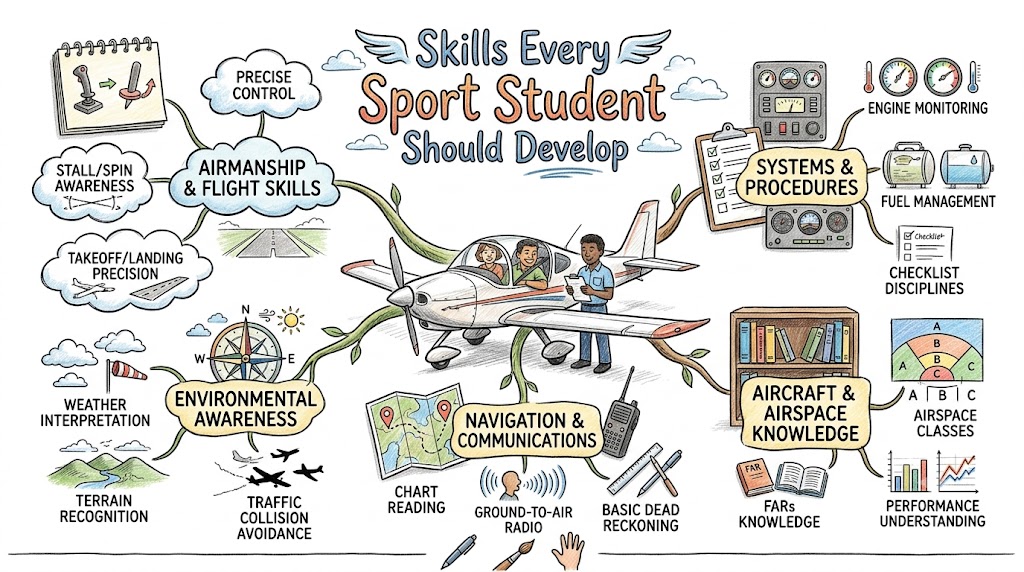
This guide explores the most important skills every sport pilot student should develop to become a safe, competent, and confident aviator.
Understanding Sport Pilot Training
Sport pilot training is designed to teach students how to safely operate light sport aircraft under visual flight rules (VFR). The training combines ground school knowledge with practical flight experience.
Students typically learn:
- Basic aerodynamics
- Aircraft controls and systems
- Weather interpretation
- Navigation fundamentals
- Radio communication
- Flight safety principles
Unlike advanced certifications, sport pilot training emphasizes simplicity, safety, and foundational flying skills.
Skill 1: Aircraft Handling
Aircraft handling is the foundation of every pilot’s ability.
Students must learn how to:
- Control pitch, roll, and yaw smoothly
- Maintain stable flight
- Execute coordinated turns
- Perform safe takeoffs and landings
- Handle different flight conditions
Smooth control inputs are essential. Overcontrolling the aircraft is a common beginner mistake and can lead to instability.
Skill 2: Situational Awareness
Situational awareness means understanding everything happening around the aircraft at all times.
This includes:
- Other aircraft in the area
- Airspace restrictions
- Terrain and obstacles
- Weather conditions
- Aircraft position and altitude
Strong situational awareness helps prevent accidents and improves decision-making in flight.
Skill 3: Pre-Flight Planning
Good flights begin long before takeoff.
Pre-flight planning includes:
- Checking weather conditions
- Reviewing flight route
- Calculating fuel requirements
- Inspecting the aircraft
- Identifying alternate landing sites
A well-planned flight reduces risks and improves overall safety.
Skill 4: Radio Communication
Clear communication is critical for safe flight operations.
Students should learn:
- Standard aviation phraseology
- How to communicate with ATC
- Listening carefully to instructions
- Making concise radio calls
- Staying calm during communication
Good radio skills improve coordination and reduce misunderstandings.
Skill 5: Decision-Making
Every pilot must make decisions during flight.
Key decision-making skills include:
- Go or no-go decisions before flight
- Weather-related judgment
- Fuel and route decisions
- Emergency response thinking
Safe pilots always prioritize caution over speed or convenience.
Skill 6: Cockpit Management
Cockpit management is about staying organized and focused during flight.
Students must learn to:
- Use checklists correctly
- Monitor instruments regularly
- Prioritize tasks
- Avoid distractions
- Maintain a structured workflow
Good cockpit discipline reduces workload and improves safety.
Skill 7: Weather Interpretation
Weather is one of the most important factors in aviation safety.
Sport pilot students should understand:
- Wind direction and speed
- Visibility conditions
- Cloud formations
- Temperature effects
- Weather changes during flight
Proper weather interpretation helps pilots avoid dangerous situations.
Skill 8: Navigation Skills
Navigation ensures the pilot reaches the correct destination safely.
Students should learn:
- Reading aeronautical charts
- Using GPS systems
- Identifying landmarks
- Planning flight routes
- Maintaining heading accuracy
Even in modern aircraft, basic navigation skills are essential for safety.
Skill 9: Emergency Handling
Emergencies require quick thinking and calm action.
Students should practice:
- Engine failure procedures
- Forced landing techniques
- Emergency communication
- System failure response
- Maintaining control under pressure
Preparation reduces panic and improves response time.
Skill 10: Consistency and Discipline
Flying skills improve only through regular practice.
Students should:
- Attend lessons consistently
- Review training material often
- Practice maneuvers regularly
- Follow instructor feedback
- Maintain structured learning habits
Consistency is one of the strongest predictors of pilot success.
Common Mistakes Sport Pilot Students Make
Many beginners face similar challenges during training.
Common mistakes include:
- Skipping ground study
- Ignoring instructor feedback
- Overconfidence early in training
- Inconsistent practice
- Poor weather assessment
Avoiding these mistakes helps students progress faster and more safely.
Best Practices for Student Pilots
Strong habits create strong pilots.
Recommended practices:
- Study aviation theory regularly
- Always use checklists
- Ask questions during training
- Focus on safety, not speed
- Review each flight after landing
- Stay calm and patient
Good habits built early last throughout a pilot’s career.
Benefits of Developing Strong Pilot Skills
Learning to fly is not just about operating an aircraft—it is about developing a complete set of skills that ensure safety, confidence, and efficiency in every phase of flight. Whether you are a sport pilot student or working toward advanced certifications, strong pilot skills form the foundation of every safe aviation journey.
A well-trained pilot is not defined only by their ability to take off or land, but by how they think, plan, communicate, and respond to changing situations in the air. These abilities develop over time through practice, instruction, and consistent learning.
This blog explains the key benefits of developing strong pilot skills and why they are essential for every aspiring aviator.
Improved Flight Safety
The most important benefit of strong pilot skills is enhanced safety.
A skilled pilot is trained to recognize risks early and take appropriate action before they become serious problems.
Strong skills help pilots:
- Identify unsafe weather conditions
- Avoid airspace conflicts
- Follow correct flight procedures
- Respond calmly during unexpected situations
- Maintain control in challenging environments
Since most aviation incidents are caused by human error rather than mechanical failure, improving pilot skills significantly reduces risk and improves overall safety.
Better Aircraft Control and Handling
Strong pilot skills lead to smoother and more precise aircraft handling.
A well-trained pilot can:
- Perform smooth takeoffs and landings
- Maintain stable flight paths
- Execute controlled turns and climbs
- Manage speed and altitude effectively
- Coordinate hand and foot movements properly
Good handling skills create a more stable and comfortable flight experience for both the pilot and passengers. Instead of reacting unpredictably, the pilot operates the aircraft with confidence and control.
Increased Situational Awareness
Situational awareness is the ability to understand everything happening around the aircraft during flight.
A skilled pilot constantly monitors:
- Air traffic in the surrounding area
- Weather conditions and changes
- Aircraft position and altitude
- Terrain and obstacles
- Airspace boundaries
Strong situational awareness helps pilots make better decisions and avoid potential hazards. It is one of the most critical skills for safe aviation.
Faster and More Confident Decision-Making
Flying requires continuous decision-making before and during flight.
Strong pilot skills allow students to:
- Decide whether to fly based on weather conditions
- Adjust flight plans when necessary
- Handle unexpected in-flight situations
- Select safe alternative routes
- Prioritize safety over convenience
Confident decision-making reduces hesitation and panic. A skilled pilot relies on training and experience to make calm and logical choices.
Reduced Risk of Pilot Errors
Human error is one of the leading causes of aviation incidents. Strong pilot skills help reduce these mistakes significantly.
Common errors avoided by skilled pilots include:
- Missing checklist steps
- Misreading instruments
- Poor radio communication
- Incorrect landing approaches
- Improper fuel or weather planning
By following structured procedures and maintaining discipline, skilled pilots ensure safer and more consistent flying.
Improved Communication Skills
Clear communication is essential in aviation, especially when interacting with air traffic control and other aircraft.
A well-trained pilot can:
- Use correct aviation terminology
- Communicate clearly over the radio
- Understand instructions quickly
- Confirm and repeat information accurately
- Avoid misunderstandings in busy airspace
Good communication improves coordination and enhances overall flight safety.
Greater Confidence in the Cockpit
Confidence in flying comes from knowledge, training, and experience.
Strong pilot skills help students:
- Feel more comfortable during flights
- Handle pressure more effectively
- Trust their training and decisions
- Stay calm in unfamiliar situations
Confident pilots are not reckless—they are prepared. Their confidence is built on discipline and repeated practice.
Better Emergency Handling Ability
Emergencies can happen unexpectedly, and strong skills make a major difference in how they are handled.
A well-trained pilot is able to:
- Stay calm under pressure
- Follow emergency procedures correctly
- Maintain control of the aircraft
- Communicate effectively during emergencies
- Prioritize safety decisions quickly
Preparation through training ensures pilots respond effectively instead of panicking.
More Efficient Learning and Progress
Strong foundational skills make learning easier and faster.
Students with good skills:
- Understand new concepts quickly
- Perform better during flight lessons
- Require fewer corrections from instructors
- Progress more smoothly through training stages
This leads to a more efficient and enjoyable learning experience.
Strong Foundation for Advanced Training
Strong pilot skills are essential for future aviation growth.
They prepare students for:
- Private pilot certification
- Instrument training
- Commercial aviation training
- Advanced aircraft operations
Without strong fundamentals, advanced training becomes more challenging and stressful.
Better Situational Judgment in Real Flights
Beyond technical skills, pilots must develop judgment skills.
This includes:
- Knowing when to fly or stay grounded
- Evaluating risk levels in changing conditions
- Making responsible go/no-go decisions
- Prioritizing safety over schedule pressure
Good judgment is what separates a trained pilot from a safe pilot.
More Enjoyable Flying Experience
Flying becomes much more enjoyable when a pilot is skilled and confident.
Strong skills allow pilots to:
- Fly with less stress
- Focus more on navigation and surroundings
- Enjoy smoother control and stability
- Experience aviation with confidence
Instead of feeling overwhelmed, flying becomes a rewarding experience.
Checklist: Key Benefits of Strong Pilot Skills
Before Flight:
- Better preparation
- Strong weather awareness
- Clear planning
During Flight:
- Smooth aircraft control
- Strong situational awareness
- Better communication
After Flight:
- Better self-review
- Continuous improvement
- Skill development
Common Mistakes Without Strong Skills
Pilots with weak foundational skills often face:
- Poor decision-making
- Inconsistent flying performance
- Communication errors
- Difficulty handling emergencies
- Slower training progress
Avoiding these issues requires consistent learning and practice.
Benefits of Developing Strong Pilot Skills
Learning to fly is not just about operating an aircraft—it is about developing a complete set of skills that ensure safety, confidence, and efficiency in every phase of flight. Whether you are a sport pilot student or working toward advanced certifications, strong pilot skills form the foundation of every safe aviation journey.
A well-trained pilot is not defined only by their ability to take off or land, but by how they think, plan, communicate, and respond to changing situations in the air. These abilities develop over time through practice, instruction, and consistent learning.
This blog explains the key benefits of developing strong pilot skills and why they are essential for every aspiring aviator.
Improved Flight Safety
The most important benefit of strong pilot skills is enhanced safety.
A skilled pilot is trained to recognize risks early and take appropriate action before they become serious problems.
Strong skills help pilots:
- Identify unsafe weather conditions
- Avoid airspace conflicts
- Follow correct flight procedures
- Respond calmly during unexpected situations
- Maintain control in challenging environments
Since most aviation incidents are caused by human error rather than mechanical failure, improving pilot skills significantly reduces risk and improves overall safety.
Better Aircraft Control and Handling
Strong pilot skills lead to smoother and more precise aircraft handling.
A well-trained pilot can:
- Perform smooth takeoffs and landings
- Maintain stable flight paths
- Execute controlled turns and climbs
- Manage speed and altitude effectively
- Coordinate hand and foot movements properly
Good handling skills create a more stable and comfortable flight experience for both the pilot and passengers. Instead of reacting unpredictably, the pilot operates the aircraft with confidence and control.
Increased Situational Awareness
Situational awareness is the ability to understand everything happening around the aircraft during flight.
A skilled pilot constantly monitors:
- Air traffic in the surrounding area
- Weather conditions and changes
- Aircraft position and altitude
- Terrain and obstacles
- Airspace boundaries
Strong situational awareness helps pilots make better decisions and avoid potential hazards. It is one of the most critical skills for safe aviation.
Faster and More Confident Decision-Making
Flying requires continuous decision-making before and during flight.
Strong pilot skills allow students to:
- Decide whether to fly based on weather conditions
- Adjust flight plans when necessary
- Handle unexpected in-flight situations
- Select safe alternative routes
- Prioritize safety over convenience
Confident decision-making reduces hesitation and panic. A skilled pilot relies on training and experience to make calm and logical choices.
Reduced Risk of Pilot Errors
Human error is one of the leading causes of aviation incidents. Strong pilot skills help reduce these mistakes significantly.
Common errors avoided by skilled pilots include:
- Missing checklist steps
- Misreading instruments
- Poor radio communication
- Incorrect landing approaches
- Improper fuel or weather planning
By following structured procedures and maintaining discipline, skilled pilots ensure safer and more consistent flying.
Improved Communication Skills
Clear communication is essential in aviation, especially when interacting with air traffic control and other aircraft.
A well-trained pilot can:
- Use correct aviation terminology
- Communicate clearly over the radio
- Understand instructions quickly
- Confirm and repeat information accurately
- Avoid misunderstandings in busy airspace
Good communication improves coordination and enhances overall flight safety.
Greater Confidence in the Cockpit
Confidence in flying comes from knowledge, training, and experience.
Strong pilot skills help students:
- Feel more comfortable during flights
- Handle pressure more effectively
- Trust their training and decisions
- Stay calm in unfamiliar situations
Confident pilots are not reckless—they are prepared. Their confidence is built on discipline and repeated practice.
Better Emergency Handling Ability
Emergencies can happen unexpectedly, and strong skills make a major difference in how they are handled.
A well-trained pilot is able to:
- Stay calm under pressure
- Follow emergency procedures correctly
- Maintain control of the aircraft
- Communicate effectively during emergencies
- Prioritize safety decisions quickly
Preparation through training ensures pilots respond effectively instead of panicking.
More Efficient Learning and Progress
Strong foundational skills make learning easier and faster.
Students with good skills:
- Understand new concepts quickly
- Perform better during flight lessons
- Require fewer corrections from instructors
- Progress more smoothly through training stages
This leads to a more efficient and enjoyable learning experience.
Strong Foundation for Advanced Training
Strong pilot skills are essential for future aviation growth.
They prepare students for:
- Private pilot certification
- Instrument training
- Commercial aviation training
- Advanced aircraft operations
Without strong fundamentals, advanced training becomes more challenging and stressful.
Better Situational Judgment in Real Flights
Beyond technical skills, pilots must develop judgment skills.
This includes:
- Knowing when to fly or stay grounded
- Evaluating risk levels in changing conditions
- Making responsible go/no-go decisions
- Prioritizing safety over schedule pressure
Good judgment is what separates a trained pilot from a safe pilot.
More Enjoyable Flying Experience
Flying becomes much more enjoyable when a pilot is skilled and confident.
Strong skills allow pilots to:
- Fly with less stress
- Focus more on navigation and surroundings
- Enjoy smoother control and stability
- Experience aviation with confidence
Instead of feeling overwhelmed, flying becomes a rewarding experience.
Checklist: Key Benefits of Strong Pilot Skills
Before Flight:
- Better preparation
- Strong weather awareness
- Clear planning
During Flight:
- Smooth aircraft control
- Strong situational awareness
- Better communication
After Flight:
- Better self-review
- Continuous improvement
- Skill development
Common Mistakes Without Strong Skills
Pilots with weak foundational skills often face:
- Poor decision-making
- Inconsistent flying performance
- Communication errors
- Difficulty handling emergencies
- Slower training progress
Avoiding these issues requires consistent learning and practice.
Best Practices to Build Strong Pilot Skills
To develop strong aviation skills, students should:
- Practice regularly
- Study aviation theory consistently
- Use checklists in every flight
- Follow instructor feedback carefully
- Focus on safety over speed
- Stay patient during training
These habits create long-term success in aviation.Benefits of Developing Strong Pilot Skills
Learning to fly is not just about operating an aircraft—it is about developing a complete set of skills that ensure safety, confidence, and efficiency in every phase of flight. Whether you are a sport pilot student or working toward advanced certifications, strong pilot skills form the foundation of every safe aviation journey.
A well-trained pilot is not defined only by their ability to take off or land, but by how they think, plan, communicate, and respond to changing situations in the air. These abilities develop over time through practice, instruction, and consistent learning.
This blog explains the key benefits of developing strong pilot skills and why they are essential for every aspiring aviator.
Improved Flight Safety
The most important benefit of strong pilot skills is enhanced safety.
A skilled pilot is trained to recognize risks early and take appropriate action before they become serious problems.
Strong skills help pilots:
- Identify unsafe weather conditions
- Avoid airspace conflicts
- Follow correct flight procedures
- Respond calmly during unexpected situations
- Maintain control in challenging environments
Since most aviation incidents are caused by human error rather than mechanical failure, improving pilot skills significantly reduces risk and improves overall safety.
Better Aircraft Control and Handling
Strong pilot skills lead to smoother and more precise aircraft handling.
A well-trained pilot can:
- Perform smooth takeoffs and landings
- Maintain stable flight paths
- Execute controlled turns and climbs
- Manage speed and altitude effectively
- Coordinate hand and foot movements properly
Good handling skills create a more stable and comfortable flight experience for both the pilot and passengers. Instead of reacting unpredictably, the pilot operates the aircraft with confidence and control.
Increased Situational Awareness
Situational awareness is the ability to understand everything happening around the aircraft during flight.
A skilled pilot constantly monitors:
- Air traffic in the surrounding area
- Weather conditions and changes
- Aircraft position and altitude
- Terrain and obstacles
- Airspace boundaries
Strong situational awareness helps pilots make better decisions and avoid potential hazards. It is one of the most critical skills for safe aviation.
Faster and More Confident Decision-Making
Flying requires continuous decision-making before and during flight.
Strong pilot skills allow students to:
- Decide whether to fly based on weather conditions
- Adjust flight plans when necessary
- Handle unexpected in-flight situations
- Select safe alternative routes
- Prioritize safety over convenience
Confident decision-making reduces hesitation and panic. A skilled pilot relies on training and experience to make calm and logical choices.
Reduced Risk of Pilot Errors
Human error is one of the leading causes of aviation incidents. Strong pilot skills help reduce these mistakes significantly.
Common errors avoided by skilled pilots include:
- Missing checklist steps
- Misreading instruments
- Poor radio communication
- Incorrect landing approaches
- Improper fuel or weather planning
By following structured procedures and maintaining discipline, skilled pilots ensure safer and more consistent flying.
Improved Communication Skills
Clear communication is essential in aviation, especially when interacting with air traffic control and other aircraft.
A well-trained pilot can:
- Use correct aviation terminology
- Communicate clearly over the radio
- Understand instructions quickly
- Confirm and repeat information accurately
- Avoid misunderstandings in busy airspace
Good communication improves coordination and enhances overall flight safety.
Greater Confidence in the Cockpit
Confidence in flying comes from knowledge, training, and experience.
Strong pilot skills help students:
- Feel more comfortable during flights
- Handle pressure more effectively
- Trust their training and decisions
- Stay calm in unfamiliar situations
Confident pilots are not reckless—they are prepared. Their confidence is built on discipline and repeated practice.
Better Emergency Handling Ability
Emergencies can happen unexpectedly, and strong skills make a major difference in how they are handled.
A well-trained pilot is able to:
- Stay calm under pressure
- Follow emergency procedures correctly
- Maintain control of the aircraft
- Communicate effectively during emergencies
- Prioritize safety decisions quickly
Preparation through training ensures pilots respond effectively instead of panicking.
More Efficient Learning and Progress
Strong foundational skills make learning easier and faster.
Students with good skills:
- Understand new concepts quickly
- Perform better during flight lessons
- Require fewer corrections from instructors
- Progress more smoothly through training stages
This leads to a more efficient and enjoyable learning experience.
Strong Foundation for Advanced Training
Strong pilot skills are essential for future aviation growth.
They prepare students for:
- Private pilot certification
- Instrument training
- Commercial aviation training
- Advanced aircraft operations
Without strong fundamentals, advanced training becomes more challenging and stressful.
Better Situational Judgment in Real Flights
Beyond technical skills, pilots must develop judgment skills.
This includes:
- Knowing when to fly or stay grounded
- Evaluating risk levels in changing conditions
- Making responsible go/no-go decisions
- Prioritizing safety over schedule pressure
Good judgment is what separates a trained pilot from a safe pilot.
More Enjoyable Flying Experience
Flying becomes much more enjoyable when a pilot is skilled and confident.
Strong skills allow pilots to:
- Fly with less stress
- Focus more on navigation and surroundings
- Enjoy smoother control and stability
- Experience aviation with confidence
Instead of feeling overwhelmed, flying becomes a rewarding experience.
Checklist: Key Benefits of Strong Pilot Skills
Before Flight:
- Better preparation
- Strong weather awareness
- Clear planning
During Flight:
- Smooth aircraft control
- Strong situational awareness
- Better communication
After Flight:
- Better self-review
- Continuous improvement
- Skill development
Common Mistakes Without Strong Skills
Pilots with weak foundational skills often face:
- Poor decision-making
- Inconsistent flying performance
- Communication errors
- Difficulty handling emergencies
- Slower training progress
Avoiding these issues requires consistent learning and practice.
Best Practices to Build Strong Pilot Skills
To develop strong aviation skills, students should:
- Practice regularly
- Study aviation theory consistently
- Use checklists in every flight
- Follow instructor feedback carefully
- Focus on safety over speed
- Stay patient during training
These habits create long-term success in aviation.Benefits of Developing Strong Pilot Skills
Learning to fly is not just about operating an aircraft—it is about developing a complete set of skills that ensure safety, confidence, and efficiency in every phase of flight. Whether you are a sport pilot student or working toward advanced certifications, strong pilot skills form the foundation of every safe aviation journey.
A well-trained pilot is not defined only by their ability to take off or land, but by how they think, plan, communicate, and respond to changing situations in the air. These abilities develop over time through practice, instruction, and consistent learning.
This blog explains the key benefits of developing strong pilot skills and why they are essential for every aspiring aviator.
Improved Flight Safety
The most important benefit of strong pilot skills is enhanced safety.
A skilled pilot is trained to recognize risks early and take appropriate action before they become serious problems.
Strong skills help pilots:
- Identify unsafe weather conditions
- Avoid airspace conflicts
- Follow correct flight procedures
- Respond calmly during unexpected situations
- Maintain control in challenging environments
Since most aviation incidents are caused by human error rather than mechanical failure, improving pilot skills significantly reduces risk and improves overall safety.
Better Aircraft Control and Handling
Strong pilot skills lead to smoother and more precise aircraft handling.
A well-trained pilot can:
- Perform smooth takeoffs and landings
- Maintain stable flight paths
- Execute controlled turns and climbs
- Manage speed and altitude effectively
- Coordinate hand and foot movements properly
Good handling skills create a more stable and comfortable flight experience for both the pilot and passengers. Instead of reacting unpredictably, the pilot operates the aircraft with confidence and control.
Increased Situational Awareness
Situational awareness is the ability to understand everything happening around the aircraft during flight.
A skilled pilot constantly monitors:
- Air traffic in the surrounding area
- Weather conditions and changes
- Aircraft position and altitude
- Terrain and obstacles
- Airspace boundaries
Strong situational awareness helps pilots make better decisions and avoid potential hazards. It is one of the most critical skills for safe aviation.
Faster and More Confident Decision-Making
Flying requires continuous decision-making before and during flight.
Strong pilot skills allow students to:
- Decide whether to fly based on weather conditions
- Adjust flight plans when necessary
- Handle unexpected in-flight situations
- Select safe alternative routes
- Prioritize safety over convenience
Confident decision-making reduces hesitation and panic. A skilled pilot relies on training and experience to make calm and logical choices.
Reduced Risk of Pilot Errors
Human error is one of the leading causes of aviation incidents. Strong pilot skills help reduce these mistakes significantly.
Common errors avoided by skilled pilots include:
- Missing checklist steps
- Misreading instruments
- Poor radio communication
- Incorrect landing approaches
- Improper fuel or weather planning
By following structured procedures and maintaining discipline, skilled pilots ensure safer and more consistent flying.
Improved Communication Skills
Clear communication is essential in aviation, especially when interacting with air traffic control and other aircraft.
A well-trained pilot can:
- Use correct aviation terminology
- Communicate clearly over the radio
- Understand instructions quickly
- Confirm and repeat information accurately
- Avoid misunderstandings in busy airspace
Good communication improves coordination and enhances overall flight safety.
Greater Confidence in the Cockpit
Confidence in flying comes from knowledge, training, and experience.
Strong pilot skills help students:
- Feel more comfortable during flights
- Handle pressure more effectively
- Trust their training and decisions
- Stay calm in unfamiliar situations
Confident pilots are not reckless—they are prepared. Their confidence is built on discipline and repeated practice.
Better Emergency Handling Ability
Emergencies can happen unexpectedly, and strong skills make a major difference in how they are handled.
A well-trained pilot is able to:
- Stay calm under pressure
- Follow emergency procedures correctly
- Maintain control of the aircraft
- Communicate effectively during emergencies
- Prioritize safety decisions quickly
Preparation through training ensures pilots respond effectively instead of panicking.
More Efficient Learning and Progress
Strong foundational skills make learning easier and faster.
Students with good skills:
- Understand new concepts quickly
- Perform better during flight lessons
- Require fewer corrections from instructors
- Progress more smoothly through training stages
This leads to a more efficient and enjoyable learning experience.
Strong Foundation for Advanced Training
Strong pilot skills are essential for future aviation growth.
They prepare students for:
- Private pilot certification
- Instrument training
- Commercial aviation training
- Advanced aircraft operations
Without strong fundamentals, advanced training becomes more challenging and stressful.
Better Situational Judgment in Real Flights
Beyond technical skills, pilots must develop judgment skills.
This includes:
- Knowing when to fly or stay grounded
- Evaluating risk levels in changing conditions
- Making responsible go/no-go decisions
- Prioritizing safety over schedule pressure
Good judgment is what separates a trained pilot from a safe pilot.
More Enjoyable Flying Experience
Flying becomes much more enjoyable when a pilot is skilled and confident.
Strong skills allow pilots to:
- Fly with less stress
- Focus more on navigation and surroundings
- Enjoy smoother control and stability
- Experience aviation with confidence
Instead of feeling overwhelmed, flying becomes a rewarding experience.
Checklist: Key Benefits of Strong Pilot Skills
Before Flight:
- Better preparation
- Strong weather awareness
- Clear planning
During Flight:
- Smooth aircraft control
- Strong situational awareness
- Better communication
After Flight:
- Better self-review
- Continuous improvement
- Skill development
Common Mistakes Without Strong Skills
Pilots with weak foundational skills often face:
- Poor decision-making
- Inconsistent flying performance
- Communication errors
- Difficulty handling emergencies
- Slower training progress
Avoiding these issues requires consistent learning and practice.
Best Practices to Build Strong Pilot Skills
To develop strong aviation skills, students should:
- Practice regularly
- Study aviation theory consistently
- Use checklists in every flight
- Follow instructor feedback carefully
- Focus on safety over speed
- Stay patient during training
These habits create long-term success in aviation.
Frequently Asked Questions
1. What skills are needed for sport pilot training?
Students need aircraft handling, navigation, communication, weather understanding, and decision-making skills.
2. How can students improve aircraft handling?
By practicing regularly, following instructor guidance, and making smooth, controlled inputs.
3. Why is situational awareness important?
It helps pilots understand their surroundings and avoid potential hazards during flight.
4. What is cockpit management?
It is the ability to stay organized, use checklists, and manage tasks efficiently in the cockpit.
5. How important is weather knowledge?
Weather awareness is critical for safe flight planning and in-flight decision-making.
6. Why is communication important in flying?
Clear communication ensures safety and coordination with air traffic control and other aircraft.
7. What mistakes do student pilots make?
Common mistakes include poor preparation, overconfidence, and inconsistent practice.
8. How can beginners improve navigation skills?
By studying charts, practicing GPS usage, and learning to identify landmarks.
9. What is the hardest part of flight training?
Many students find decision-making and situational awareness the most challenging.
10. What makes a good sport pilot?
A good sport pilot is disciplined, safety-focused, consistent, and willing to continuously learn.
Conclusion
Sport pilot training is more than learning how to fly—it is about developing the right mindset, discipline, and core aviation skills. From aircraft handling to situational awareness and decision-making, each skill plays a vital role in safe and confident flying.
Students who focus on building strong fundamentals early in their training become more capable pilots over time. With consistent practice, proper guidance, and a strong commitment to safety, every student can grow into a skilled and responsible sport pilot ready for real-world flying.

