
Introduction
Flying an aircraft is a dream for many aviation enthusiasts, but the traditional path to becoming a pilot can sometimes feel complex and demanding. For people interested in recreational flying, the Sport Pilot Certificate offers a more accessible way to begin their aviation journey.
The sport pilot pathway is designed for individuals who want to fly light sport aircraft for personal enjoyment, exploration, and aviation experience. It focuses on developing essential flying skills, understanding aviation safety, and building confidence in the cockpit.
Before beginning flight training, aspiring pilots should understand the basic requirements, training process, eligibility criteria, and responsibilities involved in becoming a sport pilot.
What Is a Sport Pilot Certificate?
A Sport Pilot Certificate is a pilot certification that allows qualified individuals to operate certain light sport aircraft for recreational flying purposes.
It provides an opportunity for aviation enthusiasts to learn flying skills without following the same training pathway required for higher-level pilot certifications.
Sport pilots typically fly light sport aircraft that are designed for simpler operation and recreational use. These aircraft are often lightweight, efficient, and suitable for pilots who want to enjoy personal flying experiences.
A sport pilot certificate helps individuals:
- Learn aircraft control skills
- Understand aviation safety principles
- Experience independent flying
- Build foundational aviation knowledge
While the certification has fewer privileges compared with advanced pilot certificates, it provides a valuable entry point into aviation.
Who Can Apply for a Sport Pilot Certificate?
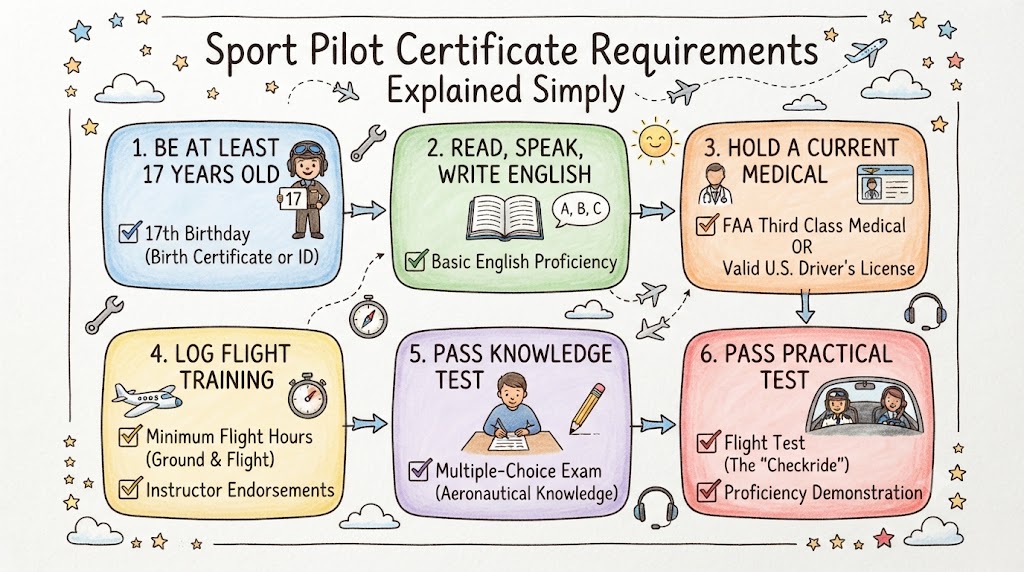
Before beginning training, applicants must meet certain eligibility requirements. These requirements help ensure that pilots have the necessary skills, knowledge, and responsibility to operate aircraft safely.
Age Requirements
Applicants must meet the minimum age requirement established by aviation regulations before receiving a sport pilot certificate.
Younger aviation enthusiasts may begin learning through approved training programs before reaching certification age, depending on applicable rules and instructor guidance.
Language Requirements
Pilots must be able to communicate effectively for safe flight operations.
Understanding aviation communication is important because pilots need to:
- Communicate with air traffic services
- Understand flight instructions
- Read aviation information
- Respond appropriately during flights
Clear communication is an essential part of aviation safety.
Flight Experience Requirements
Sport pilot applicants must complete required flight training and demonstrate essential flying skills.
Training generally includes:
- Aircraft control
- Takeoffs and landings
- Flight maneuvers
- Navigation exercises
- Emergency procedures
- Safe decision-making
The exact requirements may vary depending on aviation regulations and training circumstances.
Medical Requirements
Medical eligibility is an important part of pilot certification.
Sport pilots must meet applicable health and fitness requirements before flying. Requirements can vary based on location, aviation authority rules, and individual circumstances.
Maintaining good physical and mental fitness helps pilots make safe decisions during flight operations.
Sport Pilot Training Requirements Explained
Becoming a sport pilot involves both classroom learning and practical flight experience.
The training process is designed to help students understand aviation principles while developing safe flying skills.
Ground School Training
Ground school provides the knowledge foundation needed before flying independently.
Students learn important aviation topics, including:
Aviation Regulations
Pilots learn basic rules and responsibilities related to aircraft operation.
Topics include:
- Flight procedures
- Pilot responsibilities
- Airspace awareness
- Aviation safety requirements
Weather Basics
Understanding weather is essential for safe flying.
Students learn about:
- Weather conditions
- Forecast information
- Wind effects
- Visibility factors
Good weather knowledge helps pilots make better flight decisions.
Aircraft Systems
Students learn how aircraft components work, including:
- Engine systems
- Flight controls
- Instruments
- Safety equipment
Understanding aircraft systems helps pilots operate confidently.
Navigation and Flight Planning
Pilots learn how to plan flights using:
- Maps
- Navigation tools
- Distance calculations
- Route planning
Proper planning helps ensure safer and more efficient flights.
Flight Training Requirements
Flight training helps students develop practical flying skills under the guidance of a qualified instructor.
Important training areas include:
Aircraft Control Skills
Students learn how to control an aircraft during different phases of flight.
Training includes:
- Taxiing
- Takeoff procedures
- Climbing
- Turning
- Descending
- Landing
Takeoff and Landing Practice
Takeoffs and landings are among the most important pilot skills.
Students practice:
- Normal takeoffs
- Normal landings
- Wind-related techniques
- Airport procedures
Emergency Procedures
Pilots must understand how to respond to unexpected situations.
Training includes learning:
- Emergency decision-making
- Aircraft safety procedures
- Appropriate responses to unusual situations
Solo Flight Experience
Solo flying allows students to demonstrate independence after receiving proper instruction and approval.
It helps build:
- Confidence
- Decision-making ability
- Aircraft handling skills
Sport Pilot Certificate Training Checklist
Aspiring sport pilots can follow this basic checklist:
- Confirm eligibility requirements
- Select a qualified flight school
- Complete ground instruction
- Begin flight lessons
- Practice essential flight skills
- Complete required flight experience
- Pass required knowledge examination
- Complete practical flight evaluation
Following a structured training plan helps students progress safely.
Types of Aircraft Used for Sport Pilot Training
Light Sport Aircraft
Light Sport Aircraft are commonly used for sport pilot training.
These aircraft are designed with features that make them suitable for recreational aviation.
Common characteristics include:
- Lightweight design
- Simple operation
- Efficient performance
- Beginner-friendly handling
Common Training Aircraft Features
Many training aircraft include:
- Two-seat configurations
- Easy-to-understand controls
- Reliable systems
- Good visibility
These features help students develop flying confidence.
Sport Pilot Certificate vs Private Pilot Certificate
| Factor | Sport Pilot Certificate | Private Pilot Certificate |
|---|---|---|
| Training Requirements | Focused on recreational flying skills | More extensive training requirements |
| Aircraft Options | Limited to approved aircraft categories | Wider aircraft options |
| Flying Privileges | Primarily recreational flying | Broader flying privileges |
| Passenger Limitations | Limited based on regulations | More flexibility |
| Medical Requirements | Different eligibility options may apply | Standard medical requirements may apply |
| Training Complexity | Designed as a simpler pathway | More comprehensive training |
The right certification depends on a person’s aviation goals, available time, and future plans.
Benefits of Becoming a Sport Pilot
Easier Entry Into Aviation
The sport pilot pathway allows beginners to experience aviation without immediately pursuing advanced certification.
It provides a structured introduction to:
- Aircraft operation
- Flight safety
- Aviation decision-making
Lower Training Complexity
Sport pilot training focuses on essential flying skills required for recreational aviation.
This makes it an attractive option for people who want to enjoy flying as a hobby.
Enjoyment of Recreational Flying
Sport pilots can enjoy experiences such as:
- Weekend flights
- Local area exploration
- Scenic aviation trips
Flying provides opportunities to experience aviation freedom and personal achievement.
Building Aviation Experience
A sport pilot certificate can also help individuals build confidence and experience before pursuing additional aviation goals.
Common Mistakes Beginners Make During Sport Pilot Training
Underestimating Ground Knowledge
Some beginners focus only on flying skills and overlook the importance of aviation theory.
Strong knowledge helps pilots make safer decisions.
Not Practicing Regularly
Consistent training helps students maintain skills and improve confidence.
Long gaps between lessons can slow progress.
Ignoring Weather Awareness
Weather plays a major role in aviation safety.
Pilots should understand conditions and avoid flying beyond their experience level.
Choosing the Wrong Training Environment
A good flight school and instructor can significantly influence the learning experience.
Students should consider:
- Instructor experience
- Aircraft condition
- Training approach
- Safety culture
How to Prepare for Sport Pilot Training
Before starting lessons, beginners can prepare by:
- Learning basic aviation terminology
- Studying aircraft fundamentals
- Understanding weather concepts
- Exploring flight planning basics
- Researching flight schools
- Maintaining consistent practice schedules
Preparation helps students feel more comfortable during training.
Steps to Earn a Sport Pilot Certificate
Step 1: Research Flight Schools
Choose a training provider with qualified instructors and suitable aircraft.
Step 2: Complete Ground Training
Learn aviation rules, aircraft knowledge, weather, and navigation principles.
Step 3: Begin Flight Lessons
Practice aircraft handling and essential flight operations with an instructor.
Step 4: Complete Required Experience
Meet required training standards and demonstrate necessary flying abilities.
Step 5: Complete Required Tests
Pass the required knowledge and practical evaluations to receive certification.
Career and Future Opportunities After Sport Pilot Training
Although the Sport Pilot Certificate is primarily designed for recreational flying, it can be a foundation for further aviation development.
Pilots may choose to:
- Continue advanced flight training
- Gain additional flying experience
- Explore aviation careers
- Join aviation communities
Many professional pilots begin their aviation journey with a strong foundation built through recreational flying.
Frequently Asked Questions
1. What is a Sport Pilot Certificate?
A Sport Pilot Certificate allows qualified individuals to fly approved light sport aircraft for recreational aviation purposes.
2. Who can become a sport pilot?
Individuals who meet eligibility requirements, complete required training, and demonstrate safe flying skills can become sport pilots.
3. How long does sport pilot training take?
Training duration varies depending on student progress, lesson frequency, weather conditions, and individual learning ability.
4. How many flight hours are required for a Sport Pilot Certificate?
Flight hour requirements depend on applicable aviation regulations and training standards.
5. What aircraft can sport pilots fly?
Sport pilots can operate approved light sport aircraft that meet applicable requirements.
6. Do sport pilots need a medical certificate?
Medical requirements vary depending on aviation regulations and individual circumstances.
7. Is sport pilot training easier than private pilot training?
Sport pilot training is designed as a simpler recreational pathway, while private pilot training generally includes broader privileges and requirements.
8. Can sport pilots carry passengers?
Sport pilots may carry passengers according to applicable aviation regulations and operating limitations.
9. Can a Sport Pilot Certificate lead to advanced pilot licenses?
Yes, many pilots use sport pilot training as a foundation for continuing aviation education.
10. How do I start sport pilot training?
The first step is researching flight schools, understanding eligibility requirements, and beginning ground and flight instruction.
Conclusion
The Sport Pilot Certificate provides an exciting opportunity for aviation enthusiasts who want to experience the joy of flying light sport aircraft. It offers a structured pathway for beginners to learn essential aviation skills, understand safety practices, and build confidence in the cockpit.
Successful sport pilot training requires dedication, proper instruction, and a commitment to safe flying practices. By understanding the requirements and preparing correctly, aspiring pilots can begin their aviation journey with confidence and knowledge.

