
Introduction
For many people, learning to fly is a lifelong dream. The introduction of the Sport Pilot Certificate has made aviation more accessible by offering a practical pathway into recreational flying. Despite its growing popularity, many aspiring pilots hesitate to begin training because they encounter outdated information, misconceptions, or conflicting advice about what a Sport Pilot Certificate allows.
Some believe it is not a legitimate pilot certification, while others assume sport pilots can fly without proper training or planning. These misunderstandings can discourage potential students from exploring an exciting and rewarding aviation opportunity.
Understanding what the Sport Pilot Certificate is—and what it is not—helps future pilots make informed decisions about their aviation journey. This guide explains the most common misconceptions, clarifies the purpose of the certificate, and highlights why sport pilot training continues to attract aviation enthusiasts from many different backgrounds.
What Is a Sport Pilot Certificate?
A Sport Pilot Certificate is a pilot certification designed for individuals who want to enjoy recreational flying in eligible Light Sport Aircraft (LSA). It provides a structured training program that teaches students the knowledge, skills, and decision-making needed to operate these aircraft safely.
Sport pilot training typically includes instruction in:
- Aircraft operations
- Aviation weather
- Navigation
- Flight planning
- Airspace awareness
- Radio communication
- Emergency procedures
- Safe decision-making
The certificate offers an accessible entry point into aviation while emphasizing responsible flying and safety.
Why Do So Many Misunderstandings Exist?
Misconceptions about Sport Pilot Certificates often arise because of:
- Outdated information shared online
- Confusion between Sport Pilot and Private Pilot certificates
- Word-of-mouth advice that may no longer be accurate
- Limited understanding of Light Sport Aircraft
- Misinterpretation of aviation terminology
Learning from qualified flight instructors and current training materials is the best way to understand the certificate’s privileges and operational limitations.
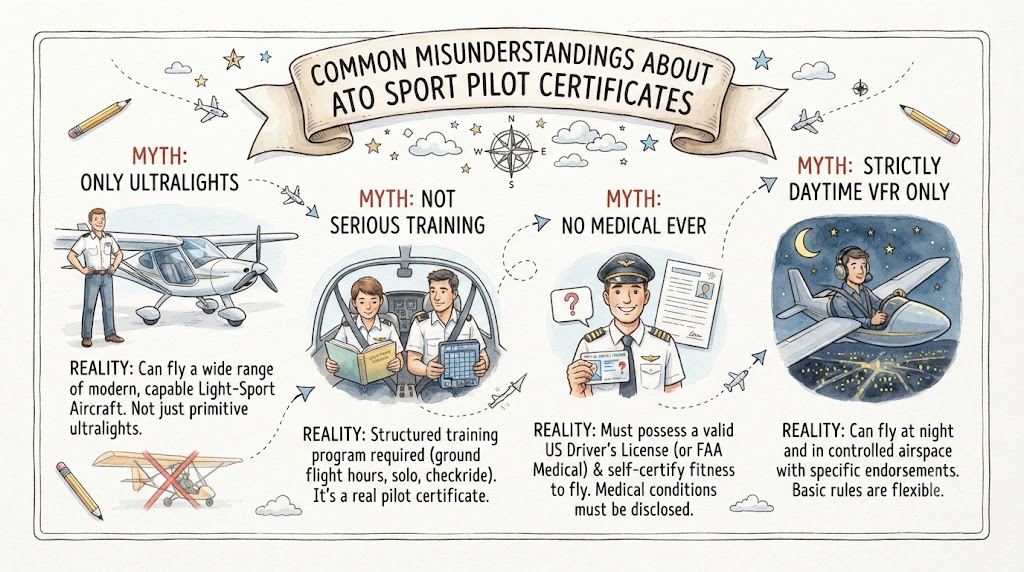
Misunderstanding 1: “A Sport Pilot Certificate Is Not a Real Pilot Certificate”
This is one of the most common myths.
A Sport Pilot Certificate is an officially recognized pilot certificate that allows qualified individuals to operate eligible Light Sport Aircraft within its operating privileges and limitations.
Although its scope differs from other pilot certificates, it still requires structured flight training, knowledge development, practical skill demonstration, and successful completion of required examinations.
Sport pilots are trained to make safe decisions and operate their aircraft responsibly.
Misunderstanding 2: “Sport Pilots Can Fly Anywhere”
Sport pilots enjoy significant freedom, but their operations are subject to specific operating rules and limitations.
Safe flight planning remains essential.
Before every flight, pilots should consider:
- Weather conditions
- Airspace requirements
- Airport information
- Route planning
- Fuel requirements
- Aircraft performance
Understanding where and how operations may be conducted is an important part of sport pilot training.
Misunderstanding 3: “Only Tiny Airplanes Qualify”
Many people assume that Light Sport Aircraft are limited to a single type of small airplane.
In reality, the Light Sport Aircraft category includes several types of aircraft designed for recreational aviation.
Depending on the aircraft category and applicable regulations, pilots may encounter aircraft with different designs, capabilities, and flying characteristics.
This variety allows students to select aircraft that best match their recreational flying interests and training goals.
Misunderstanding 4: “Sport Pilot Training Is Easy”
Although sport pilot training may differ in scope from other pilot certificates, it still requires commitment and consistent effort.
Students learn:
- Aircraft control
- Safe takeoffs and landings
- Weather evaluation
- Navigation
- Communication procedures
- Risk management
- Emergency response
- Aeronautical decision-making
Successful pilots earn their certificates through disciplined study and practical flying experience.
Misunderstanding 5: “Flight Planning Isn’t Necessary”
Every flight requires preparation.
Sport pilots routinely consider:
- Weather forecasts
- Route selection
- Airport conditions
- Fuel planning
- Aircraft performance
- Alternate options
Proper planning reduces risk and contributes to safe, enjoyable flying experiences.
Misunderstanding 6: “Anyone Can Become a Sport Pilot”
While sport pilot training is accessible, students must still meet applicable eligibility requirements before earning their certificate.
Prospective students should work with a qualified flight instructor to understand the current training and certification requirements applicable to their situation.
Being prepared before training begins helps create a smoother learning experience.
Misunderstanding 7: “A Sport Pilot Certificate Ends Your Aviation Journey”
Many pilots begin with a Sport Pilot Certificate before pursuing additional aviation education.
As their interests grow, some continue with:
- Additional flight training
- Advanced aircraft familiarization
- Expanded aviation knowledge
- Other pilot certificates and ratings, if they choose to pursue them
The Sport Pilot Certificate can serve as an excellent first step into the broader world of aviation.
Misunderstanding 8: “Sport Flying Is Less Safe”
Safety depends on proper training, sound judgment, and responsible decision-making—not simply the type of certificate held.
Sport pilot training emphasizes:
- Risk management
- Weather awareness
- Aircraft inspections
- Safe operating practices
- Communication skills
- Continuous learning
Pilots who consistently follow good aviation practices contribute to safe flight operations.
Advantages of a Sport Pilot Certificate
For many aviation enthusiasts, the Sport Pilot Certificate offers an attractive pathway into flying.
Benefits include:
- Accessible introduction to aviation
- Opportunity to enjoy recreational flying
- Modern Light Sport Aircraft
- Practical flight training
- Flexible learning opportunities
- Lower overall training commitment compared to more advanced pilot pathways
- Development of valuable aviation knowledge and flying skills
These advantages make recreational aviation achievable for many first-time pilots.
Who Should Consider Becoming a Sport Pilot?
The Sport Pilot Certificate may be a good option for:
- Recreational flyers
- Weekend aviation enthusiasts
- Retirees pursuing lifelong interests
- Outdoor adventure seekers
- Individuals exploring aviation as a hobby
- Future pilots beginning their aviation education
Many students appreciate the opportunity to experience aviation in a structured, supportive learning environment.
Sport Pilot vs. Private Pilot
| Feature | Sport Pilot | Private Pilot |
|---|---|---|
| Primary Purpose | Recreational flying | Broader personal flying privileges |
| Aircraft | Eligible Light Sport Aircraft | Wider range of aircraft |
| Training Scope | Recreational operations | Expanded operational privileges |
| Continuing Education | Additional training available | Additional ratings available |
| Flying Experience | Recreational focus | Broader mission flexibility |
Choosing between the two depends on individual aviation goals and the type of flying a student wishes to pursue.
Choosing the Right Sport Pilot Training Program
A quality flight school contributes significantly to student success.
When evaluating training programs, consider:
- Instructor experience
- Safety culture
- Aircraft maintenance standards
- Training flexibility
- Student support
- Ground instruction
- Scheduling availability
- Learning environment
Selecting a school that encourages questions and provides personalized instruction often leads to a more enjoyable training experience.
Developing Strong Aviation Habits
Successful sport pilots build good habits from the very beginning.
Important practices include:
- Conducting thorough pre-flight inspections
- Reviewing weather before every flight
- Maintaining proficiency through regular flying
- Continuing aviation education
- Communicating effectively with instructors
- Learning from every flight experience
These habits contribute to safer and more confident flying.
Sport Pilot Success Checklist
Before Starting Training
- Research flight schools.
- Schedule an introductory flight.
- Learn about Light Sport Aircraft.
- Meet with an instructor.
- Set realistic training goals.
During Flight Training
- Study consistently.
- Attend lessons regularly.
- Practice communication skills.
- Review instructor feedback.
- Build confidence gradually.
Before the Practical Test
- Review aviation knowledge.
- Practice normal and emergency procedures.
- Organize required documents.
- Complete mock evaluations.
- Stay well rested.
After Earning the Certificate
- Continue flying regularly.
- Expand aviation knowledge.
- Participate in safety seminars.
- Join local aviation organizations.
- Maintain a commitment to safe flying.
Frequently Asked Questions
1. Is a Sport Pilot Certificate officially recognized?
Yes. It is an officially recognized pilot certificate with defined operating privileges and limitations.
2. Can I continue my aviation education later?
Yes. Many pilots choose to pursue additional training as their aviation interests and goals evolve.
3. Can Sport Pilots carry passengers?
Sport pilot operating privileges are defined by applicable aviation regulations. Students should understand these privileges during training and continue following current regulations after certification.
4. What aircraft can Sport Pilots fly?
Sport pilots may operate eligible Light Sport Aircraft that meet applicable certification and operating requirements.
5. How long does training usually take?
Training duration varies depending on individual progress, lesson frequency, weather, and preparation.
6. Do I need a medical certificate?
Medical eligibility depends on applicable aviation regulations and individual circumstances. A qualified instructor can explain the current requirements.
7. Can Sport Pilots fly at night?
Sport pilot operations are subject to specific operating limitations. Students should understand these limitations during training.
8. Is Sport Pilot training suitable for older adults?
Yes. Many adults begin aviation later in life and enjoy recreational flying through structured sport pilot training.
9. How do I choose a good flight school?
Look for experienced instructors, well-maintained aircraft, a strong safety culture, and a supportive learning environment.
10. Is Sport Pilot training a good first step into aviation?
Absolutely. It provides a solid foundation in flight operations, aviation knowledge, and safe decision-making for recreational flying.
Conclusion
Many misconceptions about Sport Pilot Certificates arise from outdated information or confusion with other pilot certifications. In reality, the Sport Pilot Certificate offers a structured, rewarding, and accessible way to enter the world of recreational aviation while emphasizing safety, proper training, and responsible flying. By understanding its actual privileges, limitations, and training requirements, aspiring pilots can make informed decisions about their aviation journey. With quality instruction, consistent practice, and a commitment to lifelong learning, a Sport Pilot Certificate can be the beginning of many enjoyable and memorable flying experiences.

